

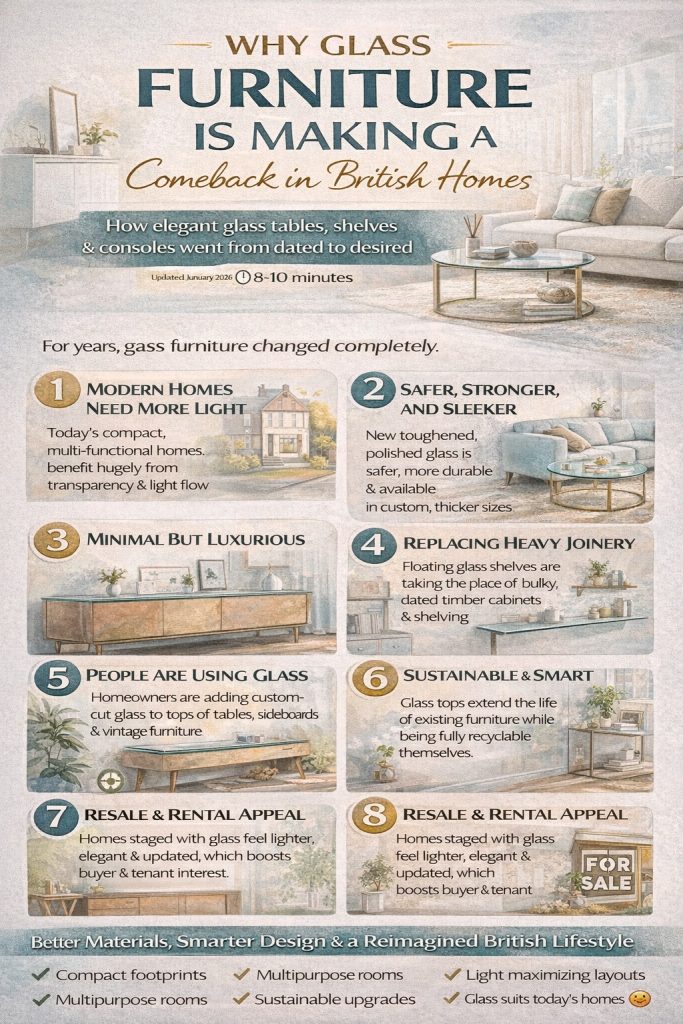
For years, glass furniture carried a mixed reputation in the UK. Some homeowners associated it with fragile coffee tables from the 1990s, fingerprints everywhere, or cold, minimalist flats that lacked warmth.
Fast-forward to today—and the picture has changed completely.
Across British homes, from London apartments to countryside renovations, glass furniture is back in style. Designers, estate agents, and homeowners alike are embracing glass table tops, shelving, consoles, and cabinets as practical, elegant upgrades rather than risky statements.
So what’s driving this revival?
It isn’t nostalgia. It’s a mix of better materials, smarter design, changing lifestyles, and a renewed focus on light-filled interiors.
Let’s explore why glass furniture is making a comeback in British homes—and why it may be one of the smartest interior choices right now.
A Shift in How Britons Use Their Homes
Modern British homes are being asked to do more than ever.
Living rooms double as workspaces. Kitchens flow into dining areas. Spare rooms become offices, gyms, or guest suites. Smaller footprints—especially in cities—mean every design choice has to work harder.
Glass furniture fits neatly into this new reality because it:
- Keeps rooms visually open
- Doesn’t block natural light
- Makes compact spaces feel larger
- Adds flexibility without bulk
- Feels contemporary but neutral
In terraced houses, flats, and extensions where daylight is precious, glass surfaces quietly amplify brightness—something timber or stone can’t always achieve.
Today’s Glass Isn’t Yesterday’s Glass
One of the biggest reasons glass furniture is enjoying a renaissance is simple:
The technology has improved dramatically.
Modern glass furniture rarely uses ordinary annealed glass. Instead, it relies on:
- Toughened (tempered) glass for strength
- Laminated constructions for safety
- Polished or arrissed edges
- Thicker panels for stability
- Optional tints, textures, and finishes
These advances mean contemporary glass tables and shelves are:
✔ Far stronger than older versions
✔ Safer if damaged
✔ More resistant to everyday use
✔ Cleaner in appearance
✔ Available in bespoke sizes
The fragile stereotype no longer holds.
The British Love Affair With Light
Natural light has become one of the most prized features in UK property listings.
Estate agents highlight it. Buyers ask about it. Renovations increasingly revolve around skylights, extensions, and larger openings.
Glass furniture complements this obsession beautifully.
Unlike solid pieces, glass:
- Allows light to pass through
- Reduces visual clutter
- Keeps sightlines open
- Reflects daylight into darker corners
In Victorian terraces or converted flats where windows are limited, replacing a bulky wooden coffee table with a glass-topped version can make a noticeable difference to how airy a room feels.
Minimalism Meets Warmth
British interiors are moving away from stark minimalism and toward something softer: think natural textures, curved shapes, muted colours, and layered lighting.
Glass fits surprisingly well into this aesthetic.
Paired with:
- Oak frames
- Brass legs
- Black steel
- Rattan bases
- Stone floors
- Wool rugs
…glass stops feeling cold and instead becomes a balancing element—bringing clarity to rooms filled with texture.
This blend of transparency and warmth is one of the defining features of current UK design.
Glass Table Tops: The Most Popular Revival
If one category leads the comeback, it’s glass table tops.
Homeowners across Britain are adding custom-cut glass to:
- Dining tables
- Coffee tables
- Console tables
- Sideboards
- Desks
- Vintage furniture
Why Britons Love Them
�� Protection
Glass shields timber from spills, scratches, and heat—ideal for busy households.
�� Visual Lightness
Tables appear slimmer and less dominant in smaller rooms.
�� Modernisation
Even traditional furniture feels updated with a crisp glass surface.
�� Showcasing Character
Beautiful wood grain or carved details remain visible.
For period homes in particular, this combination of heritage plus contemporary polish is hugely appealing.
Glass Shelving Is Replacing Heavy Joinery
Another fast-growing trend in UK homes is glass shelving.
Instead of thick timber shelves or boxed cabinetry, homeowners are choosing slim glass ledges in:
- Bathrooms
- Kitchens
- Hallways
- Living rooms
- Home offices
- Alcoves
Glass shelves:
- Keep walls looking open
- Reflect light
- Make displays feel curated
- Pair well with metal brackets
- Work in modern and traditional interiors alike
In narrow hallways or compact flats, swapping wood shelves for glass instantly reduces visual weight.
Sustainability Plays a Role Too
Sustainability has become a major consideration for UK homeowners—and glass furniture fits neatly into that conversation.
Why?
- Glass is recyclable
- Adding a glass top extends the life of existing furniture
- Upgrading surfaces avoids landfill waste
- Refurbishing rather than replacing is increasingly popular
Placing a glass top over an old dining table, for example, is both an aesthetic and environmental decision.
Estate Agents and Resale Appeal
While furniture itself doesn’t usually stay with a property, the impression it creates during viewings absolutely matters.
Homes staged with glass furniture often feel:
- Brighter
- More spacious
- Recently updated
- Less cluttered
- More premium
In competitive markets—particularly London and commuter towns—these visual cues can influence how quickly a home sells and how strongly buyers respond.
For landlords and holiday-let owners, glass surfaces also photograph exceptionally well for listings, helping properties stand out online.
The Rise of Custom-Cut Solutions
Another reason for the comeback: bespoke sizing has become far more accessible.
Rather than buying generic glass furniture, homeowners now commission:
- Custom table tops
- Shelf panels cut to alcoves
- Protective surfaces for antiques
- Desk tops for home offices
This allows glass to integrate seamlessly into British homes of all ages—from Georgian townhouses to new-build apartments.
Addressing Old Concerns: Safety and Maintenance
Two worries used to put people off glass furniture:
- Is it safe?
- Is it hard to keep clean?
Modern solutions have largely answered both.
Safety
- Toughened glass is many times stronger than ordinary glass.
- Laminated options remain intact if cracked.
- Proper thickness and polished edges improve durability.
Cleaning
- Microfibre cloths and mild cleaners suffice.
- Satin or lightly textured finishes hide fingerprints better.
- Protective coatings reduce streaking.
Glass is no longer the high-maintenance choice it once seemed.
Where Glass Furniture Works Best in British Homes
Glass is especially popular in:
- Compact city flats
- Open-plan extensions
- Period homes with heavy architecture
- Loft conversions
- Garden rooms
- Holiday lets
- Rental properties needing neutral styling
It adapts easily to changing décor and doesn’t lock homeowners into a single look.
Why the Trend Is Likely to Stick
Unlike some interior fashions, glass furniture’s revival isn’t purely decorative.
It’s driven by:
✔ Smaller living spaces
✔ Demand for daylight
✔ Sustainable upgrades
✔ Multi-functional rooms
✔ Stronger materials
✔ Bespoke solutions
✔ Buyer psychology
✔ Flexible styling
These structural shifts in how Britons live suggest glass isn’t just back for a season—it’s back for the long term.
Final Thoughts
Glass furniture’s comeback in British homes reflects something deeper than changing tastes.
It speaks to how people want their spaces to feel:
- Bright
- Calm
- Open
- Adaptable
- Modern without being cold
- Practical for everyday life
With stronger materials, custom sizing, and thoughtful design, glass has shed its outdated reputation.
In today’s UK interiors, it’s no longer a risky statement piece.
It’s a smart, versatile upgrade.
