

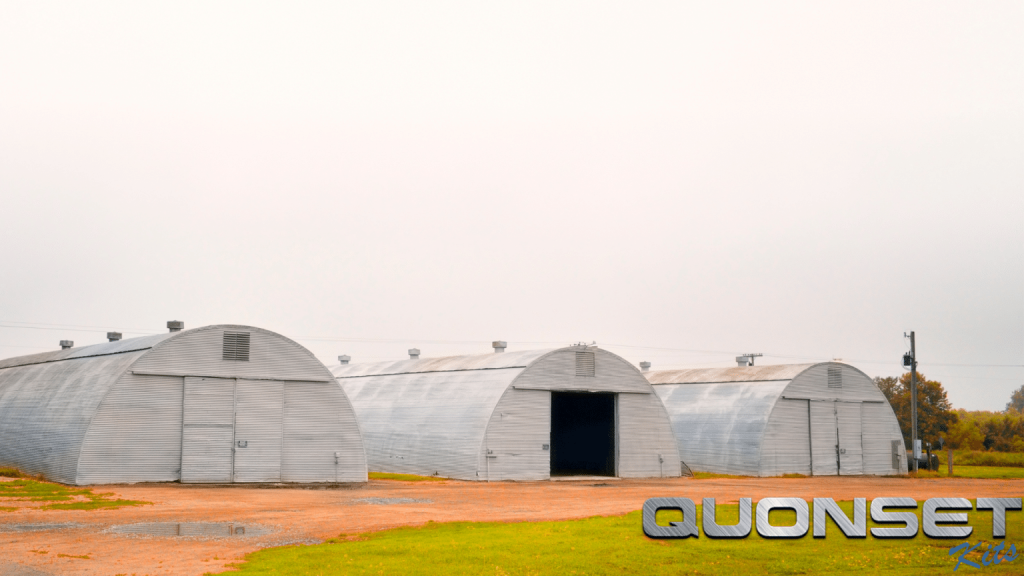
A quonset building is a prefabricated steel structure defined by its curved, semi-cylindrical shape. Unlike conventional buildings that rely on vertical walls, beams, and roof trusses, it uses a continuous arch design that distributes structural loads evenly across the entire surface, and that single engineering principle changes everything about how this building performs.
Most people who encounter a quonset building for the first time see a simple curved steel structure and assume there is not much to understand about it. That assumption could not be further from the truth. The design is simple on the outside because it is sophisticated on the inside; every curve, every panel, and every fastener works together to produce a structure that has outlasted most of the building types that surrounded it when it was first introduced. To understand why that is, you need to start at the beginning.
What a Quonset Building Actually Is
A quonset building is a prefabricated steel structure with a semi-cylindrical, arch-based form. The arch runs continuously from one end of the building to the other, forming both the walls and the roof in a single curved surface. This is fundamentally different from conventional construction, where walls and roof are separate structural elements joined together at the top.
Because the arch handles the structural load across its entire surface rather than through a network of internal beams and columns, the interior of a quonset building is completely open from wall to wall. There are no posts in the middle of the space, no load-bearing walls dividing sections, and no trusses hanging from the ceiling. The entire floor area is usable, which is a significant practical advantage for storage, workshops, warehouses, garages, and residential applications where open floor plans matter.
Modern quonset buildings are manufactured using high-grade steel panels that are pre-cut and pre-drilled at the factory, designed to fit together precisely on site. This makes them one of the easiest large structures to assemble, a fact that is directly tied to the history of how and why the design was created in the first place.
The History Behind the Design
The history of quonset buildings begins in 1941 with a specific military problem that needed an urgent solution. The United States Navy required a structure that could be rapidly deployed to any location in the world, assembled by soldiers with no construction training using only basic hand tools, and durable enough to function reliably in extreme environmental conditions. No existing building technology met all three of those requirements simultaneously.
Engineers drew on the concept of the British Nissen hut, a semicylindrical corrugated steel structure developed during World War I, and improved it significantly. They used better quality materials, refined the panel system for faster and more precise assembly, and engineered the design to be manufactured in large quantities at speed. The work was done at Quonset Point in Rhode Island, which is where the building got its name.
The result proved itself almost immediately. During World War II, more than 170,000 quonset buildings were manufactured and shipped to military operations across the globe. Soldiers used them as barracks, medical facilities, storage units, and command centers on multiple continents. Teams could assemble a building in a matter of hours or days using nothing more than hand tools, which was the critical capability the military had been looking for. Many of those original wartime structures are still standing today, a fact that says more about the quality of the design than any engineering specification could.
When the war ended, the government sold surplus quonset buildings to civilians at very low prices. Farmers were among the first buyers, recognizing immediately that the open interior and steel construction made the buildings ideal for equipment storage. Business owners converted them into workshops and warehouses. Families used them as homes during the acute post-war housing shortage. Over the years that followed, manufacturers refined the concept, improving materials, coatings, and engineering standards. Today’s quonset building is considerably more advanced than the 1941 original, but it is still based on the same core design principles that made the original work so well.
More than 170,000 quonset buildings were manufactured and shipped to military operations around the world during World War II. Soldiers assembled them in hours using only basic hand tools, and many of those original structures are still standing today.
Why the Structure Performs So Well
The structural superiority of a quonset building comes down to three things: the way the arch distributes load, the way the curved shape handles environmental forces, and the properties of the steel itself.
When wind strikes a flat vertical wall, it pushes directly against the surface and creates pressure that the structure must resist. When wind flows over a curved surface like a quonset arch, it follows the curve rather than pushing against it, which dramatically reduces the lateral force the building experiences. Snow behaves differently on a curved roof as well, rather than accumulating in deep, heavy drifts, it tends to slide off the curved surface naturally, reducing the structural load during winter storms. These are not minor performance differences. In regions with high winds or significant snowfall, they translate directly into a more reliable and longer-lasting structure.
The arch design is also one of the strongest structural forms in the history of architecture. It has been used in bridges, tunnels, aqueducts, and cathedrals for thousands of years precisely because it handles load so efficiently. In a quonset building, the arch allows the structure to carry heavy loads without requiring the internal supports that conventional buildings depend on. This is why the interior can remain completely open; the shape itself does the structural work.
The steel panels used in modern quonset buildings are manufactured from high-quality corrugated steel, which is stronger than flat panels of the same thickness because the ridges resist bending. The coating options, galvanized steel with a zinc layer or Galvalume, which combines aluminum and zinc, provide long-term protection against rust, corrosion, fire, and pests. Steel also maintains its structural properties over time in a way that wood cannot, since it does not warp, rot, or weaken as it ages. High-quality bolts and washers are used throughout to secure the structure, designed specifically to withstand environmental stress over decades of use.
The Four Main Design Models
As civilian use of quonset buildings grew over the decades following World War II, manufacturers developed different design variants to suit different applications. Today there are four main models, each preserving the core engineering principles while adapting the form for specific purposes.
The Q model is the original and most recognizable, the classic full arch that runs directly from ground level up and over to the other side. It is the most cost-effective option and is widely used for storage, agricultural buildings, and applications where the low cost and speed of construction matter more than interior headroom along the walls. The S model modifies this by introducing straight vertical side walls topped with a curved roof section. This gives the interior more usable wall height, which is important for workshops, commercial storage operations, or any application where vertical clearance near the walls is needed.
The P model takes the design further toward conventional building aesthetics by using a pitched roof with vertical walls, making the structure look considerably more like a traditional building from the outside. This variant is often chosen for residential and commercial projects where the owners want the cost and durability advantages of steel arch construction without the distinctly industrial appearance of the Q model. The X model is engineered specifically for maximum structural performance in demanding environments, combining a pitched roof with reinforced elements designed to handle heavy snow loads and high wind exposure in regions where those conditions are a regular concern.
Sizes, Flexibility and Customization
One of the practical advantages of quonset buildings is the range of sizes available and the degree to which individual projects can be customized. Width options typically range from ten feet up to over eighty feet, covering everything from a small personal storage shed to a large commercial warehouse. Length can be extended indefinitely depending on project requirements, since the arch design allows sections to be added without changing the structural system. Height is determined by the width of the arch and the curvature selected, which means wider buildings naturally have greater interior headroom.
Custom features including doors, windows, skylights, ventilation systems, insulation, and interior partitions can all be incorporated into the design. The flexibility that results from having a completely open interior means that the space can be configured almost any way the owner needs and reconfigured later as those needs change. This adaptability is one of the reasons quonset buildings have remained popular across such a wide range of uses over such a long period of time.
How Construction Actually Works
The construction process for a quonset building is significantly faster and more straightforward than conventional building methods, and this is by design rather than by accident. The first step is site preparation, clearing vegetation, leveling the ground, and compacting the soil to create a stable base. The most common foundation is a concrete slab, though stem wall foundations and pier foundations are also used depending on soil conditions and regional requirements.
Once the foundation is in place, the steel arches are assembled on the ground and then lifted into position. Corrugated panels are attached to the arches using bolts, working systematically from one end of the building to the other. End walls are framed, and doors and windows are installed at this stage. Interior finishing, insulation, electrical rough-in, and flooring come last. Compared to traditional construction methods involving separate framing, sheathing, roofing, and exterior finishing stages, the quonset process is considerably more efficient and can often be completed in days rather than weeks.
Understanding the Cost in 2026
The base kit for a quonset building, which includes the steel arches, pre-cut panels, bolts, hardware, and assembly instructions, typically ranges from ten to twenty dollars per square foot. This is the starting point, not the total project cost. A fully completed quonset building, accounting for foundation, insulation, doors, windows, and labor, generally ranges from twenty to fifty dollars per square foot depending on the size of the building, current steel prices, regional labor rates, and the level of customization involved. Despite these variables, quonset buildings remain one of the most affordable construction options available for the amount of usable space they provide.
Insulation deserves particular attention in any cost discussion because steel conducts temperature efficiently, meaning an uninsulated quonset building becomes very hot in summer and very cold in winter. Spray foam, fiberglass batts, and reflective insulation are the most common options, and the right choice depends on the climate and the intended use of the building. Proper insulation also prevents condensation from forming on the interior steel surface, which matters for long-term durability. Without insulation, the building works well for basic equipment storage. With it, the interior becomes comfortable for people to work and live in and suitable for storing sensitive materials.
What People Use Them For
The range of applications for quonset buildings is considerably wider than most people initially expect. Residential use has grown significantly in recent years, with homeowners and builders using the open arch interior to create modern, minimalist living spaces with floor plans that would be difficult or impossible to achieve in conventional wood-frame construction. Agricultural applications include barns, equipment storage, livestock shelters, and increasingly, indoor farming operations that take advantage of the controlled environment a sealed steel building provides. Commercial and industrial uses range from small workshops and retail spaces to large warehouses, manufacturing facilities, and aircraft hangars.
The versatility comes directly from the structural design. Because there are no interior columns and the floor plan is completely open, the owner has full freedom to configure the space for whatever purpose it needs to serve — and to reconfigure it later as circumstances change. A building that starts as an equipment storage facility can be converted into a workshop or a commercial space without requiring structural modifications, because the structure itself does not dictate the interior layout.
Maintenance, Longevity and What to Expect Over Time
A quonset building can last for decades with basic care, and the original wartime structures still standing eighty years after they were built are the most compelling evidence of that claim. Steel structures are resistant to the pests, rot, and fire damage that reduce the lifespan of wood-frame buildings, which means the ongoing maintenance requirements are genuinely lower over the long term. Regular inspections for any surface damage, keeping debris clear from drainage areas, tightening bolts after the first year or two of settling, and ensuring that water drains away from the foundation rather than pooling against it—these are the main maintenance tasks, and none of them are particularly demanding.
Before construction begins, it is important to check local regulations regarding zoning approval, building permits, and engineered plan requirements. These vary by jurisdiction and can affect both the timeline and the cost of a project. Addressing permit requirements early avoids delays that can be expensive if contractors are already scheduled to begin work.
How Quonset Buildings Compare to the Alternatives
Compared to wood-frame buildings, quonset buildings offer greater durability and lower long-term maintenance costs. Wood is susceptible to rot, pests, moisture damage, and fire in ways that steel simply is not, which means the total cost of ownership over twenty or thirty years tends to favor steel even when the initial construction cost of a wood building is lower. Steel-frame buildings are more expensive than quonset buildings because of the complexity of their framing systems, which require more material and more specialized labor. Pole barns offer a lower initial cost in some cases but have a shorter effective lifespan compared to steel arch construction.
The quonset building occupies a particular position in the market; it offers better long-term performance than wood and pole barn construction at a lower cost than conventional steel frame buildings. That combination of durability, affordability, and speed of construction is exactly why the design has endured for more than eighty years and continues to grow in popularity across residential, agricultural, commercial, and industrial applications.
A quonset building is one of the most efficient and reliable construction solutions available today. Its combination of proven engineering, low maintenance requirements, and genuine cost-effectiveness makes it suitable for nearly any application, and its eighty-year track record of performance in the real world is the most honest endorsement any building design could have.
