

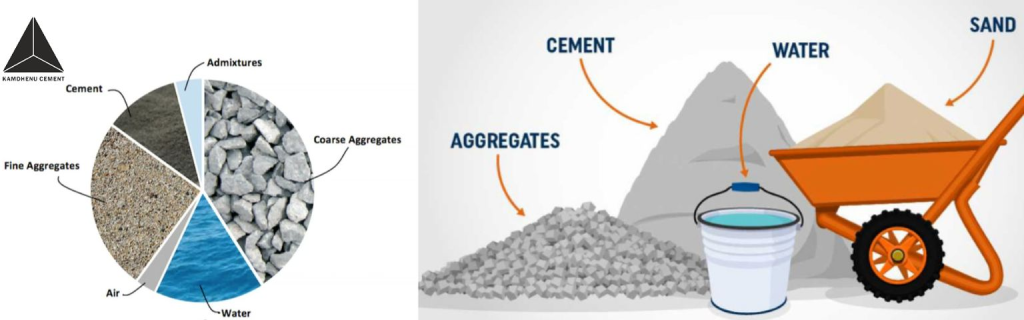
Concrete is one of the most widely used building materials in the world, and for good reason. It is strong, long-lasting, and capable of being shaped into almost anything. But not all concrete is the same. The mix you choose has a direct effect on how your finished structure performs, how long it lasts, and whether it is safe to use for the purpose you intend. Getting it right matters far more than most people realize when they first approach a building project.
What Actually Goes Into a Concrete Mix?
Concrete is made from four basic ingredients: cement, sand, aggregate (usually gravel or crushed stone), and water. The proportions of these ingredients determine the final strength, workability, and durability of the mix. A higher cement-to-water ratio generally produces stronger concrete. A lower one produces a weaker, more workable mix that is easier to pour but less capable of handling heavy loads.
These proportions are expressed in different ways. You might see a mix described as C20, C25, or C40. The number refers to the compressive strength of the concrete in newtons per square millimeter after 28 days of curing. A C20 mix reaches 20 N/mm², while a C40 mix reaches 40 N/mm². The higher the number, the stronger and more durable the final product.
You may also come across GEN mixes, such as GEN 1, GEN 2, or GEN 3. These are general-purpose grades designed for lighter domestic and civil engineering applications where the precise strength requirements are less critical. GEN mixes are commonly used for things like garden paths, fence posts, and non-structural fill.
Why Choosing the Wrong Mix Can Cause Serious Problems
Using a mix that is too weak for your application is one of the most common mistakes in DIY and smaller construction projects. A driveway laid with a GEN 1 mix, for example, will crack under the weight of regular vehicle traffic long before a properly specified C25 or C30 would. Similarly, a structural floor slab poured with a mix designed for garden paths may fail to meet building regulations and could present a genuine safety risk.
On the other side, over-specifying your concrete mix adds unnecessary cost. A C40 mix is entirely wasted on a path through your back garden. Understanding what your project actually needs is therefore both a safety issue and a financial one.
Knowing the best mix for concrete for your specific application comes down to understanding the loads it will carry, the environment it will sit in, and any relevant building regulations or structural engineer recommendations that apply to your project.
Common Applications and the Mixes That Suit Them
For most domestic jobs, the choice of mix can be narrowed down fairly quickly by thinking about the purpose of the concrete:
- Garden paths and patios typically suit GEN 3 or C20. These are relatively light-use surfaces that do not carry vehicle loads or heavy equipment.
- Driveways require something stronger, usually C25 or C30, to cope with regular car and van traffic without cracking or spalling over time.
- Foundations vary widely depending on the structure being supported. A simple garden wall might only need GEN 3, while the foundations for a house extension will almost certainly require a structural engineer’s specification, typically in the C25 to C35 range.
- Structural floors and suspended slabs are generally specified at C30 or above. These applications are subject to building control approval in the UK, so the mix must meet the relevant standards.
- Retaining walls and drainage structures often need enhanced durability mixes, sometimes with added plasticizers or sulfate-resistant cement, depending on ground conditions.
How Water Content Affects the Final Result
One of the most misunderstood aspects of concrete mixing is the role of water. Adding extra water to a mix makes it easier to pour and spread, which is why site workers are sometimes tempted to do it. But water weakens the final concrete by increasing the water-to-cement ratio, which creates more pores as it evaporates during curing. The result is a softer, more permeable slab that is more vulnerable to freeze-thaw damage, cracking, and surface degradation over time.
The right approach is to use the correct mix design in the first place and to use admixtures (chemical additives) if workability needs to be improved without increasing water content.
Ready-Mixed vs Site-Mixed Concrete
For larger projects or jobs where consistency is critical, ready-mixed concrete from a volumetric supplier is generally the better choice. Volumetric mixers in particular allow the exact quantity of concrete to be mixed on site to the precise specification required, which reduces waste and eliminates the inconsistency that can come from mixing bags manually. This approach is especially useful for projects where the volume needed is uncertain until the pour begins.
Understanding the best mix for concrete before ordering is still essential, however, as a volumetric supplier will ask you to specify the grade you need. If you are unsure, most reputable suppliers will offer guidance based on the nature of the project.
A Few Things Worth Checking Before You Order
Before placing any order for ready-mixed concrete, it is worth confirming the following:
- Whether your project requires building control approval and, if so, what mix specification is stated in the structural engineer’s drawings.
- The volume you need, including a small contingency to avoid running short during the pour.
- The access conditions on site, as this affects whether a standard truck, a pump, or a smaller volumetric mixer is the most practical option.
- The weather forecast, as concrete should not be poured in frost or extreme heat without appropriate precautions.
Getting these details right before the lorry arrives will save time, money, and a significant amount of stress on the day.
