

If you’ve spent any time in the wellness world lately, you’ve probably noticed a pattern: a new “must try” ingredient pops up, everyone raves about it, and suddenly your feed is full of powders, tinctures, and capsules promising the moon.
But when it comes to botanicals and mushrooms, especially wild-harvested ones, the most important question isn’t “What’s trending?” It’s “Where did it come from, and how was it made?” Because two products can look similar online and still be completely different in purity, potency, and integrity.
Here’s a practical guide to two ingredients people are increasingly curious about—pine pollen and medicinal mushroom tinctures—and how to choose them wisely.
Why “source” matters more than hype
With supplements, quality is rarely about one magic compound. It’s about the whole chain: the environment the ingredient grew in, how it was harvested, how it was processed and stored, and whether it was tested for contaminants.
This matters even more with wild harvested ingredients, because nature is powerful—but it’s not sterile. Clean sourcing and responsible testing are what turn “wild” into “worth it.”
What “wild harvested” really means (and what to watch for)
At its best, wild harvested means an ingredient is gathered from its natural habitat using methods that protect the ecosystem and future growth. That can be a beautiful thing—especially when it’s done with restraint and respect.
But “wild harvested” can also be used as a vague marketing label. A few quick red flags: no clear harvesting region (“from pristine forests” doesn’t count), no mention of testing, no explanation of sustainability practices, and lots of dramatic claims with very little transparency.
A trustworthy brand should be able to tell you where it harvests, how it harvests, and how it verifies the ingredient is clean and correctly identified.
Pine pollen: what it is (and why people are interested for healthy aging—men and women)
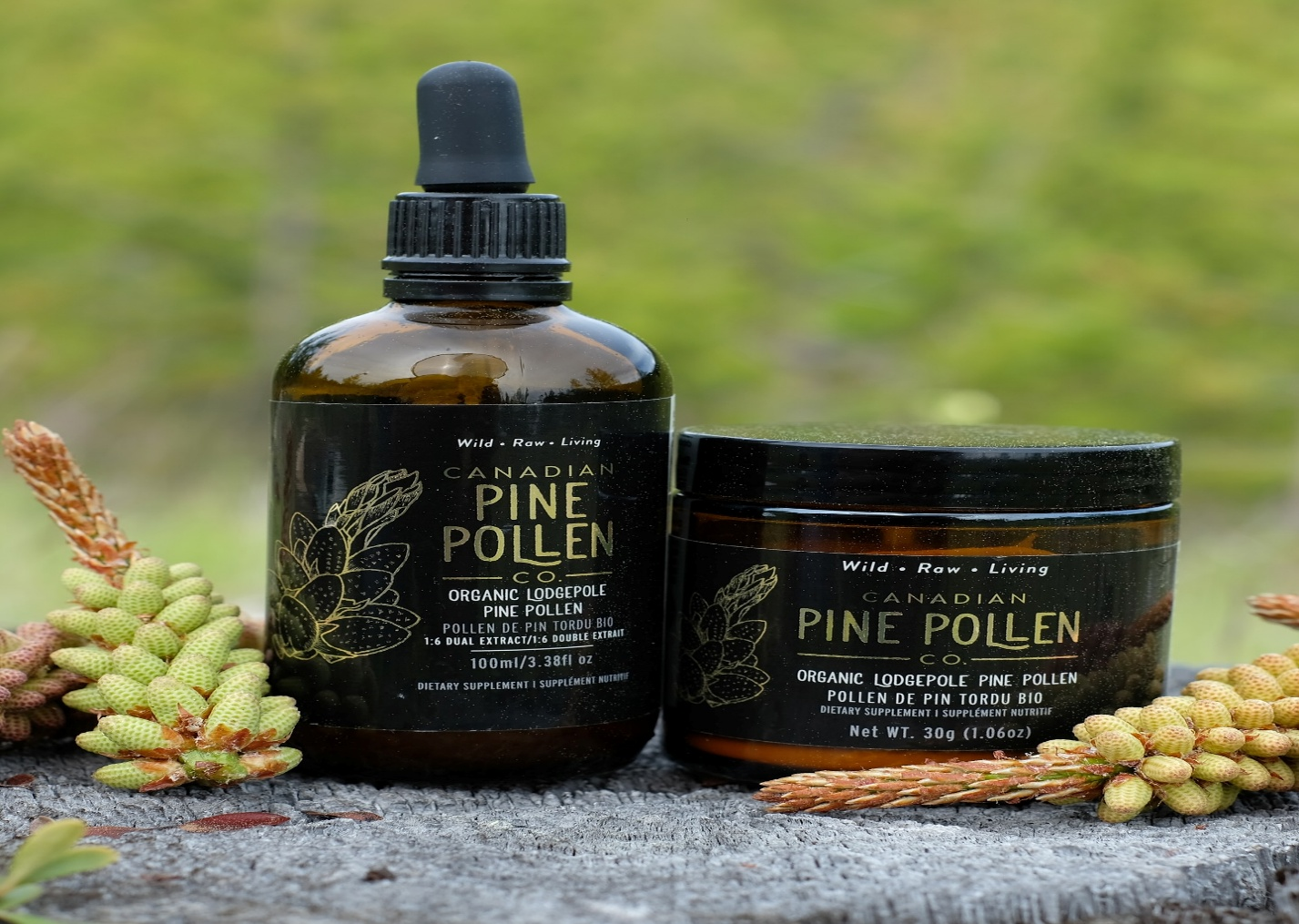
Pine pollen is the fine, yellow pollen released by male pine cones during a short seasonal window each year. It’s collected, dried (or extracted), and used as a traditional wellness ingredient in different cultures. In modern wellness, pine pollen is often discussed in the context of vitality, resilience, and healthy aging—not only for men, but increasingly for women navigating midlife changes as well.
Pine pollen is naturally complex and may contain antioxidants and phytonutrients (plant protective compounds), polysaccharides (complex carbohydrates found across many plants and fungi), amino acids and micronutrients (amounts vary), and plant sterols and “phytoandrogen” related compounds (the category that drives most of the buzz).
What are “phytoandrogens”?
“Phytoandrogens” is a term used for plant derived compounds that are structurally similar to androgens (like testosterone) or that may interact with hormone related pathways. Pine pollen gets attention here because analyses of certain pine species have identified plant sterols and hormone like constituents—though the exact profile can vary with species, geography, harvest timing, and processing.
This is why pine pollen is often marketed for “drive,” “vitality,” or “hormone support.” A grounded way to think about it is: some people explore it as part of a broader routine that includes sleep, strength training, stress management, and nutrient dense food—rather than expecting a single supplement to do all the work.
Why women in perimenopause/menopause are curious
During perimenopause and menopause, many women notice shifts in sleep and recovery, mood and stress tolerance, energy and body composition, and libido (which is influenced by hormones and stress, sleep, and relationship context). Because of that, women often build a “foundation first” approach—then add targeted supports.
Pine pollen is sometimes explored as part of that healthy aging and vitality conversation, but it’s still wise to be cautious if someone has hormone sensitive conditions or is using hormone therapy. When in doubt, check in with a clinician.
Powder vs tincture (simple version)
Powder is the most whole food style form, but can vary more batch to batch. Tinctures/extracts can be easier to dose consistently, and the extraction method may concentrate certain compounds.
Medicinal mushrooms: what “dual extraction” means
Mushrooms like Reishi and Chaga have a long history of traditional use—and they’ve become staples in modern wellness routines. But the form matters.
You’ll often see “dual extracted” on tinctures. In plain language, it usually means the maker used both water and alcohol extraction to pull out a broader range of compounds than one method alone. It’s not a guarantee of quality, but it’s often a sign the brand is thinking about how the product is made, not just what’s on the label.
The quality checklist (the part that saves you money)
If you’re shopping for pine pollen or mushroom tinctures, use this quick checklist:
- Clear identity: You should know what you’re buying—specific mushroom species, and clear pine pollen sourcing.
- Transparent sourcing: Look for region/country and a real explanation of harvesting practices.
- Testing matters: At minimum, heavy metals and microbial testing. Pesticide testing is also important depending on sourcing.
- Extraction details you can actually understand: Serving size, extraction method (especially for mushrooms), and no “mystery blends.”
- No miracle language: The best brands educate. They don’t pressure.
If you want an example of what transparent sourcing and quality standards can look like, here’s a helpful educational overview from a Canadian wild harvested supplement company: https://canadianpinepollen.com/
Sustainability: wellness that doesn’t cost the earth
A supplement routine shouldn’t come at the expense of the ecosystem. Ethical harvesting can include rotating harvest locations, taking only small amounts, and supporting regeneration. When a company can clearly explain how it protects the land it sources from, that’s usually a good sign you’re buying from people who plan to be around for the long term.
How to start simply (without overcomplicating it)
If you’re new to tinctures, keep it easy: start with one product at a time, use it consistently for a few weeks, and pair it with the basics—sleep, movement, protein, hydration, and stress support.
And if you’re dealing with persistent fatigue, mood changes, hormonal concerns, or symptoms that worry you, it’s always reasonable to speak with a qualified health professional. Supplements can be supportive—but they’re not a substitute for personalized care.
