

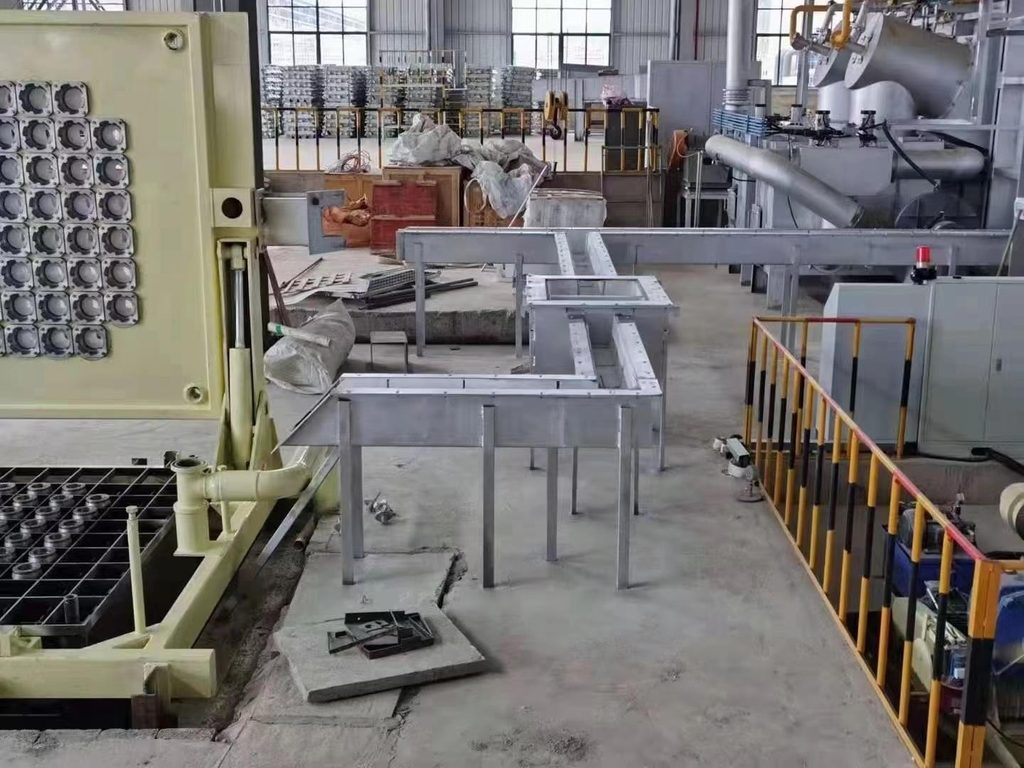
The shift starts at six. Before a single kilo of metal moves, the casting crew walks the line — checking trough temperatures, glancing at water flows, running a hand along mold tables for yesterday’s leftover skull. The crew that runs a hot top billet casting machine knows the unglamorous truth of this business: casting quality is decided long before the metal starts flowing. A hot top billet casting machine rewards routine and punishes shortcuts, and the tips below are the routine that keeps it happy. The best crews also keep a written cast log — temperatures, speeds, ring changes — because the machine’s memory is only as good as the crew’s notes.
Before the First Drop: Pre-Cast Checks
Every hot top billet casting machine deserves the same disciplined start-up, and every one has its own checklist posted near the pulpit. The non-negotiables: launder and hot-top preheat confirmed at temperature, mold tables clean and dry, stools and bottom blocks seated correctly, cooling water flowing on every mold with alarms tested, and thermocouples reading sensibly. Skipping preheat on a hot top billet casting machine is the classic false economy — a cold trough chills the first metal through it, and the cast starts with laps baked into the butt before the shift has properly begun. Stage the shift’s spares — rings, gaskets, thermocouples — at the pulpit before the furnace taps, because hunting for parts with metal waiting is how preheat discipline dies.
Caring for the Mold and Graphite Ring
The graphite ring is the hardest-working part of a hot top billet casting machine. It sits exactly where hot metal meets the mold, metering lubrication and shaping the thermal profile of the forming shell — and it wears doing it. Inspect it before every cast for chips, cracks, and erosion grooves; a damaged ring imprints its flaws onto every billet that follows. Treat the ring in your hot top billet casting machine as a consumable with a finite life, not a part that lasts forever: track casts per ring, keep spares on the shelf, and change it on schedule rather than after it fails mid-cast. The mold sleeve itself deserves the same respect — clean it, check it for scoring, and never let dross bake onto the working surface. Store spare rings somewhere clean and dry — graphite chips easily, and a ring dropped on concrete is a ring in the bin.
Cooling Water: The System You Can’t Ignore
Nothing matters more to a hot top billet casting machine than reliable cooling water. The shell that holds the liquid core exists only because water pulls heat through the mold wall at the right rate — too little flow and the shell thins toward a breakout, too much and you freeze defects into the surface. Most builders of the hot top billet casting machine specify flow per mold, inlet temperature limits, and strainer maintenance intervals; follow them literally. Clean the strainers on schedule, watch for the slow creep of flow loss that signals a partially blocked circuit, and drill the crew on the alarm response until it is reflex: water alarm means stop the cast, no debate.
Safety Around Molten Metal
Safety discipline around a hot top billet casting machine starts with one physical fact: water and molten aluminum together can explode. Everything damp — tools, scrap, mold tables, even a sweaty glove left on a stool — is a hazard until proven dry. Full PPE is mandatory on the cast floor: aluminized jackets, face shields, spats, no exposed skin. Keep spill containment clear, know where the emergency stops are before you need them, and enforce lockout/tagout on any maintenance near moving platens. The crews with the best safety records are not lucky; they are the ones who treat every cast like the first.
Troubleshooting the Usual Suspects
Even a well-kept hot top billet casting machine has bad days. The faults repeat often enough to memorize:
- Runout or bleed-out — liquid escaping the shell: slow the casting speed and verify water flow immediately.
- Hang-up — the billet sticks in the mold: check lubrication feed and graphite ring condition.
- Surface tears or laps — the meniscus ran too cold: confirm hot-top temperature and preheat.
- Butt curl or deformation — uneven cooling across the mold: balance water circuits and check stool seating.
- Off-chemistry billets — almost never the machine’s fault: look upstream at furnace practice and grain refiner addition.
At the end of the shift, a hot top billet casting machine that was checked, watched, and cleaned will cast tomorrow as well as it cast today. That is the real maintenance secret of the hot top billet casting machine — there is no trick to it, only the daily discipline of a crew that refuses to let small problems become big ones.
