

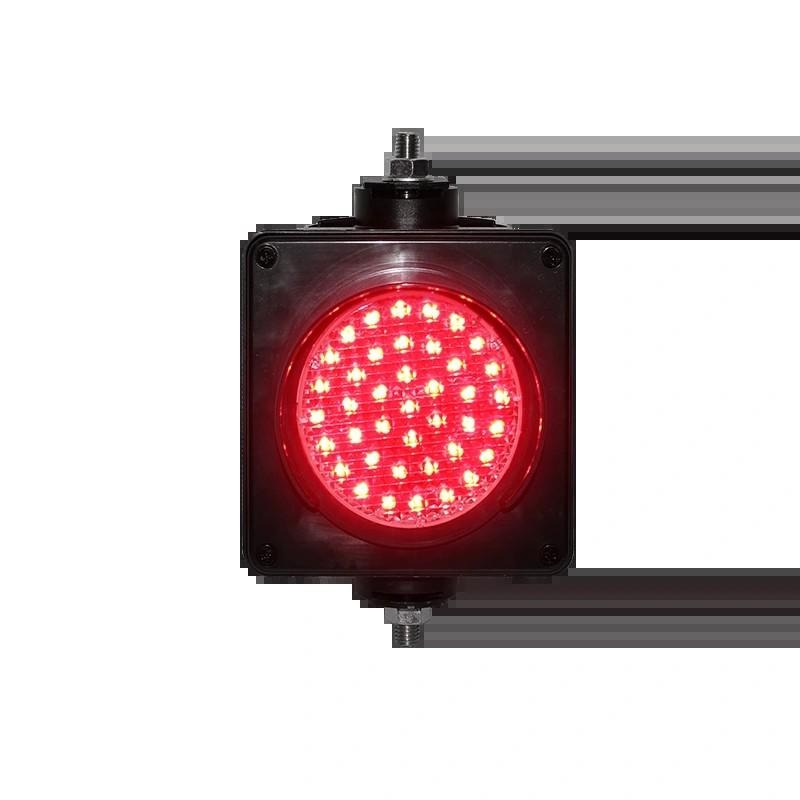
Sometimes one light says everything. A single red lamp above a doorway, a lone amber beacon at a crossing: no green needed, because the message is not stop-and-go but warning. The 100MM traffic light one aspect is built for exactly these moments, a compact single-lamp signal that flags one condition clearly. Understanding when one aspect is enough, and why it often outperforms bigger signals, starts with the psychology of warning.
The Logic of a Single Aspect
Two-aspect signals manage alternating states. One-aspect signals announce a single condition: danger, stop, attention required. A red lamp at a fire station exit means emergency vehicles emerging; an amber lamp at a pedestrian crossing means cross with care. There is no green because there is no all-clear state to communicate; the default condition is normal, and the lamp exists only for the exception. That simplicity is a feature. Drivers process a single illuminated warning faster than they parse a multi-lamp display, which is precisely what you want when reaction time matters. A 100MM traffic light one aspect respects the driver’s cognitive budget instead of spending it.
Where Single-Aspect Units Dominate
Level crossings and industrial gates use red single-aspect lamps to signal stop-only conditions. Warehouses mount amber units at blind corners where forklifts emerge. Parking structures place them at height-restriction bars and exit alerts. Toll booths, car parks, and weighbridges use them as status flags: lamp on, lane closed or attendant needed. In every case, the 100MM traffic light one aspect answers a yes-or-no question, is the hazard active, with zero ambiguity about what the dark state means, because the dark state simply means normal operations.
Why the 100MM Format Fits
At 100 millimeters the lens is conspicuous at the 15 to 40 meter distances typical of private sites, without the visual bulk of full-size signals. The compact housing mounts on walls, posts, door frames, and machinery with a single bracket, and LED lamps draw only a few watts, so a small power supply or battery backup covers outages. For facilities adding their first signaled warning, the mini format keeps the project to an afternoon’s work instead of a capital project. The 100MM traffic light one aspect is the rare safety upgrade that needs no committee approval.
Choosing the Right Color
Color carries the meaning, so choose deliberately. Red commands stop and suits emergency and prohibition uses. Amber warns of caution and fits crossings, curves, and height alerts. Some installations need both meanings at different times, which is when you step up to two aspects, but when the message is truly singular, a dedicated 100MM traffic light one aspect in the right color communicates faster than any multi-lamp unit set to show one lamp.
Flashing vs. Steady: Which Gets Attention?
A steady-burning lamp states a condition; a flashing lamp demands attention. Research on warning conspicuity consistently favors flashing for alerting drivers to unexpected hazards, roughly one to two flashes per second hits the sweet spot between noticeable and annoying. Many 100MM traffic light one aspect units accept an external flasher module, letting you choose per installation: steady for status indications like lane closed, flashing for active warnings like vehicles emerging. Match the mode to the urgency, and resist the temptation to flash everything; when every lamp flashes, none of them stand out.
Making It Last Outdoors
A warning light that fails silently is worse than none, because people learn to ignore the dark housing. Specify sealed IP65 or better construction, UV-stable lens materials that do not yellow, and LED lamps with rated lives in the tens of thousands of hours. A sun visor preserves daytime visibility, and a simple photocell can dim the lamp at night to avoid blinding nearby drivers. Maintain it like the safety device it is: a quick visual check on the same schedule as your fire extinguishers keeps the 100MM traffic light one aspect doing its job year after year.
The Cost of Ambiguity: Why Warnings Fail
Most warning failures are not electrical but cognitive. A sign that drivers do not notice, do not understand, or do not believe might as well not exist. Researchers who study warning compliance point to three requirements: conspicuity, comprehension, and credibility. The 100MM traffic light one aspect scores well on all three precisely because it is simple. It is conspicuous: a bright single lamp against a dark housing grabs peripheral vision. It is comprehensible: one lamp means one thing, with no display to misread. And it is credible, provided it only illuminates for genuine conditions; a warning lamp that burns constantly for no apparent reason trains everyone to ignore it, destroying the credibility that makes the next genuine warning work. This is the strongest argument for single-aspect discipline: reserve the lamp for real conditions, keep false activations near zero, and every illumination carries full weight.
Integrating With Alarm and Safety Systems
The single-aspect lamp rarely works alone. In industrial settings it typically serves as the visible element of a larger safety chain: a gas detector trips a relay, the relay lights the lamp and sounds the alarm together. At fire station exits, the station alert system drives the 100MM traffic light one aspect automatically when an appliance is dispatched, giving road traffic advance notice before the engine reaches the apron. The integration pattern is always the same: a dry-contact relay output from the safety system switches the lamp circuit. When planning, coordinate with whoever owns the alarm panel early, because the lamp is only as reliable as the signal feeding it, and a beautifully installed lamp wired to a flaky sensor teaches everyone the wrong lesson about warnings.
Specified thoughtfully and maintained simply, the 100MM traffic light one aspect remains the most cost-effective warning device for single-condition hazards.
