

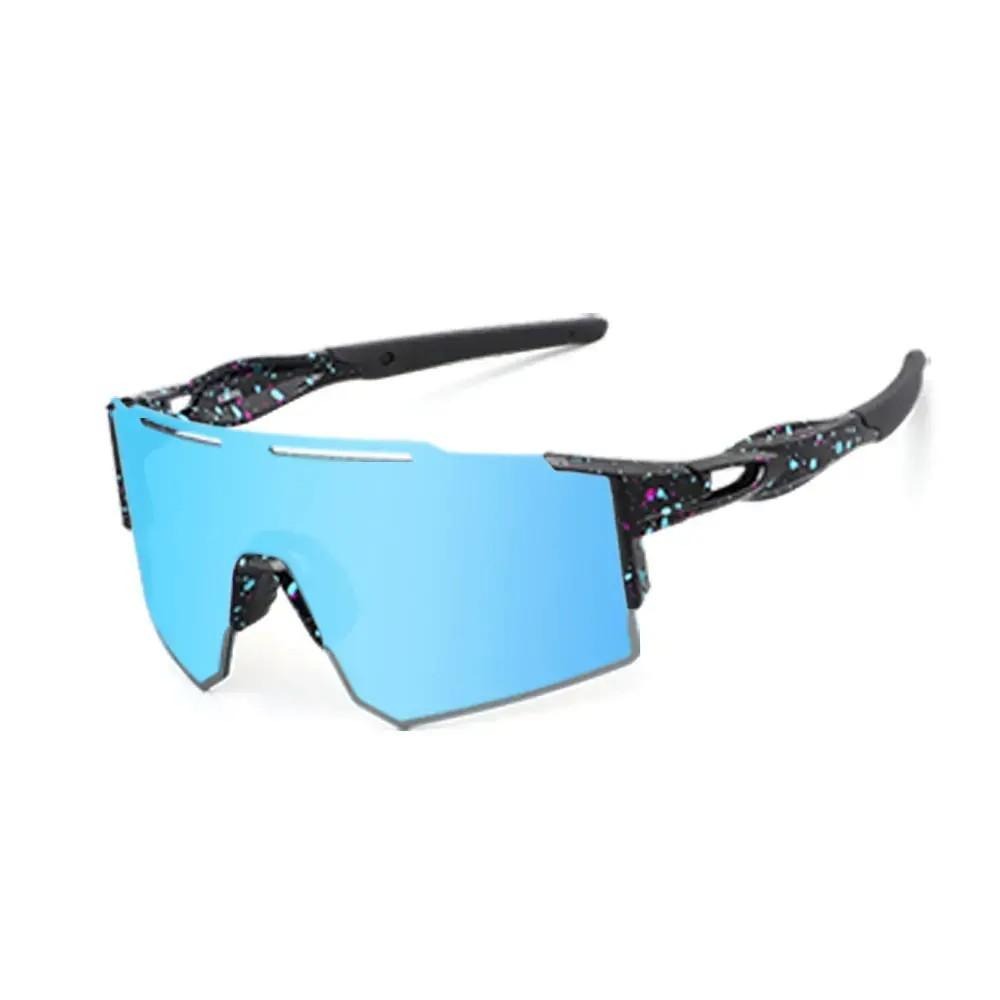
Ordering wholesale sports sunglasses for the first time can feel like stepping into a maze of jargon: polarized versus UV400, TR90 versus polycarbonate, MOQs, custom packaging, lead times. Suppliers assume you know what these mean, and guessing wrong costs real money. This guide breaks down the decisions that actually matter, so your first order lands well and your second order is bigger.
Lens Options: What You Are Really Paying For
Every lens sold today should offer UV400 protection — that is the baseline, not a feature. Beyond that, the main fork in the road is polarized versus non-polarized. Polarized lenses cut reflected glare off water, roads, and snow, which is why anglers and drivers pay a premium for them. They cost more at wholesale, but they also command higher retail prices and lower return rates, because customers can feel the difference immediately. For wholesale sports sunglasses aimed at athletes, polarized is usually worth the upgrade. Mirrored coatings are mostly cosmetic but drive impulse sales, so a mixed assortment of classic and mirrored styles covers both bases.
Lens material matters too. Polycarbonate is the standard for sport eyewear: light, impact-resistant, and cheap to produce. When evaluating wholesale sports sunglasses, confirm the lens material in writing — some ultra-cheap pairs use acrylic, which scratches faster and offers less impact protection.
Frame Materials Compared
TR90 is the workhorse of modern sport frames: a flexible, lightweight thermoplastic that survives bending and drops. Polycarbonate frames are rigid and inexpensive, fine for fashion-oriented styles. For premium lines, look at acetate or metal hybrids, though these push wholesale costs up. Hinges deserve a close look — spring hinges cost slightly more but dramatically reduce breakage returns, which is the hidden profit killer in eyewear retail. Nose pads and temple tips should be soft, adjustable, and hypoallergenic; customers notice comfort within seconds of trying a pair on.
Understanding MOQs
Minimum order quantity is where beginners stumble. A typical MOQ for wholesale sports sunglasses is a few hundred pairs per style-color combination, though some suppliers allow mixed-style cartons for first orders. Lower MOQs usually mean slightly higher per-unit prices — that is a fair trade while you are testing. Be wary of suppliers whose MOQs force you to over-commit on unproven styles; a good partner lets you start small and scale. Always clarify whether the MOQ applies per style, per color, or per order, because the difference changes your real commitment severalfold.
Customization: Logos, Colors and Packaging
Private labeling is where wholesale becomes brand-building. Most factories offer temple logo printing, custom lens etching, and branded packaging from simple polybags up to full retail boxes with your artwork. Custom colors on frames are usually possible at modest MOQs. Each customization adds lead time — typically one to two extra weeks — so plan seasonal orders accordingly. Start with logo printing on a proven bestseller before committing to fully custom designs; it gives you branded product with minimal risk.
Red Flags When Vetting Suppliers
A few warning signs should stop you cold. Suppliers who cannot provide UV test reports for their lenses are not worth the risk. Vague answers about lead times usually mean the factory is overbooked or brokering your order to someone else. Prices dramatically below market rate almost always hide a compromise — thinner lenses, weaker hinges, or skipped coatings. And if a supplier pressures you to skip sampling and go straight to bulk, walk away. Legitimate wholesale sports sunglasses suppliers expect you to test samples; it is the ones with something to hide who rush you.
Packaging and Presentation
The unboxing moment matters more than buyers expect. Basic polybag packaging keeps wholesale sports sunglasses costs rock-bottom for high-volume, low-price retail. But stepping up to a printed box with a microfiber cloth can double the perceived value — and the retail price — for a fraction of that in cost. Match packaging to your channel: convenience stores want simple and cheap, gift shops want presentation, online sellers want photogenic boxes that reduce returns.
Ask suppliers for packaging options and pricing tiers before finalizing your order. Many wholesale sports sunglasses factories offer three or four packaging levels, and mixing them — premium boxes for hero styles, polybags for volume drivers — lets you segment your assortment without complicating the supply chain.
Buy smart on the first order: request samples of your top five candidates, wear-test them yourself for a week, check the hinges and coatings honestly, then commit. The buyers who do this end up with assortments that sell themselves — and suppliers they can build a business on.
Finally, plan your reorder point before the first sale. When a style hits 70% sold through, reorder — lead times on wholesale sports sunglasses run four to eight weeks by sea, and stockouts on winners cost more than overstock on experiments. Keep a small buffer of your top three styles and you will never watch customers walk away empty-handed.
