

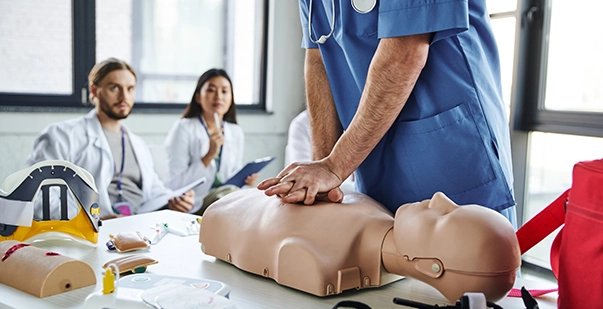
In the medical field, responding to emergencies is a crucial part of the job. For healthcare professionals, mastering Cardiopulmonary Resuscitation (CPR) is essential for saving lives during cardiac arrest and other critical incidents. Whether you are an experienced nurse, physician, paramedic, or medical assistant, understanding key CPR skills ensures you can respond confidently when time is of the essence. Here, we break down the most vital skills covered in CPR training for medical professionals.
Why CPR Training Is Essential for Medical Professionals
Medical professionals are often the first responders during a life-threatening emergency. CPR training for medical professionals goes beyond the basics, equipping individuals with advanced knowledge to manage complex scenarios. Mastery of CPR ensures medical staff can sustain oxygen flow to vital organs until advanced care can be administered.
The Importance of Certification
Obtaining CPR certification from reputable organizations such as the American Heart Association (AHA) or the Red Cross is vital. Certification programs teach medical professionals how to properly assess emergencies, perform chest compressions, and use advanced life support equipment.
Key CPR Skills for Medical Professionals
Medical professionals require in-depth training that encompasses both fundamental CPR techniques and advanced resuscitation methods. Here are the essential CPR skills every healthcare provider should master:
1. Effective Chest Compressions
Proper chest compressions are crucial in CPR. Medical professionals must master correct hand positioning, compression depth, and compression rate to maximize blood flow during cardiac arrest.
- Hand Positioning: Place the heel of your hand in the center of the victim’s chest, on the lower half of the sternum. Interlock fingers and maintain straight arms.
- Compression Depth: Adults require compressions at least 2 inches deep, while infants require compressions about 1.5 inches deep.
- Compression Rate: Maintain a rate of 100-120 compressions per minute to ensure effective circulation.
2. Airway Management Techniques
Medical professionals must know how to ensure the airway remains open during CPR. This includes using advanced tools like bag-mask devices, laryngeal mask airways, or endotracheal tubes to deliver oxygen effectively.
- Head Tilt-Chin Lift: This maneuver opens the airway by tilting the head back and lifting the chin.
- Jaw Thrust: For spinal injury cases, a jaw thrust is the preferred method for opening the airway without moving the neck.
3. Rescue Breathing Mastery
Rescue breathing is a critical component of CPR, particularly for patients experiencing respiratory arrest. Medical professionals must learn to deliver effective breaths using a bag-valve-mask (BVM) or pocket mask.
- Breath Rate: Deliver one breath every 6 seconds for adults (about 10 breaths per minute).
- Ensuring Airflow: Watch for chest rise to confirm proper breath delivery.
4. Defibrillator Use (AED Training)
Automated External Defibrillators (AEDs) are essential tools in CPR. For medical professionals, understanding the nuances of defibrillator use is vital.
- Pad Placement: Follow the AED’s instructions for proper electrode placement on the chest.
- Shock Delivery: Ensure no one is touching the patient before delivering the shock.
- Rhythm Monitoring: Advanced professionals may use AEDs that feature ECG analysis for detecting arrhythmias.
5. Team-Based CPR Techniques
In hospital settings, CPR is often a team-based effort. Medical professionals must understand their role within the team and work seamlessly with others to improve patient outcomes.
- Clear Communication: Use concise language and follow established protocols.
- Role Assignments: Designate roles such as chest compressions, airway management, defibrillator operation, and medication administration.
6. Medication Administration During CPR
In advanced CPR situations, medical professionals must be familiar with administering medications to stabilize the patient.
- Epinephrine: Often the first drug administered during cardiac arrest to increase heart rate and improve blood flow.
- Amiodarone and Lidocaine: Used for treating shock-resistant arrhythmias.
- Atropine: Administered in cases of bradycardia to improve heart rate.
7. Post-Resuscitation Care
Survival doesn’t end when the heart restarts. Post-resuscitation care is vital to stabilizing the patient and preventing complications.
- Airway Support: Ensure the patient’s airway remains open, especially if intubation was necessary.
- Oxygen Management: Maintain appropriate oxygen saturation to prevent hypoxia.
- Vital Sign Monitoring: Regularly assess heart rate, blood pressure, and breathing patterns.
8. Specialized CPR for Pediatric and Neonatal Care
CPR for infants and children differs significantly from adult techniques. Medical professionals in pediatric departments must learn specialized techniques that match the size and physiology of younger patients.
- Two-Thumb Encircling Technique: Preferred for infants during two-rescuer CPR.
- Appropriate Compression Depth: Pediatric compressions should be about 1/3 the depth of the chest.
- Rescue Breathing Frequency: Deliver one breath every 2-3 seconds for infants and children.
9. CPR in Special Circumstances
Medical professionals may encounter unique scenarios requiring adapted CPR techniques, including:
- Drowning Victims: Prioritize rescue breathing before chest compressions.
- Pregnant Patients: Position the mother on her left side to reduce pressure on major blood vessels.
- Trauma Patients: Adapt airway management to account for potential spinal injuries.
10. Emotional Preparedness and Scene Control
Beyond technical skills, CPR training for medical professionals also emphasizes emotional control, leadership, and maintaining calm in high-stress situations.
- Scene Assessment: Ensure the environment is safe for both the responder and the patient.
- Emotional Readiness: Managing stress allows professionals to think clearly and act efficiently.
Maintaining CPR Skills
Ongoing education is crucial for mastering CPR skills. Regular re-certification and advanced courses in Basic Life Support (BLS) and Advanced Cardiovascular Life Support (ACLS) ensure medical professionals stay up to date on the latest protocols and techniques.
Conclusion
Mastering CPR training for medical professionals is critical in ensuring effective emergency response. From chest compressions to advanced defibrillator use and medication administration, these essential skills can save lives. By staying certified, practicing regularly, and embracing new techniques, healthcare professionals can confidently deliver life-saving care when every second counts.
