

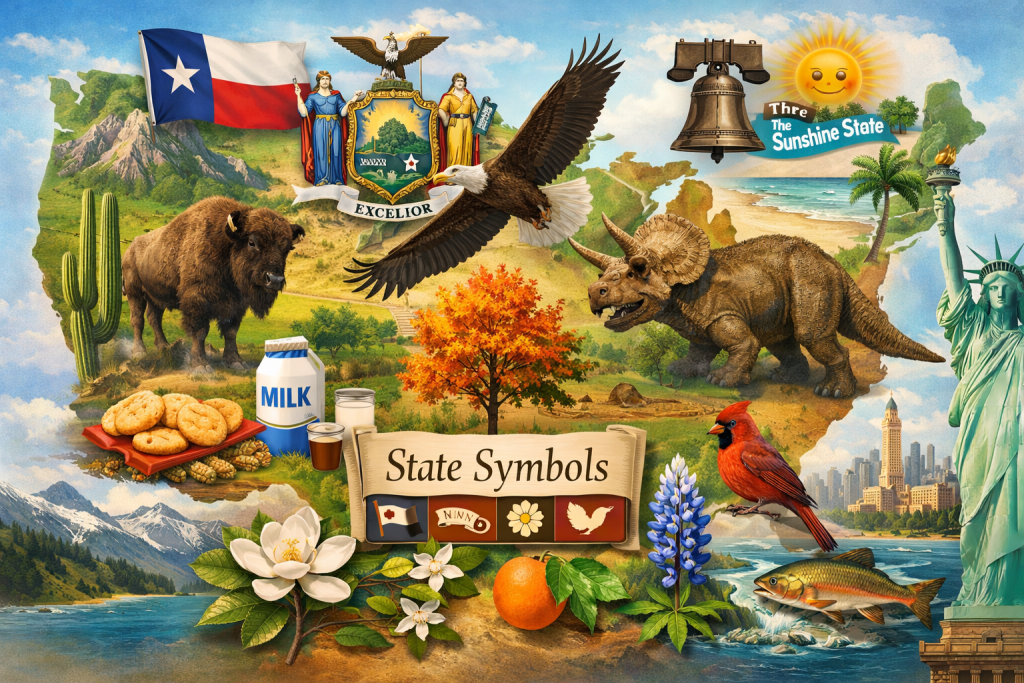
The United States is a country rich in diversity, culture, and history, and one of the most fascinating ways this diversity is expressed is through its state symbols. From colorful state flags to meaningful state mottos and unique natural emblems, each state has carefully selected representations that reflect its identity. Understanding U.S. state symbol categories helps uncover stories about geography, heritage, and local pride that often go unnoticed.
This guide takes a deeper look at how different states define themselves through official designations and what these choices reveal about the nation as a whole.
Understanding U.S. State Symbol Categories
Before diving into a state-by-state perspective, it is important to understand what U.S. state symbol categories actually include. Each state has the authority to designate official state symbols, which can range from natural elements to cultural icons.
Common categories include:
- State flags
- State mottos
- State nicknames
- State flowers
- State birds
- State trees
- State emblems
These symbols are not randomly chosen. They are often selected through legislative processes and reflect historical events, natural resources, or cultural values. Learning about U.S. state symbol categories offers insight into how states preserve their identity while contributing to the national narrative.
Regional Patterns in State Symbols
When analyzing US state symbols across all 50 states, certain regional patterns begin to emerge. Geography plays a major role in determining what becomes an official symbol.
For example, western states often highlight natural landscapes and wildlife, while northeastern states may emphasize historical heritage.
Some clear patterns include:
- Southern states frequently choose state flowers that thrive in warm climates, such as magnolias.
- Midwestern states often select agricultural symbols like corn or specific trees.
- Coastal states may focus on marine life or nautical imagery in their state emblems.
These patterns show how closely state symbols are tied to local environments and traditions.
State Flags and Their Hidden Meanings
State flags are among the most visible official state symbols, yet many people overlook their deeper meanings. Each flag tells a story through colors, shapes, and imagery.
For instance:
- California’s flag features a grizzly bear, symbolizing strength and independence.
- Texas uses a single star to represent unity and pride, earning it the nickname “The Lone Star State.”
- Maryland’s flag incorporates family crests, reflecting colonial history.
State flags often combine historical references with symbolic elements, making them one of the most layered U.S. state facts worth exploring.
The Role of State Mottos and Nicknames
State mottos and state nicknames offer a linguistic glimpse into a state’s identity. While mottos are often rooted in Latin or historical phrases, nicknames tend to be more informal and widely recognized.
Examples include:
- New York’s motto “Excelsior” means “ever upward,” reflecting ambition.
- Florida’s nickname “The Sunshine State” highlights its climate appeal.
- Pennsylvania’s “The Keystone State” points to its central role in American history.
These designations help shape how states are perceived both internally and externally, making them essential components of U.S. state symbol categories.
Nature as a Central Theme
Nature plays a dominant role in us state symbols, especially through state flowers, state birds, and state trees. These elements not only beautify the symbolic landscape but also promote environmental awareness.
Some notable examples:
- The California poppy as a state flower represents resilience and natural beauty.
- The bald eagle, although a national symbol, also appears in several state contexts.
- Oak trees are commonly selected as state trees due to their strength and longevity.
These choices reflect a strong connection between states and their natural surroundings, reinforcing the importance of conservation.
Unique and Unusual State Symbols
While many symbols follow predictable patterns, some states stand out with truly unique selections. These unusual state emblems add personality and curiosity to the overall landscape.
A few interesting picks include:
- New Mexico’s state cookie, the biscochito
- Wisconsin’s state beverage, milk
- South Dakota’s state fossil, the Triceratops
These selections highlight how states celebrate not just nature and history, but also culture and everyday life. Exploring these quirks makes learning about official state symbols more engaging.
A Closer Look at Selected States
To better understand how U.S. state symbol categories vary, let’s examine a few states more closely.
California
California’s symbols reflect its diverse geography and cultural influence:
- State flower: California poppy
- State bird: California quail
- State tree: Coast redwood
- State motto: “Eureka,” meaning “I have found it”
These symbols emphasize discovery, natural beauty, and innovation.
Texas
Texas showcases strong identity through bold symbolism:
- State flag: Lone Star design
- State nickname: The Lone Star State
- State flower: Bluebonnet
- State bird: Northern mockingbird
Texas symbols reflect independence, pride, and cultural heritage.
New York
New York blends historical significance with modern identity:
- State motto: Excelsior
- State flower: Rose
- State bird: Eastern bluebird
- State tree: Sugar maple
These symbols highlight growth, resilience, and natural elegance.
Florida
Florida’s symbols focus heavily on environment and climate:
- State nickname: The Sunshine State
- State flower: Orange blossom
- State bird: Northern mockingbird
- State tree: Sabal palm
These choices reflect the state’s tropical appeal and agricultural roots.
Educational Value of State Symbols
Studying U.S. state symbol categories is not just interesting; it is also educational. These symbols provide an accessible way to learn about geography, history, and culture.
Students and educators often use state symbols to:
- Understand regional differences
- Explore biodiversity
- Learn historical contexts
- Build civic awareness
By connecting symbols to real-world elements, learning becomes more interactive and memorable.
How States Choose Their Symbols
The process of selecting official state symbols is more structured than many people realize. Typically, proposals are introduced by citizens, schools, or lawmakers and then reviewed by state legislatures.
The process usually involves:
- Public suggestions or campaigns
- Legislative approval
- Official designation through law
This democratic approach allows communities to participate in shaping their state identity, making the symbols more meaningful.
Why State Symbols Still Matter Today
In a fast-paced digital world, it might seem like state symbols are just historical relics. However, they continue to play a vital role in shaping identity and fostering pride.
State symbols are used in:
- Education systems
- Tourism campaigns
- Cultural celebrations
- Government branding
They serve as reminders of shared values and heritage, helping people stay connected to their roots.
Bringing It All Together
Exploring a state-by-state breakdown of U.S. symbol categories reveals more than just lists of flowers or birds. It uncovers stories of resilience, culture, and identity that define each state.
From state flags and mottos to unique state emblems, every symbol carries meaning. Together, they form a rich tapestry that reflects the diversity of the United States. Whether you are a student, researcher, or simply curious, diving into these symbols offers a deeper appreciation of the nation’s character.
Understanding these elements not only enriches your knowledge but also strengthens your connection to the places that shape American life.
