

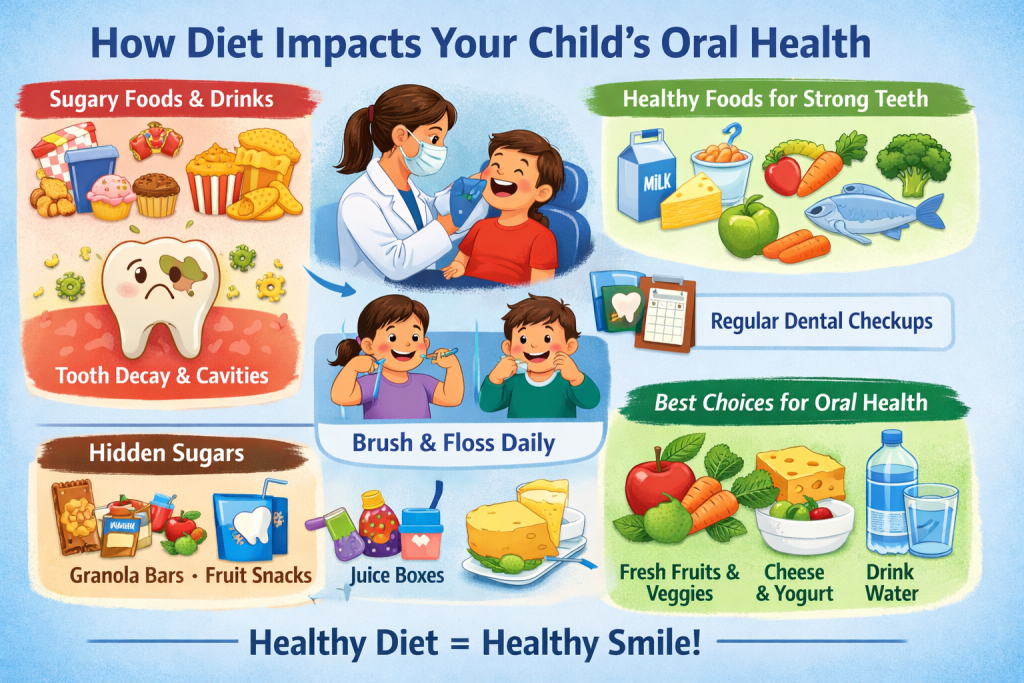
A kid’s oral health is shaped by their diet from an early age. Daily eating and drinking habits can have positive or negative effects on dental health. In addition, brushing, flossing, and regular dental appointments are critical for protection against dental diseases. Parents who want their children to practice proper dental hygiene need to understand how food intake throughout the day affects their children’s dental health even MORE than brushing and flossing.
Parents who want their kids to develop healthy teeth should learn about different foods and their potential to cause tooth decay and affect dental and overall health. Your child will maintain a healthy smile throughout their life when you combine balanced nutrition with effective Oral Hygiene for Kids.
Why Diet Matters for Kids’ Oral Health?
Children’s oral health is significantly affected by the foods and drinks they consume during daily activities, creating continuous contact between their teeth and these substances. The mouth contains both beneficial and harmful bacteria that feed on certain foods. The bad bacteria in the mouth can produce acids that damage tooth enamel, leading to dental cavities.
The scientific evidence demonstrates that dietary sugar is a major risk factor for dental caries (the disease that causes cavities) in children. The bacteria found in dental plaque use sugars (or carbohydrates) as their food source to produce acids that harm oral health in kids and lead to tooth decay.
The regular intake of sweet snacks and beverages leads to multiple episodes of acid erosion, which, over time, affects children’s oral health. This process results in the deterioration of tooth enamel, increasing the risk of dental cavities. The frequency of sugar or snack consumption increases the risk of cavities. Pediatric dentists consider proper nutrition essential for effective dental treatment in children and for the prevention of dental disease.
The Role of Sugar and Cavities
The major danger to kids’ oral health comes from their high and frequent consumption of sugary foods. The sugary content in candy, soda, flavored milk (or even regular milk!), fruit juices, and sticky snacks provides a food source for bacteria that cause dental cavities.
Sticky foods are often worse because they get stuck in the grooves of the teeth. Also, crackers and similar processed foods (Goldfish, Cheez-its, Wheat Thins, etc.) stick in the teeth, and the bacteria can use these for food as well – leading to cavities even without consuming “sugar” in the traditional sense.
Bacteria in human bodies transform sugars from sugary foods into acids, which damage tooth enamel for 20 to 30 minutes after children consume those foods, until saliva can wash them off the teeth. The habit of frequent snacking leads to continuous acid exposure, which makes people more vulnerable to dental cavities caused by sugar consumption. The frequency of snacks and sugar is even MORE important than the amount. A little sip of apple juice from a sippy cup, white milk sitting on the teeth all night, or breastfeeding on demand at night can all lead to cavities, as it does not take much sugar or carbohydrates for bacteria to produce acid that eats through the enamel.
Research demonstrates that both how much sugar children consume and when they consume it determine their likelihood of developing dental cavities.
Foods That Support Healthy Teeth for Kids
A kid’s oral health depends on particular foods that create a greater risk for cavities and others that help preserve their tooth health. The combination of nutrient-rich foods helps build healthy teeth for kids and maintain healthy gums while supporting overall oral growth.
- Calcium-Rich Foods
Calcium serves two purposes: creating strong tooth enamel and building strong bones. The following foods serve as excellent sources of calcium:
- Milk
- Cheese
- Yogurt
- Leafy greens
Cheese functions as a valuable food because it reduces acid levels that exist in the mouth. Beware of added sugar to milk and yogurt, as this would have a negative effect on the teeth.
- Crunchy Fruits and Vegetables
Foods such as apples, carrots, and celery increase saliva production. Saliva functions to remove food particles from the mouth while it neutralizes acids that can harm teeth.
- Protein-Rich Foods
Phosphorus is found in eggs, fish, poultry, and nuts, which helps strengthen tooth enamel and can repair initial dental damage.
- Water
Water serves as an excellent beverage choice that helps children maintain their oral health. Water removes sugars and acids from the mouth while it supports the body’s process of producing saliva. Water is the best choice for overall health and dental health. Water, water, water!
The combination of these foods with proper dental care for children establishes Oral Hygiene for Kids, promoting healthy teeth throughout their lives.
Hidden Sugars That Harm Children’s Oral Health
Many foods that companies promote as healthy options for children actually contain high levels of sugar. Parents should watch for hidden sugars in products like:
- Granola bars
- Flavored yogurts
- Fruit snacks
- Juice boxes
- Sports drinks
Chips and white bread both contain starchy components which the body transforms into sugars that cause dental problems. Bacteria in the mouth can use these sugars as food just like they do with candy
The practice of checking food labels together with the restriction of additional sugar intake will especially benefit the protection of children’s dental health.
When to Seek Pediatric Dental Care
Children need dental preventive visits because these visits help maintain their oral health. Pediatric dentists for tooth decay specialize in treating developing teeth and provide guidance on dietary choices and brushing techniques and cavity prevention methods.
- Dental professionals use routine checkups to
- Detect initial signs of tooth decay
- Perform professional dental cleanings
- Implement protective treatments such as fluoride
- Teach children proper oral care practices
Early pediatric dental care prevents most dental issues which enables children to establish lifelong healthy dental habits.
Helping Your Child Build Lifelong Healthy Habits
Kids’ oral health and diet exist as interconnected elements. Parents who choose nutritious foods create better health outcomes for their children because they restrict sugary snacks and promote proper dental care.
The implementation of ordinary adjustments which include replacing sugary drinks with water and providing nutritious snacks and scheduling consistent dental appointments will create substantial improvements in children’s oral health.
The appropriate mix of nutrition balance with daily dental hygiene practices and expert pediatric dental treatment will enable your child to maintain healthy teeth throughout their childhood while achieving a self-assured smile for upcoming years.
FAQs
1. How does diet affect kids’ oral health?
Diet plays a major role in kids’ oral health. Foods high in sugar feed harmful bacteria in the mouth, leading to plaque buildup and cavities. A balanced diet rich in calcium, fruits, and vegetables helps support strong enamel and promotes healthy teeth for kids.
2. What foods help improve children’s oral health?
Foods like milk, cheese, yogurt, leafy greens, apples, and carrots are beneficial for children’s oral health. These foods strengthen enamel, stimulate saliva production, and help reduce bacteria that cause tooth decay.
3. How do sugar and cavities develop in children?
When children consume sugary snacks or drinks, bacteria in the mouth break down the sugar and produce acids. These acids attack tooth enamel, leading to sugar and cavities over time. Limiting sugary foods and practicing good Oral Hygiene for Kids can help prevent this.
4. When should my child see a dentist for tooth decay?
If your child complains of tooth pain, sensitivity, or you notice dark spots on their teeth, it’s important to visit a dentist for tooth decay as soon as possible. Early pediatric dental care helps prevent small cavities from turning into more serious dental problems.
5. What are the best habits for maintaining kids’ oral health?
To maintain good oral health, children should brush twice daily, floss regularly, limit sugary snacks, drink plenty of water, and visit their dentist for routine pediatric dental care checkups. These habits help ensure long-term healthy teeth for kids.
