

In a city that moves at the pace of London, the ability to hear with absolute clarity is not simply a health matter. It is the foundation of every conversation that closes a deal, every nuance absorbed at a private members’ dining table, every piece of music experienced at the Royal Opera House. Hearing is central to the quality of life that London’s most discerning residents demand, and yet for a growing number of them, that clarity is being compromised by one of the most overlooked and easily resolved conditions in modern medicine: ear wax impaction. As NHS provision for routine ear wax removal London services continues to contract, the city’s premium private clinics have stepped forward to offer a level of care that goes far beyond what the public system was ever designed to deliver.
The Sophistication of Prevention
True luxury is not reactive. It is anticipatory. The most forward-thinking approach to personal health involves identifying and resolving issues before they interfere with the quality of life you have worked to build. Ear wax impaction follows an entirely predictable pattern: it accumulates gradually, often over weeks or months, until the point at which muffled hearing, a persistent ringing, or a sensation of blockage becomes impossible to ignore. At that stage, the condition has already been affecting focus, communication, and wellbeing for some time without the individual realising it.
Around 2.3 million people in the UK require professional ear wax removal every year. In London, the rate sits at approximately 3.9 percent of the population annually, rising among those who wear hearing aids, travel frequently by air, or spend extended periods in air-conditioned environments. These are not profiles that fall far outside the typical London professional or frequent traveller. The condition is common precisely because the lifestyle factors that drive it are common in this city.
Why London Life Creates the Perfect Conditions for Buildup
The environments and habits that define refined living in London also happen to be among the most significant drivers of ear wax accumulation. Premium in-ear audio experiences, whether through high-end wireless earbuds on a morning commute or noise-cancelling headphones in a private workspace, trap heat and moisture in the canal and compact wax inward over time. Regular long-haul travel creates repeated cabin pressure changes that push wax against the eardrum. The stress of managing a demanding professional or social calendar raises cortisol, which thickens ear secretions. London’s air quality, despite ongoing improvements, means fine particulate matter regularly enters the canal and mixes with cerumen.
The result is that many of the city’s highest-performing residents are unknowingly operating with compromised hearing. In meetings, at cultural events, in private conversations that matter, the precision of what is being communicated is being blunted by a condition that takes under thirty minutes to resolve.
The Problem with NHS Access
Until recently, ear wax removal was a routine GP service. It no longer is across most of England. RNID research has confirmed that the majority of Integrated Care Boards have stopped commissioning the service, despite NICE guidance recommending its availability. Around two thirds of patients who raise the issue with their GP are now turned away. The response for most people is either to resort to home remedies that carry documented risks, or to wait and hope the problem resolves on its own. Neither approach reflects the standard of care that Londoners who prioritise their health deserve or expect.
The private sector has responded, and within it, quality varies enormously. Choosing the right provider is not a minor decision when the alternative is a procedure carried out with insufficient equipment or unqualified practitioners.
Microsuction: Precision Care for Precise Hearing
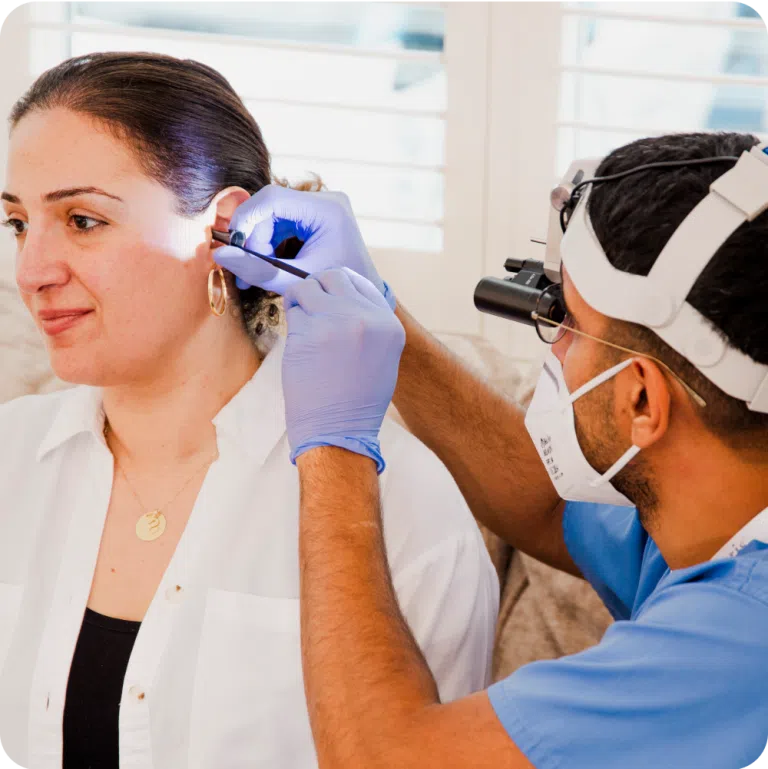
The gold standard for professional ear wax removal is microsuction, and it is the method that distinguishes premium audiological care from the rest. Rather than flushing the canal with water in the manner of traditional irrigation or syringing, microsuction uses a finely calibrated, low-pressure suction probe under direct optical magnification to remove wax with clinical precision. The clinician maintains an unobstructed view of the ear canal and eardrum throughout the entire procedure, enabling a level of control and safety that no irrigation-based technique can match.
The advantages are compelling:
No water enters the canal, making the procedure entirely safe for patients with a history of perforations, ear surgery, grommets, or chronic infections. The real-time visibility allows the clinician to identify any additional considerations immediately, from canal skin conditions to unexpected structural features. Sessions take 20 to 30 minutes, with no recovery period required. Most patients report an immediate and significant improvement in hearing clarity at the end of the appointment. Video otoscopy provides a before-and-after visual of the canal, giving patients the kind of transparent, evidence-based outcome they would expect from any premium health service.
For those accustomed to the highest standards in every aspect of their healthcare, microsuction represents the appropriate choice.
Auris Ear Care: London’s Specialist Choice
For professional ear wax removal London delivered to a clinical standard that matches the expectations of the capital’s most discerning patients, Auris Ear Care (https://www.aurisearcare.co.uk/ear-wax-removal-london) has established itself as a trusted specialist provider. Their approach is built on qualified, audiologist-led care, thorough pre-treatment examination, and a genuine commitment to patient education and aftercare. Locations across London ensure that accessing treatment is straightforward, with same-week appointments available for those who prefer not to wait.
For hearing aid users, those who travel extensively, or anyone who simply places a premium on operating at full clarity, a relationship with a trusted ear care specialist is an investment that pays dividends in every area of life.
Maintenance: Protecting a Precious Asset
The most effective approach to ear health, as with any aspect of premium wellbeing, is consistent and preventative rather than reactive. Between professional appointments, a small number of habits make a meaningful difference:
Apply two or three drops of olive oil to each ear two or three nights per week to keep wax soft and support natural migration. Avoid inserting anything into the ear canal. The outer ear can be cleaned with a soft damp cloth. Give your ears regular periods of rest from in-ear audio, particularly during long flights or extended desk sessions. Keep listening levels moderate, ideally no higher than 60 percent of maximum volume. Schedule an annual professional check, particularly if you wear hearing aids, travel frequently, or are over 50.
When Urgency Takes Priority
Routine maintenance and scheduled appointments address the majority of ear wax concerns. Certain symptoms, however, require immediate clinical attention: sudden hearing loss in one or both ears, acute pain inside the canal, any discharge or bleeding, severe dizziness, or facial weakness. These can indicate an acute infection or structural concern that should not wait. Reputable clinics will always accommodate urgent assessments for patients who need them.
Clarity as a Standard, Not an Afterthought
The most refined version of life in London is lived with every sense operating at its best. For the many thousands of residents who are quietly managing muffled hearing, persistent tinnitus, or the subtle fatigue that comes from straining to follow conversations, the solution is closer, faster, and more straightforward than they may realise.
For expert ear wax removal London using gold-standard microsuction, visit Auris Ear Care: https://www.aurisearcare.co.uk/ear-wax-removal-london
