

Every homeowner has wrestled with the same question at some point: what is the right temperature for a water heater? Set it too low and you risk cold showers and dangerous bacterial growth. Set it too high and you could end up with scalding water, sky-high energy bills, and accelerated wear on your unit. Finding that sweet spot requires understanding a few key principles around safety, efficiency, and comfort — and knowing when to call in an expert like Doctor Water Heater to get things properly calibrated.
The Standard Recommended Temperature
The U.S. Department of Energy recommends setting your water heater to 120°F (49°C) for most households. This temperature is considered the sweet spot for several reasons. It is hot enough to kill most harmful bacteria, reduce mineral buildup, and deliver satisfying hot water for showers, dishwashing, and laundry — while being cool enough to minimize scalding risk and unnecessary energy consumption.
At 120°F, your water heater operates efficiently without overworking itself. For every 10°F you reduce the temperature below the factory default (which is often set at 140°F), you can save between 3% and 5% on your water heating costs. Over the course of a year, that adds up to meaningful savings on your utility bills.
Why Some Households Need 140°F
While 120°F works well for most people, there are legitimate situations where a higher temperature setting of 140°F is recommended. Homes with immunocompromised residents — such as elderly individuals, young children, or people undergoing chemotherapy or living with chronic illness — benefit from the higher heat because it more aggressively eliminates dangerous pathogens.
Additionally, if your home has a dishwasher that does not feature an internal heating element (also called a booster heater), running water at 140°F ensures your dishes actually reach the temperature needed for proper sanitization. Most modern dishwashers do have this built-in feature, so check your appliance specifications before defaulting to the higher setting.
There is also the matter of Legionella bacteria, the organism responsible for Legionnaire’s disease. Legionella thrives in water temperatures between 77°F and 113°F and can survive up to about 122°F. Keeping your tank at or above 140°F effectively eliminates the risk of this bacteria colonizing your hot water system. However, if you do choose 140°F, you must take extra precautions around scalding.
The Scalding Risk You Cannot Ignore
Hot water scalds are a serious and often underestimated household hazard. At 120°F, it takes about five minutes of exposure to cause a burn. At 130°F, that window drops to roughly 30 seconds. At 140°F, scalding can occur in just five seconds — and for young children or elderly adults with more sensitive skin, even faster.
If you have young children, elderly family members, or anyone with reduced sensitivity to heat living in your home, 120°F is the strongly preferred setting. You can also install a thermostatic mixing valve (also called an anti-scald valve) at the point of use, which blends cold water into the hot supply before it reaches your faucets. This allows you to keep the tank at 140°F for bacteria control while delivering water at a safer temperature at the tap.
How to Check and Adjust Your Water Heater Temperature
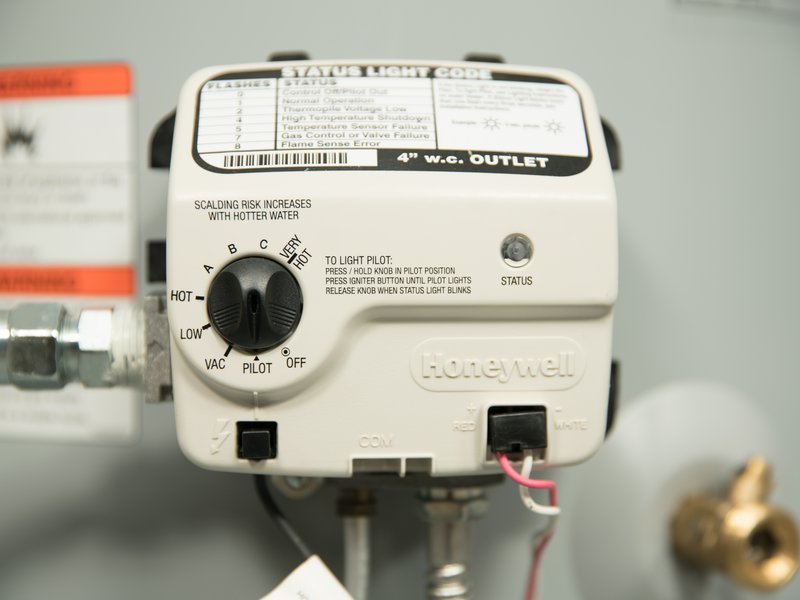
Many water heaters have a dial or thermostat control that uses vague markings like “warm,” “hot,” and “very hot” rather than specific degree readings. Do not rely on these labels. The only way to know your actual water temperature is to measure it directly.
To check your water temperature, run the hot tap in your kitchen or bathroom for two to three minutes to purge any cooled water sitting in the pipes. Then use a cooking or candy thermometer to measure the temperature of the water coming from the tap. This gives you a reliable baseline reading.
If your temperature needs adjustment, here is how to proceed based on your unit type. For a gas water heater, the thermostat dial is usually located on the front of the unit near the gas valve. Turn it clockwise to increase temperature or counterclockwise to decrease it, then wait several hours before re-testing. For an electric water heater, you will typically need to shut off power at the breaker, remove the access panels on the side of the tank, and adjust the thermostat behind the insulation using a flathead screwdriver. Electric units often have two thermostats — one upper and one lower — and both should be set to the same temperature for consistent performance.
If you are uncertain about any of these steps or if your water heater does not respond as expected after adjustment, it is best to consult a professional. A qualified service provider like Doctor Water Heater can safely assess, adjust, and service your unit to ensure everything is operating correctly.
The Energy Efficiency Angle
Your water heater typically accounts for 14% to 18% of your total home energy usage, making it one of the largest energy consumers in the average household. Temperature settings play a direct role in how hard your unit has to work — and how much you pay.
Beyond temperature, the type of water heater you have significantly affects efficiency. Traditional tank water heaters keep a large volume of water continuously hot, which results in standby heat loss even when no hot water is being used. Tankless (on-demand) water heaters only heat water when needed, eliminating standby loss entirely. Heat pump water heaters are even more efficient, using electricity to move heat from the surrounding air into the water rather than generating heat directly.
If your unit is aging and struggling to maintain consistent temperatures, it may be more cost-effective to replace it than to keep servicing it. Units older than 10 to 12 years are prime candidates for replacement, and newer models offer dramatically improved efficiency ratings that can recover their upfront cost through energy savings within a few years.
Special Considerations for Different Household Types
Not all households have the same hot water needs, and your temperature settings should reflect your specific situation.
Households with infants or toddlers should keep temperatures at or below 120°F without exception. Children’s skin is significantly thinner and more sensitive than adult skin, making them far more susceptible to burns at lower temperatures and in shorter exposure times.
Vacation homes or properties that sit vacant for extended periods present a different challenge. If a water heater is left unused for weeks or months, stagnant warm water inside the tank becomes an ideal breeding ground for bacteria. Before leaving a property unoccupied, consider either draining the tank entirely or briefly raising the temperature to 140°F for an hour or two to pasteurize the contents. When returning, flush the lines before use.
Homes with well water rather than municipal supply may also need to account for higher mineral content, which can affect both water temperature consistency and the longevity of heating elements. Regular flushing and anode rod inspection become even more critical in these cases.
When to Call a Professional
While basic temperature adjustments are within reach for most handy homeowners, there are several situations where professional service is the right call. If your water is not getting hot enough despite correct thermostat settings, if you notice rust-colored water, strange popping or rumbling sounds from the tank, or if your pilot light keeps going out on a gas unit, these are all signs of underlying issues that go beyond a simple setting adjustment.
A trusted service provider like Doctor Water Heater brings the expertise to diagnose and resolve these issues efficiently — whether it is a failing heating element, a sediment-clogged tank, a deteriorating anode rod, or a faulty thermostat. Regular professional maintenance every one to two years also extends the lifespan of your unit, prevents unexpected failures, and keeps your warranty valid.
A Quick Reference Guide
To summarize the key temperature guidelines covered in this article:
- 120°F is the standard recommendation for most households, balancing safety, comfort, and energy efficiency.
- 140°F is appropriate for households with immunocompromised members, older dishwashers without booster heaters, or as a periodic treatment to eliminate Legionella.
- Below 120°F is not recommended, as it creates conditions that allow dangerous bacteria to thrive.
- Anti-scald mixing valves are the best solution when you need to maintain a higher tank temperature while keeping delivery temperatures safe.
Final Thoughts
Getting your water heater temperature right is one of the simplest yet most impactful things you can do for your home’s comfort, safety, and efficiency. The default settings that come from the factory are not always the best settings for your household — they are simply generic starting points.
Take the time to measure your actual water temperature, assess your household’s needs, and adjust accordingly. And when in doubt or when the job goes beyond a dial adjustment, do not hesitate to reach out to a professional. Experts like Doctor Water Heater exist precisely to help homeowners navigate these decisions with confidence, ensuring your system runs safely and efficiently for years to come.
