

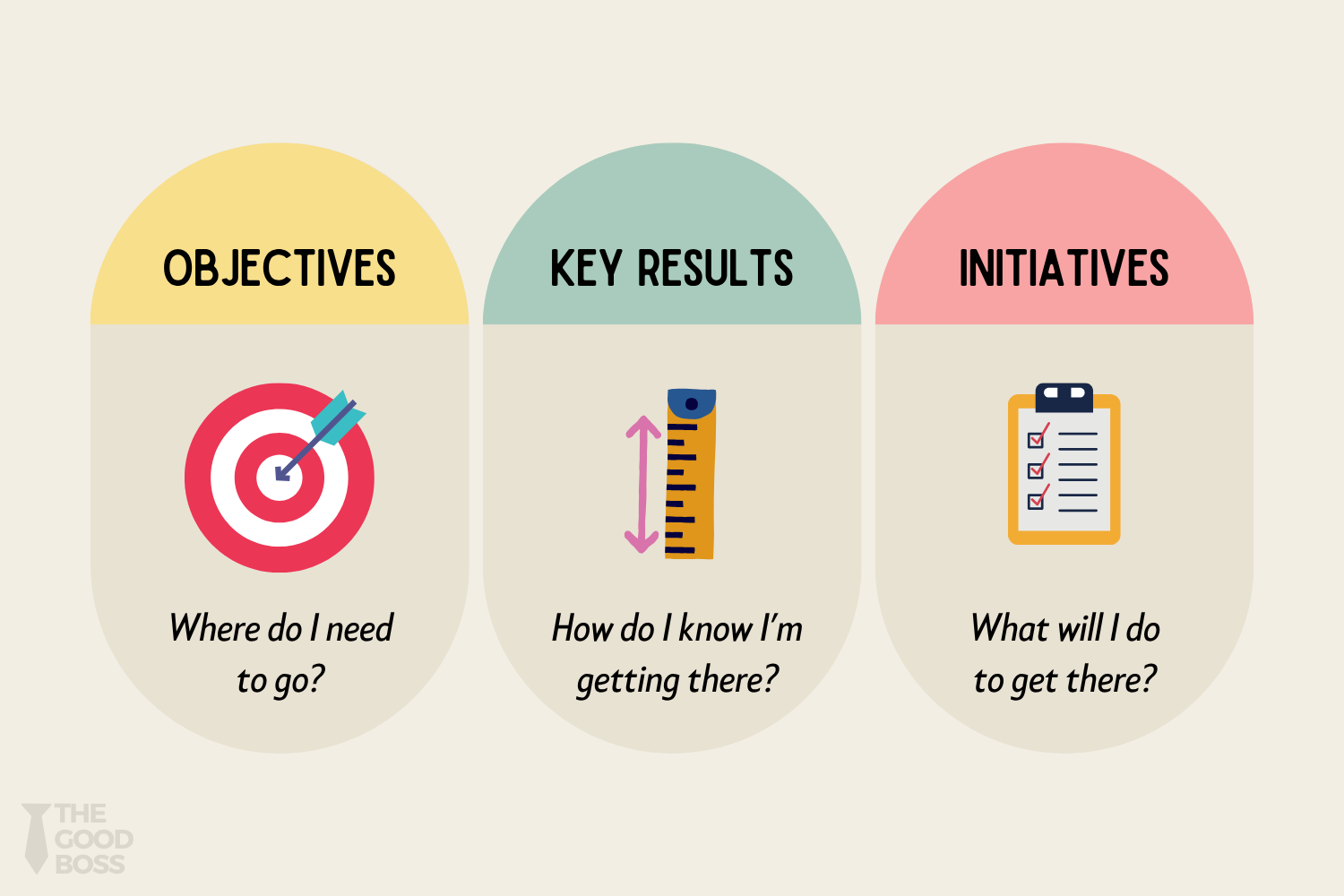
Most teams do not struggle because they lack ambition. They struggle because priorities are unclear, goals compete with each other, and progress is hard to see. OKRs, short for Objectives and Key Results, were designed to solve exactly that problem.
Used well, OKRs turn strategy into something practical and visible. They help teams agree on what matters most and understand what success actually looks like.
The Basic Idea Behind OKRs
OKRs are built on a simple structure.
An objective describes where you want to go. It is qualitative, clear, and motivating.
Key results describe how you will know you are getting there. They are specific, measurable, and time bound.
For example:
- Objective: Build a product customers genuinely love
- Key results:
- Increase customer satisfaction score to 4.6 or higher
- Reduce customer complaints by 30 percent
- Increase referral driven sign ups by 20 percent
The objective gives direction. The key results define success.
Why OKRs Create Clarity
Many goals fail because they are either too vague or too crowded. OKRs create clarity in three important ways.
First, they force focus. Most teams work best with three to five objectives at a time. This reduces noise and makes tradeoffs clearer.
Second, they make success measurable. Key results remove guesswork and opinion. You can see progress without endless debate.
Third, they make priorities visible. When OKRs are shared openly, people understand how their work connects to the bigger picture.
OKRs Encourage Better Conversations
One of the most underrated benefits of OKRs is the quality of conversations they create.
Instead of asking, “Did we work hard?” teams ask, “Did we move the result?”
Instead of blaming, teams reflect on what worked and what did not.
Because OKRs are reviewed regularly, they support learning rather than judgement.
Writing OKRs That Actually Work
Good OKRs are surprisingly hard to write, but a few principles help.
Objectives should be written in plain language that people care about.
Key results should measure outcomes, not activities.
Each objective should have a small number of key results, usually three or four.
If a key result looks like a task list item, it probably needs rewriting.
Simplicity is a strength, not a weakness.
OKRs at Different Levels
OKRs work at many levels of an organization.
Leadership teams use them to express strategy.
Teams use them to coordinate effort.
Individuals use them to focus their time and energy.
The format stays the same. Only the scope changes.
This consistency is part of what makes OKRs so powerful.
Common Pitfalls to Avoid
Teams new to OKRs often fall into predictable traps.
Setting too many objectives reduces impact.
Using OKRs as performance ratings damages trust.
Writing vague or unmeasurable key results creates confusion.
Treating OKRs as static documents limits learning.
OKRs work best when they are revisited, discussed, and refined.
Final Thoughts
OKRs are not complicated, but they do require discipline. They ask teams to be honest about priorities and outcomes.
When used with the right mindset, OKRs bring focus, alignment, and momentum to complex environments.
They help turn intention into action and action into measurable progress.
