

The price of laser machines dropped a lot. Like, a real lot, over the past few years. What used to cost thirty or forty thousand dollars in a mid-size shop now runs at a fraction of that for comparable output.
That’s why the conversation about affordable laser systems for small businesses changed. It’s not just hobbyist territory anymore.
Shops with three employees are running daily production on machines that cost what a decent used truck costs. Sign makers. Custom gift businesses. One-person knife shops. Metal workshops adding a marking station for the first time.
What are they actually buying?
The CO2 Side: Wood, Acrylic, Everything Non-Metal
Most small businesses making physical products work with soft materials. Wood boards. Acrylic sheets. Leather. MDF. Maybe some rubber or cork.
CO2 laser systems cover all of it. The beam wavelength works on organic materials cleanly. Wood burns sharp. Acrylic cuts with a polished edge. Leather engraves without fraying.
For a small Etsy seller or a sign shop starting out, the entry point is a 40W to 60W CO2 machine. Those machines cost less than a lot of people expect and can handle real work, not just test cuts. Cut 1/4 inch plywood. Engrave photos into maple. Cut acrylic letters in one pass.
The Pronto 35 60W CO2 Laser Cutter and Engraver fits this use case well. Autofocus built in. Compact enough for a smaller shop space. You’re not buying a machine you need a warehouse to run.
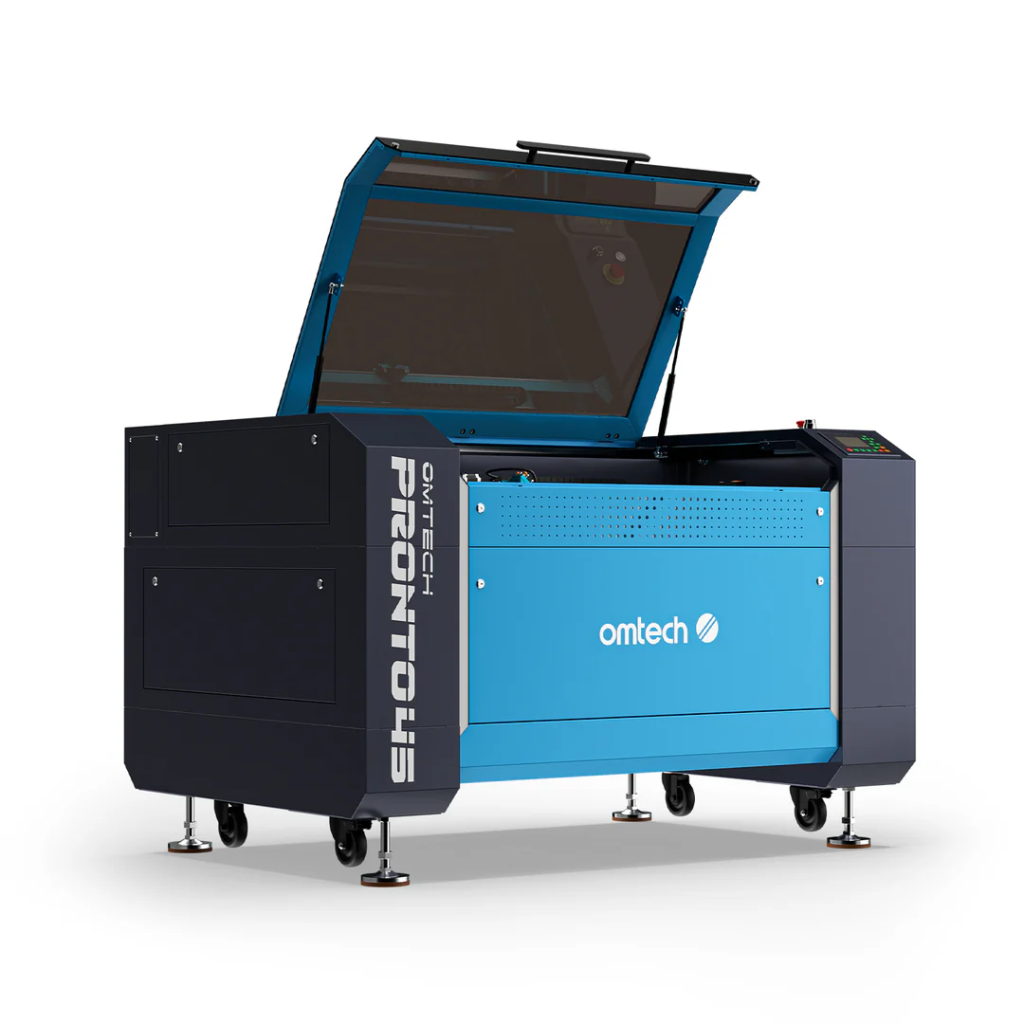
Step up in volume and you step up in wattage. The Pronto 45 100W CO2 Laser Engraver and Cutter runs faster, cuts thicker, and handles daily production better than a 60W when your order count climbs. More watts means less time per job. At production volume that adds up fast.
What “Affordable” Actually Means for CO2
Let’s be real about the word affordable. It means different things to different buyers.
For a hobbyist, affordable might mean under $500. That’s a diode machine. Small. Slow. Fine for simple wood burns.
For a small business running production? Affordable means a machine that pays for itself. The math is: how many jobs per week, at what price per job, versus the machine cost over two or three years. A $3,000 to $5,000 CO2 machine that runs five days a week generating custom orders earns back its cost fast. A $300 toy that breaks after six months of use is not cheaper.
OMTech’s CO2 lineup sits in a range most small businesses can actually budget for. Not consumer-priced diode toys. Not $40,000 industrial machines. Somewhere in between that fits a real shop with real production needs.
Check the full CO2 laser machines collection to compare models by wattage and table size.
Affordable Fiber Laser Marking: Metal Shops Take Note
Metal is a different story. CO2 doesn’t mark bare steel or aluminum well. Fiber does.
An affordable fiber laser marking system for a small metal workshop doesn’t have to be a massive investment. The galvo-style fiber markers are compact, air-cooled, and run on standard power. No water chiller needed. No special electrical service.
What they do: permanent marks on stainless steel, aluminum, brass, titanium, coated metals. Serial numbers. Logos. Custom text. Part IDs.
A knife maker engraving blades. A machine shop adding part numbers to aluminum components. A jewelry business marking custom rings. All of these use fiber, not CO2.
The 30W Fiber Laser Engraver Cutter USB is where a lot of small metal shops start. The 30W output handles stainless and aluminum without complaint. Good for a business marking parts daily without needing industrial production speeds.
According to Wikipedia’s overview of laser engraving, fiber lasers work by delivering a concentrated beam that the metal surface absorbs efficiently, creating a permanent mark through controlled thermal modification. That’s why the marks survive coatings, cleaning, and long-term use in ways that ink or stamping can’t match.
The Best Affordable Laser System in 2026 Depends on One Thing
People ask “what’s the best affordable laser system in 2026” like there’s one answer.
There isn’t.
The best machine depends entirely on what you make.
Wood, leather, acrylic, fabric: CO2 is the answer. Entry-level 60W machines cover most small business needs. Mid-range 80W to 100W machines handle production volume.
Metal marking: fiber. 20W to 30W covers most small shop applications. Bigger volume or harder alloys? Step up.
Both: dual-source machines exist and work well for businesses with mixed material jobs.
The wrong approach is buying on price alone. A cheap machine that can’t handle your material, or one that breaks at light use, costs more in the long run than a mid-range machine that runs for years.
Real Business Examples: What These Shops Are Actually Running
This is worth being specific about, because the “ideal customer” framing gets vague fast.
Custom gift shop, 8 orders per day: 60W CO2 machine. Engraves wooden cutting boards, name boards, baby gifts. Table size 20 x 28. Runs three to four hours daily. Paid off in under a year.
Knife maker, side business: 30W fiber galvo. Marks blades with maker’s mark and customer names. Small work area, doesn’t need more. Air cooled. Fits in a garage shop.
Sign business, growing: Upgraded from a 60W to a 100W CO2 after six months when job volume outpaced the slower machine’s cut speed. Now runs custom acrylic letters, wood signs, and MDF shapes on one machine.
Metal shop adding personalization: Added a fiber marker to offer custom logos on made-in-house hardware items. The fiber machine opened a new revenue line without changing the main shop workflow.
These aren’t hypothetical. These are the actual patterns that show up when small businesses adopt affordable laser systems. The machine fits one clear job. It proves itself. Sometimes the shop expands from there.
Don’t Forget the Running Costs
Upfront price is what people focus on. Running costs are what actually affect the business over time.
CO2 tubes burn out. Eventually. Typical life is 1,000 to 3,000 hours depending on power level and cooling. Budget for a replacement at some point. It’s not a defect. It’s just how gas tubes work.
Fiber laser sources last much longer. Usually 100,000 hours or more. Much lower maintenance overhead.
Lenses get dirty. Clean them regularly. A dirty lens cuts weaker and slower. Most operators figure this out early.
Ventilation costs money to set up properly. An exhaust fan and some ducting. Not optional. Laser machines make fumes. Wood smoke, acrylic off-gas, leather odor. You need air moving out.
The real total cost of an affordable laser system includes all of this. Budget for it upfront and the machine is actually affordable. Skip it and you’re making costly fixes later.
Choosing the Right Table Size
Table size matters more than people think before they buy.
A 12 x 8 inch table sounds fine until you’re trying to engrave a 14-inch cutting board. A 20 x 12 inch table sounds fine until you’re cutting acrylic from a standard 18 x 24 sheet.
Match the table to the largest piece you’ll regularly run. Not the largest piece you’ll ever run. The largest piece you run regularly. If you need to trim every sheet to fit, you’re losing material and time on every single job.
Most small production shops find a 20 x 28 or larger work area gives them room to work without constantly improvising around size constraints.
FAQs
What is the best affordable laser system for a small business?
Depends on material. CO2 for wood, acrylic, leather. Fiber for metal marking. A 60W to 100W CO2 covers most non-metal small business work. A 20W to 30W fiber galvo handles most small metal shop needs.
What is an affordable CO2 laser system good for?
Wood engraving and cutting, acrylic cutting, leather engraving, fabric cutting, rubber stamps, MDF shapes. CO2 handles all soft and organic materials well.
Is an affordable fiber laser marking system reliable?
Yes, modern fiber galvo machines are air-cooled, low-maintenance, and have laser sources rated for 100,000+ hours. They’re genuinely more reliable long-term than CO2 systems for metal marking work.
What table size do I need for a small business laser?
At minimum a 20 x 12 inch table. A 20 x 28 inch bed is better for most production shops. Match it to your most common material sheet size.
What’s the real total cost of a laser system for a small business?
Machine price plus ventilation setup, any accessories you need (rotary, air assist), replacement consumables over time, and software. Budget for all of it. The machine price is just the starting point.
