

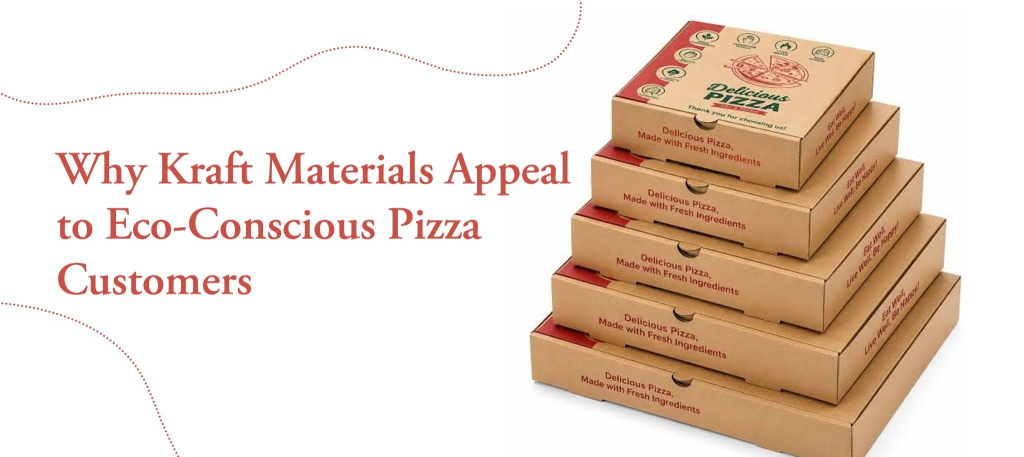
Sustainability has become an increasingly visible part of the customer experience. Pizza buyers are not only judging the flavor, price, and delivery speed of an order; many also notice how much packaging is used, what the box appears to be made from, and whether the restaurant provides responsible disposal information.
Kraft packaging has become popular among pizza businesses because its natural brown appearance creates an immediate association with simplicity, reduced processing, and environmental awareness. It can give customers the impression that a restaurant is trying to avoid excessive decoration and unnecessary materials.
However, the environmental value of a pizza box cannot be determined by appearance alone. Material sourcing, coatings, inks, box dimensions, food contamination, local recycling systems, and manufacturing practices all affect the complete sustainability picture.
For restaurants, the strongest approach is to combine the visual appeal of kraft materials with genuine improvements in packaging design and transparent environmental communication.
What Is Kraft Packaging?
Kraft packaging is commonly recognized by its natural brown color and visible paper texture. The term relates to the kraft pulping process used to produce strong paper fibres, although kraft-style boxes can vary significantly in composition.
Some boxes use virgin kraft fibres, while others contain recycled material or a combination of fibre sources. They may also include grease-resistant barriers, coatings, printing inks, adhesives, or internal liners.
This means two boxes with a similar brown appearance may have different performance and environmental characteristics.
Restaurants should ask suppliers for clear information about:
- Paperboard composition
- Recycled content
- Fibre sourcing
- Food-contact suitability
- Grease-resistant treatments
- Printing methods
- Recyclability
- Compostability, where claimed
- Relevant certifications
Understanding these details helps businesses make packaging decisions based on evidence rather than appearance.
Kraft Materials Create a Natural Visual Identity
One reason kraft packaging appeals to environmentally aware customers is its recognizable natural appearance.
Brown paperboard often looks less processed than heavily laminated, glossy, or plastic-dominated packaging. Its texture and neutral tone can communicate simplicity, authenticity, and a connection to natural materials.
This visual style works especially well for pizza brands that emphasize:
- Fresh ingredients
- Handmade preparation
- Local sourcing
- Artisan recipes
- Organic products
- Minimal waste
- Community values
The box becomes part of the restaurant’s brand message. Before customers read a sustainability statement, the material already creates a particular impression.
Nevertheless, businesses should avoid assuming that brown packaging automatically proves environmental superiority. Kraft materials are most credible when their appearance is supported by responsible sourcing and accurate information.
Customers Are Paying Attention to Packaging Waste
Packaging has become a visible test of a brand’s environmental credibility. Consumers increasingly notice unnecessary layers, oversized containers, excessive plastic, and packaging that lacks clear disposal instructions.
A 2025 survey reported by The Wall Street Journal found that some consumers in North America and Europe had avoided purchases because they considered the packaging excessive or environmentally unsuitable. The findings demonstrate that packaging decisions can influence customer perceptions as well as purchasing behavior.
For pizza restaurants, the box may be the largest disposable element included with an order. Choosing an appropriately sized paper-based package can therefore make the restaurant’s waste-reduction efforts more visible.
Kraft boxes can support this objective when they use only the material necessary to protect the pizza effectively.
Combining Sustainability With Food Protection
Packaging cannot be considered successful if it reduces waste but fails to protect the food.
A pizza box needs sufficient strength to support the product, resist grease, maintain its shape, and prevent the lid from touching the toppings. It should also manage steam so that the crust does not become excessively soft during transportation.
Restaurants considering Custom Kraft Pizza Boxes should evaluate structural performance alongside appearance. The board thickness, fluting, ventilation, dimensions, locking tabs, and grease resistance should match the restaurant’s pizza style and average delivery conditions.
A weak box can lead to:
- Crushed toppings
- Grease leakage
- Heat loss
- Soggy crusts
- Customer complaints
- Replacement orders
- Additional food waste
Preventing product damage is itself an important sustainability consideration. A box that uses slightly more material but prevents an entire meal from being discarded may deliver better overall value than an extremely lightweight package that regularly fails.
Responsible Fibre Sourcing Builds Credibility
Paper is produced from a renewable resource, but that does not mean all paper-based packaging has the same environmental impact.
Forest management, fibre traceability, recycled content, manufacturing efficiency, and transportation all influence the material’s environmental profile. Restaurants should therefore look beyond general phrases such as “natural” or “earth-friendly.”
The Forest Stewardship Council explains that chain-of-custody certification verifies the path of certified forest-based materials through production and trade. FSC-certified or controlled materials can help businesses demonstrate a commitment to more responsible sourcing.
Restaurants interested in certified packaging should confirm that the supplier and relevant products are covered by valid certification. A logo or claim should not be printed on a box without proper authorization.
Kraft Packaging Supports Minimalist Branding
The neutral surface of kraft paperboard works well with simple, high-contrast designs.
Restaurants do not always need full-color printing across the entire box. A clear logo, short message, contact details, or one-color illustration may be enough to make the packaging recognizable.
Minimal printing can create a handcrafted appearance while reducing visual clutter. Depending on the materials and production process, it may also help businesses avoid unnecessary decorative layers.
Effective kraft packaging may include:
- A bold logo
- A short brand slogan
- Social media details
- A QR code
- Reheating instructions
- Recycling guidance
- A thank-you message
- Ingredient or allergen information where relevant
The design should feel intentional rather than unfinished. Proper spacing, readable typography, and consistent branding remain important even when the visual style is simple.
Personalized Packaging Can Strengthen Customer Loyalty
Sustainable packaging does not need to look generic.
Restaurants can use personalized pizza boxes to combine environmentally conscious presentation with memorable customer communication. A business might print a customer-friendly disposal reminder, a brief explanation of its material choices, or a message about reducing unnecessary packaging.
Personalization can also support marketing through seasonal graphics, loyalty promotions, limited-edition designs, or messages tailored to local communities.
The most effective personalization adds value without covering the entire box in heavy decoration. The natural kraft surface should remain part of the design rather than being completely hidden.
Restaurants should also keep printed environmental statements precise. A message such as “Check local recycling guidance and remove leftover food” is generally more useful than an unsupported claim that the package is completely harmless to the environment.
Kraft Boxes May Be Recyclable, but Local Rules Matter
Paper and cardboard are widely collected materials, but local recycling rules are not identical.
The U.S. Environmental Protection Agency states that pizza boxes can generally be recycled after food scraps are removed and the box is flattened. However, the agency also recommends checking with local recycling providers because accepted materials vary by location.
Grease alone may not always prevent recycling, but leftover cheese, crust, dipping sauce, and other food should be removed. Some facilities may also treat coated or heavily contaminated boxes differently.
Restaurants can help customers dispose of boxes responsibly by printing short, practical instructions, such as:
- Remove all leftover food.
- Check local recycling requirements.
- Flatten the box where accepted.
- Separate non-paper components if required.
Clear instructions are more valuable than a vague recycling symbol that may not apply in every market.
Coatings Can Affect the Sustainability Story
Pizza boxes often require protection against grease and moisture. This may involve treatments, barriers, or coatings that improve performance.
While these features can protect the food, certain combinations of paper and plastic-based materials may make recycling more complicated. Recent reporting on the shift toward paper packaging has highlighted that some paper-based food packages still contain coatings that create end-of-life challenges.
Restaurants should ask packaging suppliers:
- What creates the grease barrier?
- Is the coating repulpable?
- Does it affect recyclability?
- Is the box accepted by common recycling systems?
- Are there any removable plastic components?
- Is the coating suitable for direct food contact?
A box should not be promoted as an easy-to-recycle paper product without considering every component used in its construction.
Environmental Claims Must Be Specific
Terms such as “green,” “eco-friendly,” “biodegradable,” “recyclable,” and “compostable” can influence customer expectations. They can also become misleading when they are broad, unsupported, or presented without necessary qualifications.
The U.S. Federal Trade Commission’s Green Guides are designed to help marketers avoid deceptive environmental claims. They emphasize that businesses should have evidence for their claims and qualify them when limitations apply.
For example, a box should not be called compostable merely because it contains paper. The inks, adhesives, coatings, and local availability of composting facilities must also be considered.
Safer and more transparent statements may include:
- “Made with 70% recycled fibre,” when verified
- “FSC-certified paperboard,” when authorized
- “Recycle where accepted”
- “Remove food before recycling”
- “Check local disposal guidance”
Specific claims give customers useful information while protecting the brand’s credibility.
Right-Sized Boxes Reduce Unnecessary Material
Material choice is only one part of sustainable packaging design. The quantity of material also matters.
An oversized box uses additional board, requires more storage space, and may allow the pizza to move during delivery. A box that is too small can damage the crust or toppings.
Restaurants should develop packaging dimensions around their actual pizza sizes rather than selecting a generic container with excessive empty space.
Right-sizing can provide several benefits:
- Lower material consumption
- Reduced shipping volume
- Better storage efficiency
- Improved pizza stability
- More accurate presentation
- Potentially lower purchasing costs
Reducing unnecessary packaging at the design stage is often more effective than relying entirely on disposal claims after the box has been used.
Kraft Packaging Can Reinforce Authenticity
Many eco-conscious customers value brands that appear honest, local, and straightforward.
Kraft packaging supports this perception because it often looks less artificial and more tactile than heavily processed alternatives. It can complement restaurant interiors, menus, uniforms, and social media content built around an artisan or community-focused identity.
This aesthetic is especially suitable for businesses that already follow responsible practices, such as:
- Buying ingredients locally
- Reducing food waste
- Offering utensils only upon request
- Monitoring energy use
- Sourcing paper responsibly
- Avoiding excessive packaging
- Providing clear recycling information
When packaging reflects real operational choices, it strengthens the authenticity of the brand. When the appearance is used without meaningful action, environmentally informed customers may view it as superficial.
Cost and Storage Should Be Considered
Kraft boxes can be cost-effective, but customization, board quality, order volume, certifications, and protective treatments all affect pricing.
Restaurants should calculate the complete cost per usable box rather than choosing the lowest quotation. A cheap product that bends, absorbs grease, or varies in size may create more waste and complaints.
Before ordering in bulk, businesses should consider:
- Average monthly usage
- Available storage space
- Minimum order quantities
- Seasonal sales changes
- Printing setup costs
- Supplier lead times
- Risk of a future rebrand
- Moisture conditions in storage
Boxes should be kept clean, dry, and protected from pests and humidity. Poor storage can weaken the material before it is used.
Test Boxes Under Real Delivery Conditions
Supplier specifications are useful, but practical testing provides more reliable information.
Restaurants should place freshly prepared pizzas in sample boxes and evaluate them over the typical delivery period. The test should examine:
- Heat retention
- Steam release
- Crust texture
- Grease resistance
- Lid strength
- Stacking performance
- Customer handling
- Print durability
- Box assembly time
- Final product appearance
Different pizzas create different packaging demands. A lightly topped thin-crust pizza may perform differently from a heavy deep-dish product.
Customer and delivery-driver feedback can reveal problems that may not be obvious during an office-based packaging review.
Conclusion
Kraft materials appeal to eco-conscious pizza customers because they communicate natural simplicity, reduced visual excess, and a connection to paper-based packaging. Their texture and appearance can help restaurants create an authentic, responsible, and modern brand identity.
However, a brown box is not automatically sustainable. The complete environmental value depends on fibre sourcing, recycled content, coatings, inks, structural performance, material quantity, transportation, and local disposal systems.
Restaurants can build greater customer trust by choosing appropriately sized, durable packaging; working with transparent suppliers; making specific environmental claims; and giving customers practical recycling guidance.
When these decisions are supported by genuine waste-reduction practices, kraft pizza boxes become more than a visual trend. They become a credible extension of the restaurant’s values, helping protect the food while showing customers that packaging choices have been made thoughtfully.
