

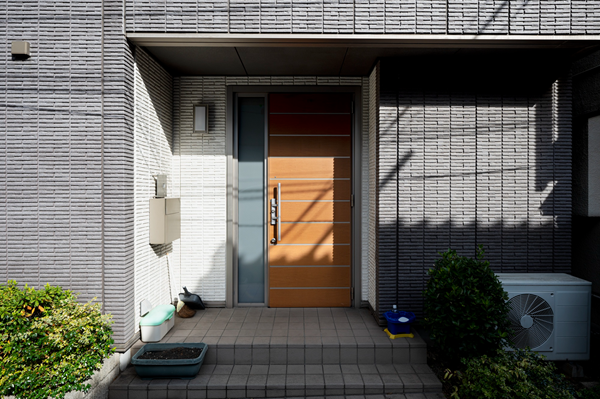
Don’t let harsh NI weather or security threats compromise your home. While composite doors offer premium insulation and durability, quality varies wildly behind the scenes. Ask these 9 essential questions before buying your external door to ensure you get a truly high-spec entryway.
Key Takeaways
- Core & Security Matter Most: Look for a solid timber core over 48mm thick and PAS 24:2022 or Secured by Design certifications to ensure maximum structural rigidity and break-in protection
- Verify NI Compliance & Efficiency: Ensure the door achieves a whole door set U-value of 1.2 W/m² or lower, and confirm your installer is certified to handle NI Building Control compliance and local council planning rules
- Inspect the Hardware & Fine Print: Check that hinges are 3D adjustable to handle the door’s weight, understand exactly what the multi-part warranty covers, and clarify ongoing maintenance to keep the warranty valid
Your front door is the first line of defense of your home. Be it Northern Ireland’s weather or someone who shouldn’t be there. The best option is getting composite doors, because they offer exceptional security, long-lasting durability, and superior thermal insulation, without the hassles of wooden doors.
But before you buy one, you should know that external composite doors largely vary in quality, even though they may look similar in a brochure. You should be able to identify the best among the various options available in the market. So, this blog presents 9 questions that you should ask your provider before you buy any composite door for your home.
9 Questions to Ask Before Buying a Composite Door
Made from a blend of timber, GRP (glass-reinforced plastic), uPVC (unplasticized polyvinyl chloride), and PU (polyurethane) foam, composite external doors are premium modern entryways. Here’s what you should ask to choose the best quality.
Q1. What Is the Door’s Core Construction?
Not all composite doors are built in the same way. Here’s what you need to look for in a core:
- Door thickness should be more than 48mm, which is the industry benchmark for rigidity
- It should have a solid laminated timber core because the alternative foam-filled options are cheaper and less rigid
- The door should have a GRP outer skin because it helps resist warping during wet NI winters or rainy seasons
Q2. What Security Certifications Does It Carry?
Security is the #1 aspect that contributes to your door’s quality. The door should meet the UK security standards for external doorsets like the PAS 24:2022 regulations. It should also meet the police-preferred “Secured by Design (SBD)” specification. Furthermore, it should have a 5 to 10-point locking system, which includes dog bolts installed by the hinges, and the lock should be anti-snap and anti-bump.
Q3. What U-Value Does It Achieve — and Can You Prove It?
Energy costs and damp homes will always be a NI homeowner’s major concern. To make sure that those do not cause any problems, here’s what you should consider:
- Enquire if the actual U-value is 1.2 W/m2 or lower (best if it is 0.85 W/m²K), which is a strong value for NI
- Check if the rating is for the whole doorset or just the slab, and if it carries an energy rating, an A-rated or above is recommended
Q4. Is My Property Subject to NI Planning or Listed Building Rules?
Most standard replacements do not need any planning permission in NI. But you might if your property is a listed building, and you will need a Listed Building Consent. Also, if your property sits within a conservation area, you will need permission. You might also have to consider getting permits if the door specification differs from the original (color, material, and style). To stay compliant, always verify with your local council building control boards before ordering.
Q5. How Does the Installer Handle NI Building Control Compliance?
As a buyer, you should not focus only on the door, but also on the installation compliance. Check if they are FENSA or Certass registered, as these certify compliance with the NI building regulations. Also, ensure that they offer a completion certificate and carry public liability insurance. As poor installation leads to draughts, premature wear, and water ingress, ask your provider to show previous local installations as proof.
Q6. What Hinge System Is Used, and Is It Rated for the Door’s Weight?
Standard composite doors weigh between 40 and 55 kilograms. And hinges that are only rated for the door’s exact weight will sag or wear out prematurely under daily use. Check the following:
- Are the hinges 3D adjustable in terms of lateral, compression, or vertical?
- How many hinges are included as standard?
- What is the weight rating vs. actual door weight?
- What is the maintenance/adjustment process after settling?
Q7. What Does the Warranty Actually Cover — and for How Long?
Check the frame vs. slab vs. hardware features, including locks, letterbox, and handles. The warranty should be transferable if you sell the property, and enquire who handles claims, the installer or manufacturer. Furthermore, incorrect painting or power washing can void the warranty, so when conducting them, make sure they are done right.
Q8. What Customization Options Are Available — and What Adds Cost?
There are a lot of customization options available, and the following are the usual ones that you should consider before buying external doors.
- Dual color option; different inside/outside color options available
- Double (44mm), triple (70mm), or quadruple (120mm) glazing options
- Sidelights and fanlights availability because they impact thermal and security performance
- Hardware finishes, whether they come in chrome, antique brass, or brushed steel variants, prices change accordingly
Q9. What Aftercare and Ongoing Maintenance Does the Door Actually Require?
Most competitors sell the “low maintenance” promise, but might not tell you what it actually covers and means. So you are left unprepared and potentially end up voiding warranties without realizing. Even if the door is marked as maintenance-free, it still needs some oversight.
- Enquire about the frequency of inspecting door seals and weatherstripping
- Ask which cleaning products are safe to use based on the material of your door, and which one voids the warranty
- Check whether the multi-point locking system needs periodic lubrication, and with what
Ready to Buy Your Home’s Composite Door?
When you are buying your home’s entrance or back door, the first thing that you should ensure is its ability to protect. Then consider how it supports your budget. Based on these two factors, composite doors make a huge difference in terms of looks and functionality.
A reputable NI home improvement company will welcome all the aforementioned questions. And if the supplier cannot answer these confidently, keep looking for other options.
