

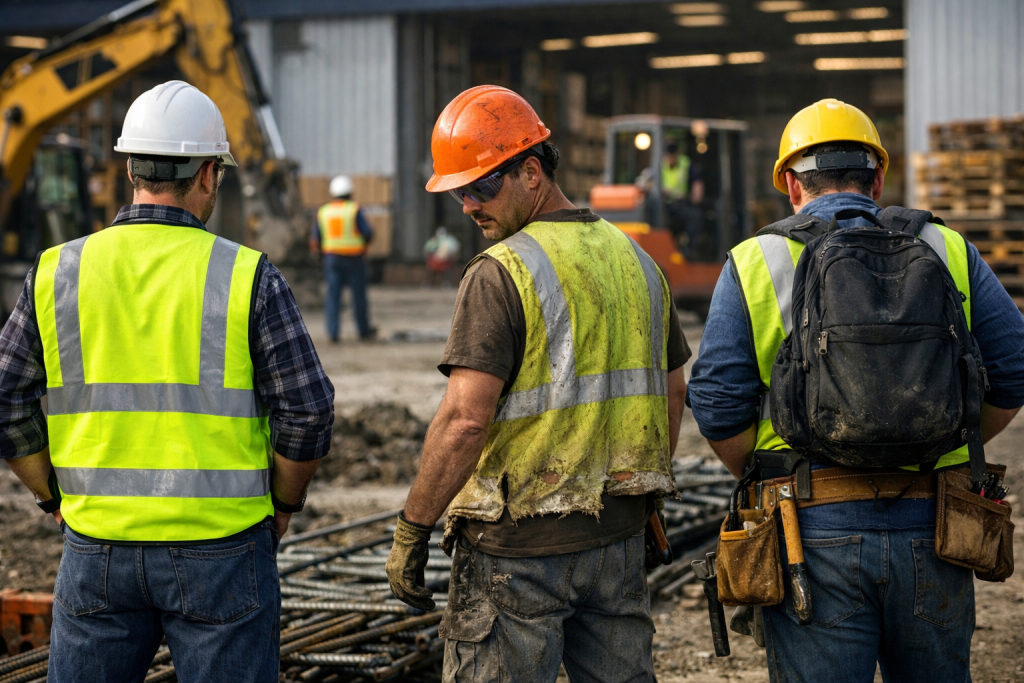
Visit any construction site, warehouse, roadside or any other industrial work place and you will easily recognize one feature among workers. They wear special clothes for better visibility. One of the most essential personal protective equipments (PPEs) is Safety Vest but it often goes unnoticed. hi vis vests are commonly used across various industries to improve worker visibility and reduce risks.
It is thought that one only needs to wear this vest to stay safe. However, there are a number of mistakes that one could make while wearing such an equipment and thus reducing its efficiency making workplace accident more likely or making company not fully compliant with regulations.
Vests play a vital role in prevention of accidents in workplaces that need to ensure high visibility. Even though safety vest is a reliable product that is made with high quality, it can still fail at doing its job if it was worn incorrectly, poorly maintained or selected according to workplace and its conditions.
Selection of the Wrong Type of Safety Vest
This is one of the most overlooked mistakes when it comes to safety vest usage. Many people choose vest because of how it looks or because of low price. All visibility garments are not alike, different types of vest have different standards of visibility depending on traffic speed, lightning or hazards of workplace.
If a person directs traffic near a busy roadway he will need much higher standard of visibility in comparison to a person who works in a brightly lit warehouse. The usage of wrong safety vest will help to fulfill dress code regulation but it will not guarantee sufficient visibility that could help a worker to be noticed by motorists or heavy machinery.
Before you buy a vest consider the workplace conditions in which it will be used.
Incorrect Sizing of the Vest
Sizing of the vest is very important but it is often neglected. The oversized vest will get stuck in the equipment and tight vest could be inconvenient to wear.
Comfort level affects wearing the vest properly. It is likely that the worker would wear it incorrectly or take off in absence of supervision if a vest is uncomfortable to wear.
It should be loose enough to put on over regular work clothes and comfortable enough to forget about it.
Using Damaged and Dirty Vests
Visibility clothes do not provide visibility indefinitely. They are subject to dust, oil, paint, mud, and wear, which gradually reduce reflective qualities. A vest, which seems visible from afar, may have already lost most of its capabilities.
Faded and torn fabric, small rips, and damaged reflective strips are the signals that should never be overlooked. Unfortunately, many companies continue wearing out the gear even when its protective capabilities decline.
Inspection will show which clothes require replacement well before they become dangerous.
Covering the Reflective Parts
This mistake occurs rather often. The tool belts, backpacks, jackets, and any other equipment frequently covers the reflective parts of vests and other visibility clothing.
The reflective strips exist for a reason. Covering them decreases the ability to be seen especially under poor lighting.
Even the highest quality Safety Vest will not function if the critical parts of its reflectors stay covered for the whole working day.
Treat the Gear as an Unneeded Cost Rather Than an Investment
Some companies see the safety clothes as a source of expenditures which should be reduced. As a result, outdated and deteriorated gear stays in usage.
Replacement of worn clothes may be quite inexpensive compared to the cost of workplace accidents. Medical expenses, delays in project realization, claims and lawsuits may be far higher.
Moreover, regular purchase of new visibility clothes in bulk through workwear bundles can decrease total costs of workwear in the long term.
Failure to Provide Training for Workers
No matter how good the visibility equipment is, it loses most of its value if workers do not understand the meaning of its use.
Employees should be aware of situations when the visibility clothes are necessary, how to inspect them properly, and what should be done with damaged gear. It might be surprising but some workers consider the visibility clothes just a part of their uniform.
A short training session can solve the problem reminding workers about the importance of this clothing and encouraging them to report any damage.
Trying to Fit One Type of Garment for Different Needs
Sometimes the task requires the specific combination of protection equipment. For instance, a worker who operates in the food service needs a work apron and someone who directs the traffic needs high visibility clothing.
It would be very ineffective to try to use the same piece of equipment for all activities. Job assessment will reveal
Wearing one piece of clothing at all times may result in insufficient protection. Assessments performed according to job-related factors allow the provision of appropriate protective clothing.
Not Considering the Weather
Weather conditions such as rain, fog, dust, and bad lighting greatly affect visibility. A vest that works well under sunny conditions will be inadequate under adverse weather circumstances.
Most organizations do not take into account changes in environmental factors when selecting appropriate visibility clothing. Waterproof vests and clothing featuring better reflective materials should be selected to increase worker safety.
A preventive measure is better than a reactive action any time of the day.
Conclusion
A Safety Vest is often taken for granted, especially when everything is fine. Nevertheless, this piece of clothing is one of the most critical pieces of equipment aimed at minimizing workplace accidents. Such minor issues as wrong fitting, material damage, wrong clothing selection, and blocked reflective tapes may greatly diminish the effectiveness of a vest.
Organizations that choose proper clothing, inspect them regularly, and educate workers about protective equipment guarantee safety in their companies. It should be remembered that a Safety Vest is much more than a mandatory piece of equipment.
FAQs
1. How often should a Safety Vest be replaced?
A vest should be replaced whenever it becomes faded, torn, heavily stained, or loses its reflective effectiveness.
2. Can I wash a Safety Vest regularly?
Yes. Follow the manufacturer’s care instructions to maintain reflective performance and fabric durability.
3. Why is proper fit important for safety vests?
A proper fit ensures comfort, freedom of movement, and maximum visibility while reducing snagging hazards.
4. Are all safety vests suitable for roadside work?
No. Roadside environments often require higher visibility classifications than indoor workplaces.
5. What should workers check before wearing a safety vest?
Inspect for fading, tears, missing reflective strips, damaged fasteners, and excessive dirt buildup.
6. Can reflective strips lose effectiveness over time?
Yes. Exposure to sunlight, dirt, repeated washing, and general wear can reduce reflectivity.
7. Who is responsible for ensuring safety vests are in good condition?
Both employers and workers share responsibility for inspecting, maintaining, and replacing visibility gear when necessary.
