

In a crowded marketplace, businesses are constantly looking for practical ways to stay visible and memorable. Digital advertising remains important, but physical branded products still offer something online campaigns cannot always provide: repeated real-world exposure.
Among the many promotional products available today, custom bags have become one of the most versatile options for businesses, events, retailers, and growing brands. Unlike disposable giveaways, a well-designed bag can be used repeatedly, giving a brand much more long-term visibility.
From tote bags and backpacks to travel bags, cooler bags, and crossbody styles, custom bags can combine branding, functionality, and customer value in a single product.
Why Bags Work So Well as Promotional Products
One of the biggest advantages of a bag is simple: people actually use it.
A promotional item only creates value if the recipient wants to keep it. Low-cost products that are quickly discarded provide very limited exposure, while practical bags can remain in use for months or even years.
A branded tote might be used for shopping, commuting, events, or everyday errands. A backpack can travel between work, school, gyms, and airports. A duffle bag may become part of a customer’s regular travel routine.
Every time the product is used, the brand gains additional visibility without paying for another impression.
This makes bags particularly attractive for companies that want promotional merchandise to provide ongoing value rather than a one-time advertising moment.
Choosing the Right Bag for the Audience
The most effective promotional bag is not necessarily the most expensive one. It is the one that matches the target audience and intended use.
For example, a lifestyle or fashion brand may choose a minimalist canvas tote with subtle branding. A technology company could prefer a structured backpack with a laptop compartment and organized internal pockets. A fitness brand may select a lightweight duffle or waist bag, while a food and beverage business could benefit from insulated cooler bags.
Companies should think about several factors before choosing a product:
- Who will receive the bag?
- Where will they use it?
- How much should it carry?
- What level of durability is required?
- How visible should the branding be?
- What is the target unit cost?
- Does the bag need special functions or compartments?
Answering these questions early makes it easier to develop a product that customers will genuinely use.
Branding Should Feel Intentional
A large logo is not always the best form of branding.
In many cases, subtle branding creates a more premium product and increases the likelihood that people will use the bag regularly.
There are several common decoration options, including screen printing, embroidery, woven labels, rubber patches, metal logo plates, heat transfer, and custom zipper pulls. The best technique depends on the bag material, brand identity, order quantity, and desired appearance.
For a promotional event, a bold printed logo may be appropriate. For a premium corporate gift, a small embroidered logo or metal badge can create a more refined impression.
The goal should be to make the branding feel like part of the design rather than an advertisement placed on top of it.
Materials Affect Both Cost and Perceived Value
Material selection has a significant influence on how a branded bag looks and performs.
Polyester is commonly used because it is durable, lightweight, and cost-effective. Nylon can provide better abrasion resistance and is frequently used for travel or performance products. Canvas offers a natural and lifestyle-oriented appearance, while PU and other coated materials can create a more fashion-focused look.
Recycled materials are also becoming more popular for companies that want to align promotional products with sustainability goals.
However, material choice should not be based only on appearance. Brands should also consider:
- Fabric strength
- Weight
- Water resistance
- Color consistency
- Printing or embroidery compatibility
- Cleaning requirements
- Overall durability
A promotional product represents the company every time it is used. Poor stitching, weak handles, or low-quality fabric can negatively affect the brand just as easily as good quality can strengthen it.
Customization Goes Beyond the Logo
One reason custom bags are becoming more attractive to businesses is that customization can extend far beyond simply printing a logo on a standard product.
Brands can customize dimensions, colors, fabrics, pocket layouts, straps, lining, zipper pulls, labels, hardware, packaging, and other details.
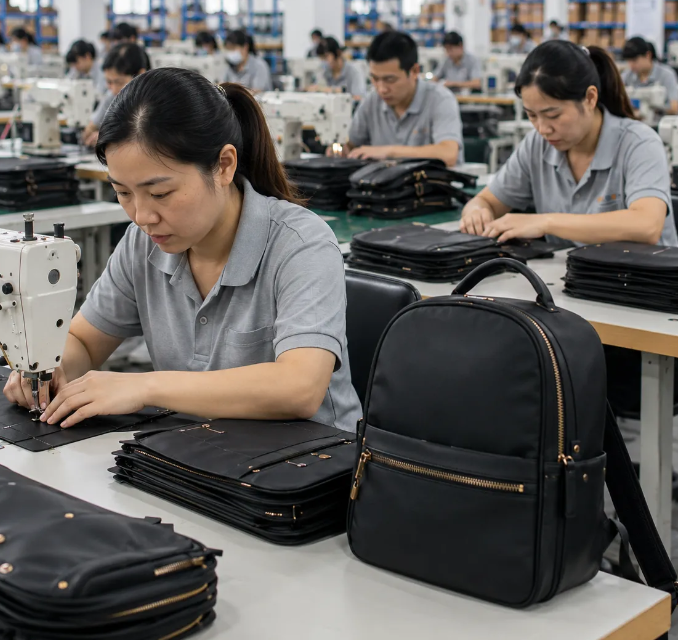
For larger campaigns or private-label projects, working with an experienced custom bag manufacturer can help businesses develop a product that feels more closely connected to their brand identity instead of relying entirely on generic stock bags.
For example, a company may want a tote bag with a specific internal pocket, reinforced handles, and a custom lining color. A travel brand might want a lightweight backpack with a luggage strap and hidden passport compartment. An event organizer may require a simple promotional bag in a custom Pantone color.
These details can significantly improve how customers perceive the final product.
Promotional Bags Can Support Different Marketing Goals
Custom bags are useful because they can support several different types of campaigns.
Events and Trade Shows
Trade shows often involve brochures, samples, catalogs, and promotional materials. A branded tote or lightweight backpack gives visitors a practical way to carry these items while also increasing brand visibility around the venue.
Employee and Corporate Gifts
A well-designed laptop bag, backpack, or travel bag can become a useful employee gift. These products can also be used for onboarding kits, company anniversaries, conferences, and business travel.
Retail Promotions
Retail brands can offer reusable bags as part of a purchase promotion, loyalty program, or seasonal campaign. When the design is attractive enough, the bag itself can become part of the brand experience.
Influencer and PR Packages
Brands sending products to influencers, journalists, or partners can use customized bags as part of the packaging. This creates a stronger presentation and gives recipients an additional reusable item.
Product Merchandise
For creators, sports organizations, lifestyle brands, and communities, bags can become merchandise rather than giveaways. This allows companies to develop products with greater attention to design, materials, and branding.
Sampling Helps Prevent Expensive Mistakes
Before placing a larger order, businesses should normally review a physical sample.
A sample allows the buyer to check fabric quality, color, dimensions, logo placement, stitching, zippers, hardware, compartments, and overall appearance.
It also provides an opportunity to make adjustments before production begins.
A logo that looked perfectly sized on a computer screen may appear too large on the physical product. A shoulder strap may need to be longer. A pocket may need to move slightly. The selected fabric might feel heavier or lighter than expected.
Finding these issues during sampling is much easier and less expensive than correcting them after bulk production.
Quality Matters More Than the Lowest Price
Promotional merchandise is often purchased under strict budgets, but choosing entirely based on the lowest unit cost can be risky.
A bag with weak seams, poor zippers, uncomfortable straps, or inconsistent printing may not be used for long. That reduces both the practical value and the marketing value of the product.
Instead, companies should compare suppliers based on several factors:
- Material quality
- Construction
- Customization capability
- Sampling process
- Communication
- Quality control
- Lead time
- Packaging
- Production consistency
A slightly higher-quality product that remains in regular use can generate much more exposure than a cheaper product that is quickly discarded.
A Practical Product Can Become a Long-Term Brand Asset
The strongest promotional products are useful enough that customers stop thinking of them as promotional items.
A backpack becomes the bag they take to work. A tote becomes part of their weekly shopping routine. A travel bag becomes something they carry through airports and hotels.
When that happens, branding becomes part of everyday life.
This is why custom bags can offer such strong long-term value. They combine practical function with repeated visibility, while still giving businesses considerable freedom in design, materials, and customization.
For companies planning their next promotional campaign, corporate gift, retail collection, or branded merchandise project, a well-designed custom bag can be much more than packaging. It can become a product customers actually want to keep.
