

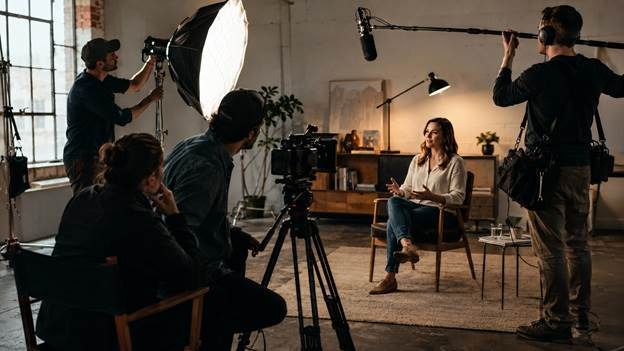
Audiences rarely know which camera captured a video, how many lights were used, or what the production spent on the location. They notice something simpler: whether the finished piece feels intentional.
That difference matters more than ever. Brands, independent creators, musicians, agencies, filmmakers, and businesses are producing video for websites, social platforms, advertising, events, internal communications, and streaming channels. Better equipment is easier to access, editing software is more capable, and AI can accelerate parts of the workflow. Yet technical access does not automatically create professional results.
Professional-looking video is less about making every frame expensive and more about controlling the decisions viewers can feel: story, light, sound, performance, locations, camera movement, continuity, pacing, and delivery.
Here are the production choices that create that control.
1. Start With the Message the Viewer Should Remember
Production becomes unfocused when the team begins with equipment instead of purpose.
Before discussing lenses, locations, or visual effects, define what the audience should understand after watching.
Product films may need to demonstrate one feature clearly. Recruitment videos may need to make the workplace feel credible and human. Music performances can depend on atmosphere rather than explanation. Founder interviews may work best when the audience feels trust rather than spectacle.
Once that purpose is clear, creative decisions become easier to judge.
Dramatic crane shots can look impressive, but if they add nothing to the message, they may simply consume setup time and budget. Sometimes a quiet close-up with strong performance carries more value.
The strongest production choices have a reason to exist.
2. Turn the Creative Idea Into a Production Plan
Mood boards and treatments show what the team wants to achieve. Production planning explains how it will happen.
Break the idea into real requirements.
How many locations are involved? How many people appear on camera? Does the concept require daylight, night work, controlled sound, special props, vehicles, choreography, drones, studio builds, or several wardrobe changes?
Each answer creates dependencies.
Night filming changes lighting, crew hours, transport, and location access. Adding another location introduces travel, loading, parking, resets, and new permissions. Choreography affects rehearsal time and camera coverage.
This is the point where creative ambition meets the schedule.
Teams using professional video production support can connect pre-production, filming, and post-production requirements rather than treating each stage as a separate problem.
3. Light for the Story, Not for the Equipment List
More lighting does not automatically create better images.
The visual goal determines what the lighting needs to do.
Beauty campaigns may demand controlled, flattering light and careful skin tones. Documentary interviews may benefit from a natural environment that still gives the subject shape. Music videos can intentionally use harder contrast, color, silhouettes, or practical lights inside the frame.
Good lighting also considers consistency.
If an interview lasts three hours beside a window, daylight may change dramatically. The first answer could look soft and balanced while the final answer is hit by direct sun.
Production teams need to decide whether to control the daylight, reposition the subject, modify the window, or build a lighting setup that remains stable.
Viewers may never identify the technical solution. They notice when shots feel as though they belong together.
4. Treat Sound as Part of the Image
Weak sound can make excellent cinematography feel amateur.
Dialogue needs to be understandable. Background noise needs to support rather than overpower the scene. Music, ambience, interviews, and effects need enough separation for post-production to shape them.
Location scouting should therefore involve listening as carefully as looking.
Air-conditioning systems, roads, aircraft, refrigerators, crowds, lifts, construction, music from neighboring businesses, and generators can all create problems.
Microphone choice matters, but microphone placement and environmental control matter too.
Production teams should also capture room tone, wild lines, or additional sound where the edit may need them later.
VentMagazines readers interested in the wider skill set behind filmmaking can also explore the site’s article on building a creative career through videography.
Visual storytelling is never only visual.
5. Scout Locations as Workplaces
A photograph can prove that a location looks right. It cannot prove that the production can work there efficiently.
Check access.
Where does the crew unload? Are stairs involved? Is there a freight elevator? How far is parking from set? Can large equipment pass through the doors? Where will talent prepare? Are bathrooms available? Is there stable power? What hours can the crew enter and leave?
These details affect both time and money.
Imagine a commercial scheduled in a fourth-floor space with no lift. Lighting, grip, camera cases, monitors, wardrobe, and art materials all need to be carried upstairs. The visual concept may still work, but the schedule and crew plan need to reflect the physical reality.
Location decisions should include the world outside the frame.
6. Build the Crew Around the Technique
Crew size should follow what the production needs to execute.
Simple interviews and complex moving-camera sequences do not require the same structure.
Define responsibility clearly.
Who manages the camera package? Who controls focus? Who owns media backups? Who handles playback? Who manages lighting and power? Who coordinates the location? Who tracks releases? Who communicates schedule changes?
Titles vary between production markets, so scope matters more than assumptions.
This becomes especially important when filming internationally. Local crew members may bring knowledge of suppliers, permits, transportation, languages, locations, and working practices that a visiting team cannot gain from remote research alone.
Clear responsibility prevents small gaps from becoming expensive delays.
7. Make Camera Movement Earn Its Place
Modern production has access to gimbals, drones, sliders, dollies, cranes, handheld rigs, stabilized vehicles, and compact cameras that can move almost anywhere.
Movement should still serve the scene.
Slow push-ins can create intimacy. Handheld work may give a documentary immediacy. Locked-off framing can make an interview feel calm and authoritative. Fast movement might suit performance, sport, or energetic social content.
Using movement simply because the equipment is available can make the video feel restless.
The same principle applies to lens choice.
Wide lenses place subjects inside an environment. Longer lenses can isolate them. Close focus can emphasize products or details.
Each tool influences how the viewer experiences the subject.
Technique becomes professional when the reason for using it is visible in the result.
8. Shoot for the Edit You Actually Need
Editors cannot create missing coverage.
Before filming, map the moments required to build the final piece.
Interviews may need wide, medium, and detail coverage. Product films benefit from clean hero shots, demonstrations, hands, close-ups, contextual use, and supporting B-roll. Events require establishing material, audience reactions, speakers, details, sponsor elements, and transitions.
The production should also consider multiple formats.
Widescreen masters may later need vertical and square versions. Important subjects placed at opposite edges of a 16:9 frame may not survive a 9:16 crop.
Capture enough composition flexibility or dedicate selected takes to alternate formats.
Creative professionals interested in the hardware side of post-production can also see VentMagazines’ ASUS ProArt P16 review for video editing and creative work.
Powerful editing hardware helps. It cannot replace footage that was never captured.
9. Protect the Footage Before Calling the Day Finished
Shoot-day success means very little if the files are not protected.
Set a data process before the first card fills up.
Who copies the media? How many backups are required? Who verifies the transfer? Where are the drives stored? When can the original card be formatted?
Two copies placed in the same bag are vulnerable to the same loss or damage.
Organization matters as well.
Consistent folders, camera labels, audio files, slate information, interview names, production notes, and release documents make post-production faster.
The editor should receive a structured project, not a digital mystery.
10. Plan Rights and Releases Around Real Distribution
Content often travels further than originally expected.
Campaigns may begin on a website and later expand into paid advertising, social media, events, regional versions, or sales materials.
Talent agreements and location permissions need to match the intended use.
Clarify media, territories, duration, exclusivity, still extraction, behind-the-scenes content, and derivative versions where relevant.
Artwork, photographs, logos, archive footage, music, and branded materials visible in the frame can introduce other clearance questions.
Solving those issues before release is usually much easier than replacing an important shot during the final edit.
11. Use Local Expertise When the Production Travels
International shoots add unfamiliar variables.
Equipment inventories differ. Crew structures change. Permit processes vary. Weather behaves differently. Travel times are difficult to judge remotely. Locations may have working restrictions that are not obvious during early research.
Local production knowledge reduces those uncertainties.
The goal is not to replace the traveling creative team. It is to give that team reliable information about the market where the work is happening.
Projects coordinating international production services can bring local crews, equipment, locations, logistics, filming, and related production requirements into one planning structure.
That approach becomes particularly useful for brands, agencies, documentary teams, and creative companies producing in several countries.
12. Give Post-Production a Better Starting Point
Editing is not where production mistakes magically disappear.
Post-production works best when footage arrives with clear technical and creative information.
Confirm frame rates, codecs, color workflow, audio organization, graphics requirements, subtitles, aspect ratios, file naming, and final deliverables.
Feedback needs structure too.
“Make it more exciting” leaves the editor guessing.
“Shorten the opening and reach the product demonstration by 0:15” identifies both the problem and the intended outcome.
Centralized feedback also prevents several stakeholders from giving contradictory instructions.
Strong post-production depends on good material and clear decisions.
Professional Does Not Mean Overproduced
Viewers do not need every video to look like a feature film.
They need the production choices to feel appropriate for the story.
Small documentary interviews can look professional with thoughtful framing, clean sound, controlled light, and honest environments. Social campaigns can feel polished without enormous crews when format, performance, coverage, and delivery are planned properly.
Conversely, expensive equipment cannot rescue unclear messaging, bad audio, unrealistic scheduling, weak coverage, or disorganized post-production.
Professional video is ultimately a chain of deliberate decisions.
Define the message. Translate it into practical requirements. Build the crew around the technique. Scout beyond appearance. Protect sound and footage. Plan the edit before filming. Confirm rights. Use local knowledge when the project travels.
When those pieces work together, audiences do not see the production machinery.
They simply see a video that feels like it knows exactly what it is doing.
