

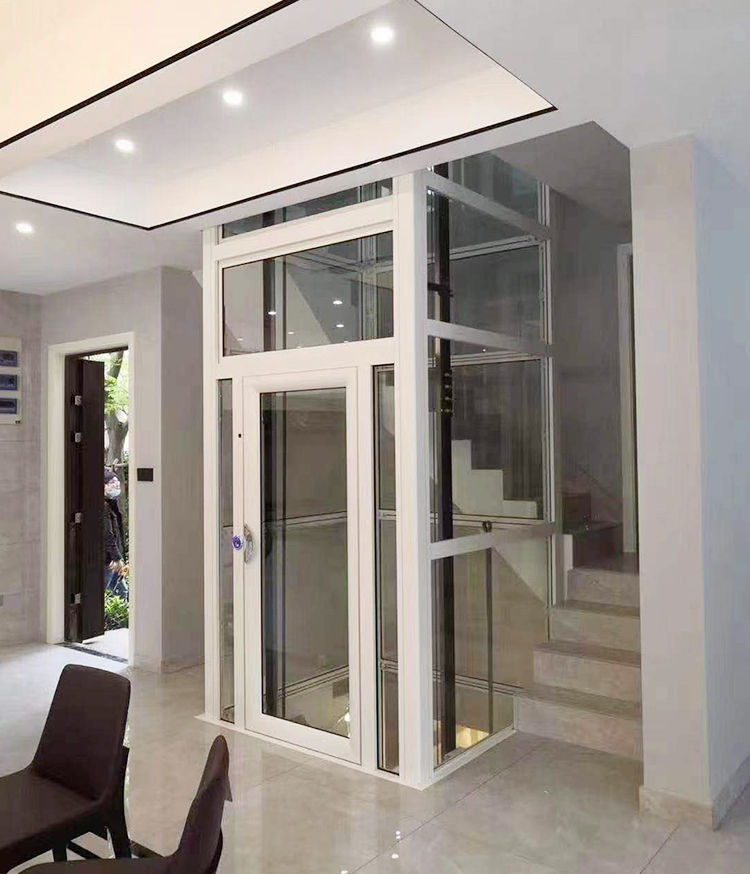
The reasons homeowners install villa elevators have changed over the years. Once considered a luxury reserved for the very wealthy, residential elevators are now seen as practical investments that improve quality of life and future-proof a home.
Accessibility is the primary driver. A staircase that is easy at forty can become a challenge at sixty and a barrier at eighty. A villa elevator allows homeowners to remain in their home as they age, rather than being forced to move to a single-story property or an assisted living facility.
Convenience is another factor. Carrying groceries, luggage, or laundry between floors is tedious. A villa elevator makes daily tasks easier and reduces the risk of falls, which are one of the most common causes of injury in the home.
Property value is a consideration. In many markets, a villa elevator is seen as a premium feature that increases the value and marketability of a home. Buyers with mobility concerns or aging parents may prioritize properties with elevators.
Multigenerational living is also driving demand. Adult children moving back in with parents, parents moving in with adult children, and grandparents helping raise grandchildren all create households where different generations need different levels of mobility support. A villa elevator allows a family to share the same home comfortably.
The Different Types of Villa Elevators
Villa elevators are available in several types, each suited to different home layouts and installation requirements.
Traction villa elevators use a cable and counterweight system. They require a hoistway and typically a machine room, though machine-room-less designs are increasingly common. They offer smooth, quiet operation and are energy efficient. They are most common in new construction where a hoistway can be designed into the home from the start.
Hydraulic villa elevators use a piston to lift the car. They require a power unit that can be located in a nearby closet or utility space. They are reliable, can handle heavier loads, and are common in retrofit applications where a hoistway can be added but a machine room is difficult to accommodate.
Machine-room-less villa elevators eliminate the need for a separate machine room. The machinery is compact and fits within the hoistway. These are popular in homes where space is limited.
Pneumatic villa elevators use air pressure to lift the car. They require no pit, no hoistway, and no machine room. They are the easiest to install in existing homes but have lower capacity and speed.
Key Features to Evaluate
When evaluating a villa elevator, several features distinguish a good system from a poor one.
The drive system is the most important technical consideration. Traction drives offer the smoothest ride and the best energy efficiency. Hydraulic drives offer reliability and higher capacity. Pneumatic drives offer the simplest installation. The right choice depends on the home’s layout, the available space, and the owner’s priorities.
The car size and capacity determine who can use the elevator and what they can bring with them. A small car may accommodate one or two people. A larger car may accommodate a wheelchair and an attendant. The manufacturer should offer a range of sizes to match the home’s needs.
The finish options allow the elevator to blend with the home’s decor. Manufacturers offer a range of materials, including wood veneer, glass, stainless steel, and custom colors. The car interior, the doors, and the fixtures should be selectable to match the home’s style.
The safety features are essential. Villa elevators must meet safety standards for residential applications. These include door interlocks, emergency alarms, battery backup for emergency lowering, and overspeed protection. The manufacturer should provide documentation of compliance.
The warranty and service program protect the homeowner’s investment. A good manufacturer offers a comprehensive warranty and a service program that includes regular maintenance and prompt repair. The availability of spare parts and local service technicians should be confirmed.
What to Consider When Selecting a Manufacturer
The selection process begins with the home. What type of villa is it? How many floors? Is the elevator for new construction or a retrofit? What is the available space? What is the budget? The answers to these questions define the type of elevator and the level of performance required.
The manufacturer’s experience with residential projects is the next consideration. A manufacturer who has installed many villa elevators understands the unique challenges of working in occupied homes and integrating equipment with high-end finishes.
The manufacturer’s product range is the third consideration. The home may need a small elevator for two people or a larger one for a wheelchair. A manufacturer who offers a range of sizes and configurations can match the product to the need.
The manufacturer’s service capabilities are the fourth consideration. Villa elevators require maintenance, repair, and occasional modernization. The manufacturer’s service network and parts availability must be adequate for the homeowner’s location.
The manufacturer’s references are the fifth consideration. Homeowners who have installed the manufacturer’s elevators can provide feedback on performance, reliability, and service. This information is more valuable than any brochure.
The Installation Process
The installation of a villa elevator is a significant project. It involves structural modifications, electrical work, and finish carpentry. The process typically takes several days to several weeks, depending on the type of elevator and the complexity of the installation.
The manufacturer or its authorized dealer typically manages the installation. They coordinate with the homeowner, the contractor, and the building inspector. They ensure that the installation meets all applicable codes and standards.
After installation, the elevator is tested and inspected. The homeowner is trained on its operation and maintenance. A warranty covers the equipment and the installation.
The Bottom Line
A villa elevator is more than a mobility aid. It is an integrated feature of a luxury home, designed to enhance daily life and add lasting value to the property. The choice of a manufacturer affects the home’s value, its occupants’ quality of life, and the long-term cost of ownership. For homeowners considering a villa elevator, understanding what these systems do and how to evaluate them is essential to making a sound decision. The elevator will be in service for decades. The manufacturer relationship often lasts just as long.
