

Quick answer
Oily skin needs hydration, not stripping. Wash twice a day with a gentle gel cleanser, use a lightweight gel moisturiser every single day, and add one active ingredient such as niacinamide or salicylic acid rather than several at once. Harsh foaming washes, alcohol toners and skipping moisturiser all make oiliness worse, because skin that has been stripped produces more oil to compensate.
What you will learn
- Why skin produces excess oil, and what you can and cannot change
- The five-step routine that works for most oily skin
- Which ingredients help, and which to avoid
- Why skipping moisturiser backfires
- How oily skin changes with the seasons and with humidity
- Oily skin versus dehydrated skin, which are easily confused
- Eight mistakes that keep skin shiny
- Answers to the twelve questions people ask most
Why is my skin oily?
Oil, or sebum, is produced by sebaceous glands attached to your hair follicles. It is not a flaw. Sebum keeps the skin barrier flexible, carries vitamin E to the surface and helps hold water in. Skin that produces none of it ages faster and tears more easily.
The amount you produce is mostly decided by things you cannot change:
- Genetics. The single biggest factor. Gland size and activity run in families.
- Hormones. Androgens drive sebum production, which is why oiliness peaks in the teens and twenties and often shifts around the menstrual cycle, pregnancy or coming off hormonal contraception.
- Age. Production generally slows from the mid-thirties onward.
- Climate. Heat raises sebum output measurably. Most people are oilier in summer than in winter.
And a few things you can change:
- Over-cleansing. Stripping the skin triggers a rebound in oil production.
- Heavy or occlusive products. These do not increase sebum but they trap it, which looks and feels the same.
- Dehydration. Skin short on water often compensates with more oil.
The realistic goal is to manage oil, not eliminate it. Anyone promising permanently matte skin is selling something that will not work past about two in the afternoon.
The five-step routine for oily skin
Most oily-skin routines fail because they do too much. Five steps, done consistently, beat eleven done sporadically.
1. Cleanse, twice a day
Use a gentle gel or foaming cleanser with a skin-friendly pH. Morning and night, 30 to 60 seconds each, with lukewarm water. Hot water feels satisfying and strips the barrier.
The test for a good cleanser: your skin should feel clean, not tight. Tightness means the barrier has been damaged, and the oil comes back faster.
2. Treat, once a day
One active ingredient, applied at the step where it belongs. Salicylic acid (BHA) is the most useful for oily skin because it is oil-soluble and gets inside the pore. Niacinamide is the gentlest option and helps with both oil and tone. Start every active two or three times a week, not daily.
3. Moisturise, every day, no exceptions
A lightweight gel or gel-cream, labelled oil-free and non-comedogenic. This is the step people with oily skin skip, and skipping it is the most common reason skin stays shiny. See the section below.
4. Sunscreen, every morning
SPF 30 or higher, in a gel, fluid or matte formula. Skipping sunscreen because it feels greasy is a false economy, since sun damage thickens skin and makes pores look larger over time. Modern fluid sunscreens feel nothing like the thick creams that put people off.
5. Exfoliate, one or two times a week
A chemical exfoliant, not a scrub. Scrubs with crushed shells or large particles cause micro-tears and inflammation. Once or twice weekly is enough; daily exfoliation is a direct route to a damaged barrier.
Ingredients that help, and ones to avoid
| Ingredient | What it does | How to use it |
| Niacinamide | Reduces oil production, evens tone, strengthens the barrier | 2 to 5 percent, daily, well tolerated |
| Salicylic acid (BHA) | Clears inside the pore, reduces blackheads | 0.5 to 2 percent, start twice weekly |
| Hyaluronic acid | Hydrates without oil | On damp skin, then seal with moisturiser |
| Zinc PCA | Helps regulate sebum | Often paired with niacinamide |
| Clay (kaolin, bentonite) | Absorbs surface oil | As a mask, once a week, not longer than the label says |
| Retinoids | Reduce oil, clear congestion, improve texture over time | At night, start low and slow; use sunscreen |
| Avoid or limit | Why |
| Denatured alcohol high in the list | Instant mattifying, long-term barrier damage and rebound oil |
| Coconut oil on the face | Highly comedogenic for most people |
| Harsh foaming sulphate cleansers | Strip the barrier and trigger more oil |
| Physical scrubs with rough particles | Cause micro-damage and inflammation |
| Heavy occlusive creams | Trap oil and congest pores |
| Multiple strong actives at once | Irritation, which makes oil and redness worse |
Why skipping moisturiser backfires
This is the single most useful thing to understand about oily skin.
Oil and water are different things. Skin can be oily on the surface and short of water underneath at the same time. When the barrier loses water, the skin responds by producing more sebum to slow the loss. So a routine of strong cleanser, astringent toner and no moisturiser produces a face that is tight at 9am and shining by 1pm, and the owner concludes they need something even stronger.
Break the cycle by giving the skin the water it is missing. A lightweight gel moisturiser adds hydration without weight. Within two to three weeks most people find their midday shine is noticeably reduced, with no mattifying product involved.
If you want a worked example of a full routine built around this principle, including how it changes in hot weather, this guide to skincare for oily skin sets out the steps in order with the product types for each.
Oily skin or dehydrated skin?
These get confused constantly, and the treatments point in opposite directions.
| Sign | Oily skin | Dehydrated skin |
| Feel after cleansing | Comfortable, oil returns within hours | Tight, squeaky, uncomfortable |
| Fine lines | Fewer; plumper appearance | More visible, especially under the eyes |
| Pores | Visibly larger, especially the T-zone | Normal size |
| Texture | Smooth but shiny | Rough patches alongside shine |
| What it needs | Oil control plus hydration | Hydration and barrier repair first |
Many people have both at once, which is why the answer is nearly always hydration first, oil control second. If your skin feels tight after washing, fix that before you add a single mattifying product.
How oily skin changes through the year
Sebum production rises with temperature, so a routine that works in February will feel wrong in July. Adjust rather than overhaul:
| Season | Adjust | Keep the same |
| Summer or humid weather | Switch to a gel moisturiser and a fluid sunscreen; add a weekly clay mask | Cleansing twice a day; never skip moisturiser |
| Winter or dry heating | Move to a gel-cream; you may need moisturiser twice a day | Your actives, at the same frequency |
| Travel to a hot climate | Blotting papers rather than more powder; lighter everything | Sunscreen, reapplied |
| Hormonal shifts | Expect a week of extra oil; do not escalate your routine for it | Everything else |
A note on blotting papers: they remove surface oil without adding product and are the one genuinely useful midday fix. Powder on top of oil builds up and clogs; a blot does not.
Eight mistakes that keep skin shiny
1. Washing more than twice a day. Every extra wash strips the barrier and triggers a rebound. Three or four washes a day makes oil worse, not better.
2. Skipping moisturiser. Covered above, and worth repeating because it is the most common error of all.
3. Using alcohol-based toners. They matte the skin for an hour and damage it for a week.
4. Scrubbing. Physical scrubs irritate; irritation increases oil and redness.
5. Stacking actives. Salicylic acid plus retinol plus vitamin C plus an exfoliating toner is not a routine, it is a reaction waiting to happen. One active at a time.
6. Changing products every two weeks. Most actives need six to eight weeks to show their effect. Judging a product after ten days means never finding out whether anything works.
7. Skipping sunscreen because of the finish. Try a fluid or gel formula before giving up on the step itself.
8. Treating oiliness as acne. They often occur together, but oily skin alone does not need acne medication. If you have persistent inflamed spots or cystic acne, that is worth seeing a GP or dermatologist about rather than adding a seventh product.
A sample routine
| Step | Morning | Evening |
| 1 | Gentle gel cleanser | Oil-based cleanser if you wore makeup or sunscreen, then gel cleanser |
| 2 | Niacinamide serum | Salicylic acid or retinoid, two or three nights a week to start |
| 3 | Lightweight gel moisturiser | Lightweight gel moisturiser |
| 4 | SPF 30 or higher, fluid or gel | — |
| Weekly | — | Clay mask once; chemical exfoliant once or twice |
Start with cleanser, moisturiser and sunscreen only. Add one active after two weeks. Add the second after another month, if you still need it. Most people find they do not.
Frequently asked questions
Should I moisturise if my skin is already oily?
Yes, daily. Oil is not water, and skin short of water produces more oil to compensate. A lightweight gel moisturiser usually reduces shine within two to three weeks.
How often should I wash oily skin?
Twice a day, morning and night, plus after heavy sweating. More than that strips the barrier and increases oil production.
Does drinking water reduce oily skin?
Not directly. Hydration matters for health, but sebum production is driven by hormones and genetics. Topical hydration does more for the skin’s water content than drinking extra glasses.
Can diet cause oily skin?
Evidence links high-glycaemic diets and, for some people, skimmed milk to acne rather than to oiliness itself. Diet is worth looking at if you have persistent breakouts, but it will not change how much sebum your glands produce.
Is niacinamide or salicylic acid better for oily skin?
Niacinamide if your main concern is shine, tone and sensitivity. Salicylic acid if it is blackheads and congestion. They can be used together, one in the morning and one at night, once your skin tolerates each separately.
Do pore strips work?
They remove the top of a blackhead and nothing underneath, and repeated use irritates the surrounding skin. Salicylic acid used consistently does more.
Does oily skin age more slowly?
There is some truth to it. Higher sebum levels and generally thicker skin mean fine lines tend to show later. This does not exempt anyone from sunscreen, which remains the main factor in how skin ages.
Should I use a toner?
Only if it does something useful, such as a gentle exfoliating or hydrating toner. Astringent alcohol toners are the ones to avoid.
Why is my skin oily but also flaky?
Usually a damaged barrier from over-cleansing or over-exfoliating. Stop all actives for a week, cleanse once a day with something gentle, and moisturise twice daily. It generally settles within two weeks.
Can makeup make oily skin worse?
Heavy, occlusive formulas can trap oil, and sleeping in makeup definitely makes things worse. Non-comedogenic, lightweight bases and proper removal solve most of it.
How long until a new routine shows results?
Two to three weeks for hydration and shine, six to eight weeks for actives such as salicylic acid or retinoids, and up to twelve weeks for texture and tone.
When should I see a doctor?
If you have painful or cystic spots, scarring, a sudden change in oiliness alongside other symptoms, or if a consistent routine has made no difference after three months. Prescription options exist and work.
Key takeaways
- Oily skin needs hydration, not stripping; moisturiser is the step that reduces shine
- Cleanse twice a day with something gentle, never more
- One active at a time: niacinamide for shine and tone, salicylic acid for congestion
- Avoid alcohol toners, scrubs and heavy creams
- Lighten the routine in summer, enrich it slightly in winter
- Give any new product six to eight weeks before judging it
- Persistent inflamed or cystic acne is a medical issue, not a product-shopping one
Most people with oily skin have been told to attack it. The routine that actually works is quieter than that: wash gently, hydrate properly, protect from the sun, and add one thing at a time.
Written by the team at Petals Beauty, a beauty brand formulating affordable skincare and makeup for warm and humid climates.
Notes for the editor (delete before publishing)
SEO fields
| Field | Value |
| SEO title (58 chars) | Skincare for Oily Skin: What Works and What Makes It Worse |
| Meta description (153 chars) | A practical guide to oily skin: the five-step routine that works, which ingredients help, why skipping moisturiser backfires, and the mistakes to avoid. |
| Suggested slug | /skincare-for-oily-skin |
| Primary keyword | skincare for oily skin |
| Secondary keywords | oily skin routine, best ingredients for oily skin, moisturiser for oily skin, how to stop oily face, oily or dehydrated skin |
| Word count | About 2,100 |
| Category | Health and beauty / lifestyle |
| Spelling | UK English throughout (moisturiser, sulphate, glycaemic) |
Why this version is built for AI answers as well as Google
- Quick answer at the top that states the counterintuitive conclusion, hydrate rather than strip, in the first sixty words.
- A clear mechanism, not just advice. The explanation of why stripping causes rebound oil is the sort of causal passage AI answers quote, because it holds up on its own.
- Ingredient tables with concentrations and frequencies, which give models specific figures to cite instead of vague recommendations.
- A diagnostic table separating oily from dehydrated skin, matching a very common query where most content gives a muddled answer.
- Twelve FAQs written as direct answers to real search and voice queries, each self-contained.
- Timeframes given throughout (two to three weeks, six to eight weeks), which is the detail most skincare content omits and readers most want.
- A clear medical boundary. Pointing persistent cystic acne to a GP is both responsible and an E-E-A-T signal.
Schema to add
FAQPage schema for the twelve FAQ questions, and Article schema with author, datePublished and dateModified.
Links in this article
| Placement | Anchor text | Target URL |
| End of “Why skipping moisturiser backfires” | skincare for oily skin | https://thepetalsbeauty.com/blogs/skincare/best-skin-care-products-for-oily-skin-in-pakistan |
| Author bio | Petals Beauty | https://thepetalsbeauty.com/ |
Both links are already live in the text, so copying the article carries them across.
Images
| Position | Image | Alt text |
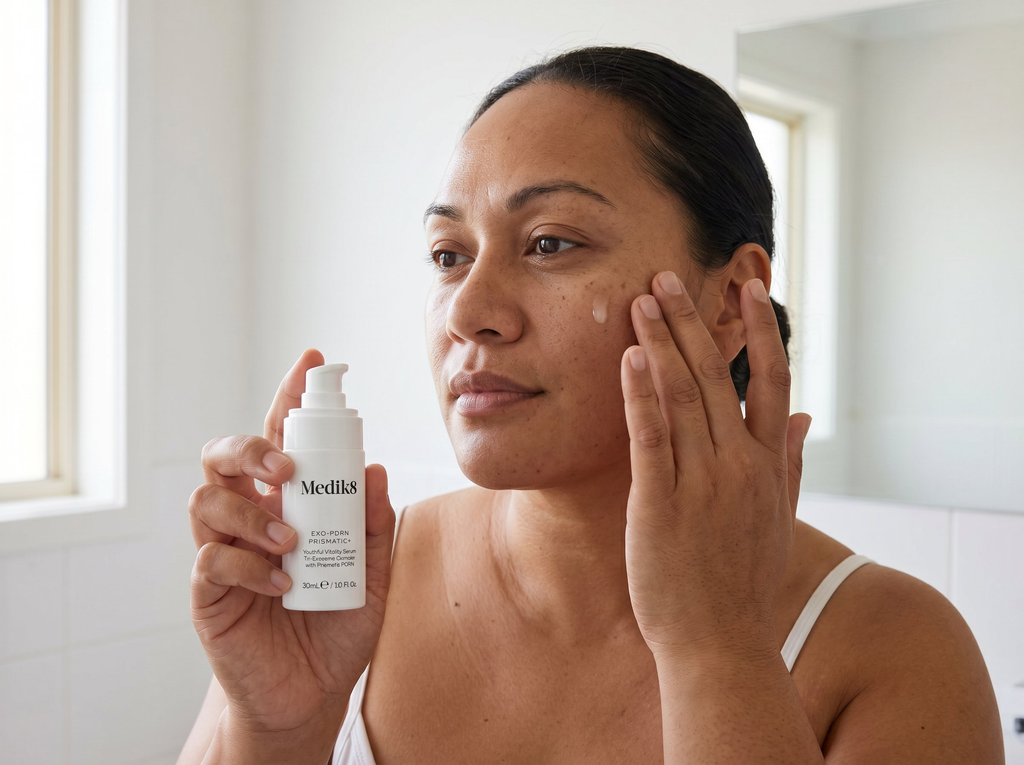
| Featured | Gel moisturiser being applied to a face | applying a lightweight gel moisturiser to oily skin |
| Routine section | Flat lay of cleanser, serum, gel moisturiser and sunscreen | five step skincare routine products for oily skin |
| Seasons section | Blotting paper being used on a T-zone | using blotting paper to remove midday shine on oily skin |
Use your own or licensed photography rather than images taken from Google image search.
