

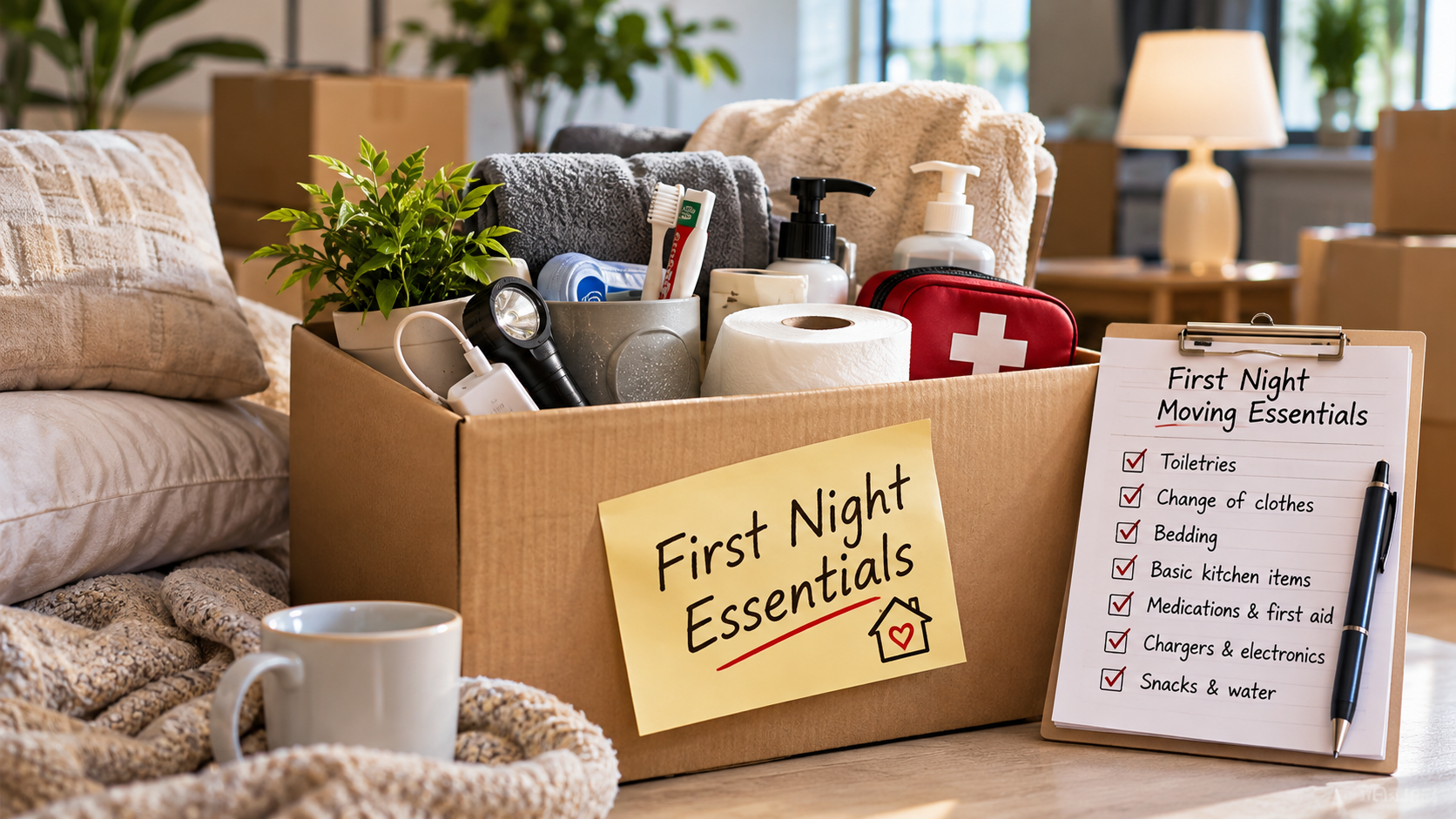
It is 9 p.m. The truck is empty, your legs ache, and your phone is at 6 percent. Somewhere inside a wall of nearly identical cardboard boxes are your toothbrush, your charger, and a clean pair of socks.
This is the exact moment a moving essentials box pays off. What to pack comes down to five jobs: sleeping, washing, eating something simple, charging your devices, and opening more boxes. Fill one clearly marked box (or two, for a bigger household) with bedding, toiletries, a change of clothes, snacks, chargers, and a few basic tools. Pack it last, and carry it yourself.
The rest of this guide explains how to decide what earns a spot, what to keep out of the box entirely, and a few safety items most checklists forget.
What Is a Moving Essentials Box?
A moving essentials box is a single container, sometimes called an “open first” or first-night box, that holds everything you need during your first evening and morning in a new home. It stays separate from the main load and is the first thing you unpack.
It helps to think in three layers, because people often blur them together:
- Your personal bag: items that never leave your hands, such as medications, documents, and valuables.
- The essentials box: the comfort and function items for night one and morning two.
- The first-week box (optional): things like extra kitchen basics and cleaning supplies that you can wait a few days for.
Keeping these layers apart stops the essentials box from turning into a second kitchen, which is the most common way it fails.
Use the Five-Job Test to Decide What to Pack
Ask one question about every item: does it help me sleep, wash, eat, charge, or open things tonight? If the answer is no, it can wait in a regular box.
This test works better than copying a long list, because it adapts to your household. A single adult in a furnished rental needs less than a family of five moving into a house with no furniture set up. The jobs stay the same; the quantities change.
A useful side effect is that the test keeps the box light. A box you can lift with one arm is a box you will actually carry in first.
The Moving Essentials Box Checklist, Job by Job
Start with the items below, then trim or add based on your own routine.
Sleep
- Sheets for each bed you will use, plus pillows and a light blanket
- Pajamas and a fresh outfit for the next day
- Earplugs or a sleep mask if your new street is an unknown
- Phone-charging cable that reaches the bed
Wash
- Toothbrushes, toothpaste, soap, and any skin or hair basics
- One towel per person
- Toilet paper (more than you think) and hand soap
- Hand sanitizer and a few tissues
Eat
- Water bottles and shelf-stable snacks, such as crackers, fruit, or granola bars
- Paper plates, cups, and a few forks
- Coffee or tea supplies, plus a mug and a small kettle if your mornings depend on them
- Dish soap and a sponge, in case you use a real plate after all
- Trash bags
Charge
- Phone and tablet chargers, a power strip, and a portable battery
- A flashlight or headlamp, in case the electricity is not on yet
Open
- A box cutter or sturdy scissors
- A screwdriver, an adjustable wrench, and a small hammer
- Packing tape and a marker
- Basic tools to reassemble the bed frame, which is the one job you cannot skip
A short note on that last group: many people pack the bedding and forget the screwdriver that turns the bed frame back into a bed.
What Should Not Go in the Box
Anything that is expensive, private, or hard to replace belongs in your own bag, not in the essentials box. That includes medications, medical supplies like inhalers, passports and other IDs, financial paperwork, cash, jewelry, and laptops.
State consumer-protection guidance says the same thing. The Arizona Attorney General’s office advises people to move valuables, important medical items, and confidential items such as bank statements themselves rather than leaving them in the load. The advice applies even when you are using a reputable mover, because a delayed or misplaced box is hard to fix when it holds a prescription.
A practical habit: put a small zip pouch inside your personal bag for medications and keys, so you do not have to dig for them when you arrive.
Add Three Safety Items Most Checklists Skip
The first night is also your first look at a home whose safety equipment you did not choose. Three small additions cover the basics.
First, pack a fresh 9-volt or AA battery set. The U.S. Fire Administration says to test smoke alarms every month and replace 9-volt batteries at least once a year, and to replace the whole alarm every 10 years. You rarely know when the previous owner last did any of this, so a quick test of the alarms near the bedrooms is worth two minutes on arrival.
Second, think about carbon monoxide. Carbon monoxide (CO) is a colorless, odorless gas produced when fuels burn incompletely, usually from furnaces, water heaters, and fireplaces. The Consumer Product Safety Commission says CO alarms belong on every level of the home and outside sleeping areas, with fresh batteries at least once a year. If you cannot find one, add a battery-powered alarm to your shopping list for the first morning.
Third, keep a flashlight in the box. If the power is off, or the basement light switch is nowhere obvious, you will be glad it is there.
How to Pack, Label, and Move the Box
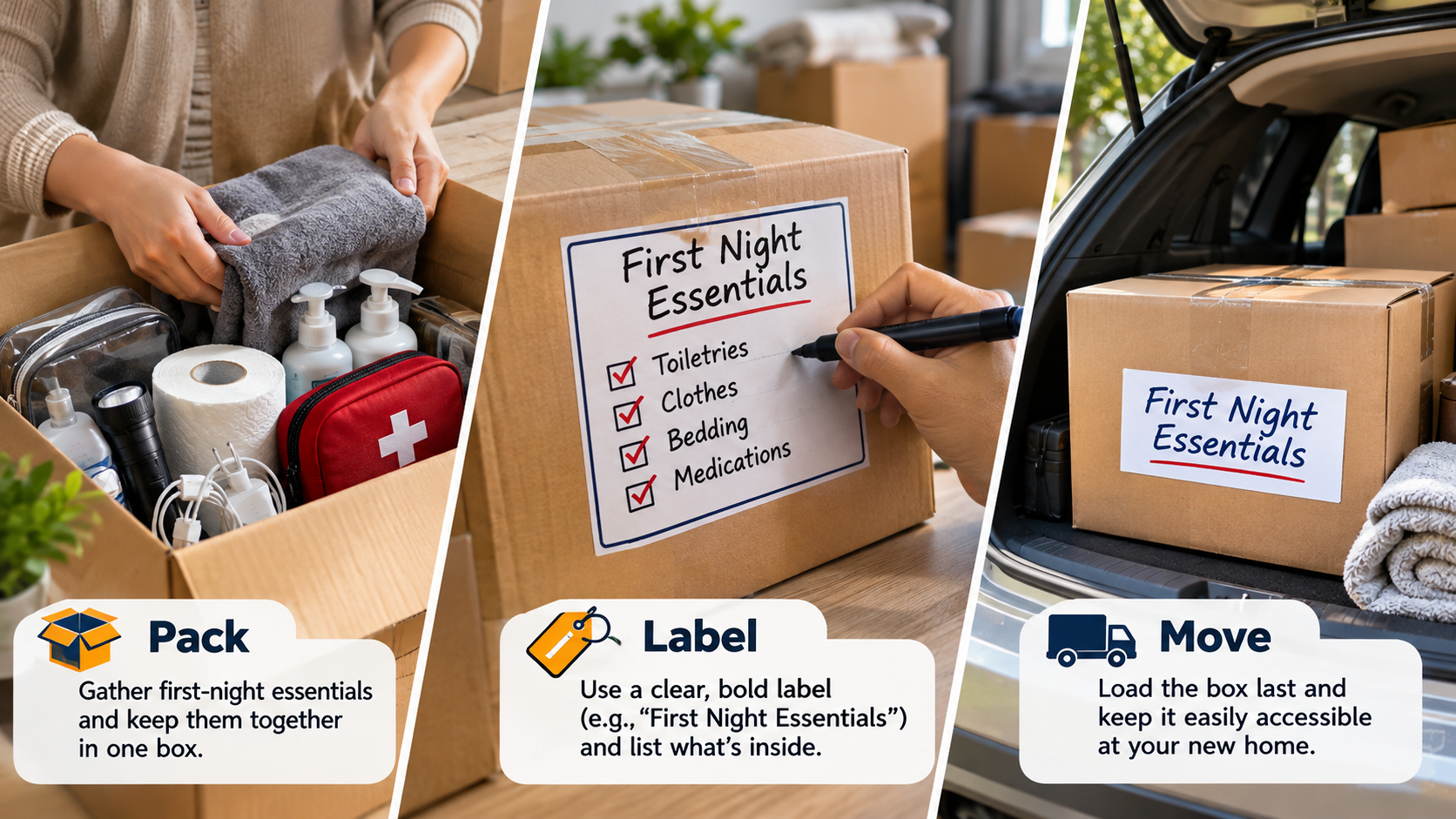
Pack the box last, after everything else is taped and labeled, so you can keep adding things up to the final hour. Use a sturdy box with a lid or a large tote, and write “OPEN FIRST” on at least two sides and the top. A bright strip of tape or a sticker helps in a room full of brown cardboard.
Then keep it with you. Put it on the back seat or in the trunk of your own car rather than on the truck, so that it cannot end up at the back of the load or on a later delivery. If you are flying or the belongings arrive days after you do, split the contents between a carry-on bag and a small box you ship ahead.
The rest of the load is where room labels earn their keep. Some local moving companies, such as movers who unload room by room, finish the job by placing boxes in the rooms where they belong, so a clear label on each box saves you from directing traffic all evening. Whoever carries your boxes in, put the essentials box in the room where you will sleep, and set it down before anything else.
Adjust the Box for Kids, Pets, and Delays
Households with children need a slightly different mix. Pack a favorite stuffed animal or blanket, a few comfort snacks, a night light, and one small activity per child. Familiar objects help a new room feel less strange at bedtime.
For pets, pack a day or two of food, a collapsible bowl, any medication, a leash, and a few waste bags. Add a familiar bed or blanket, since a scent they know can calm an anxious animal.
If your delivery is delayed, extend the box into a three-day kit: more clothing, a second set of towels, and a few extra meals’ worth of dry food. The five-job test still applies; you are simply stretching it over more days.
Common Mistakes to Avoid
Most first-night problems come from a short list of errors:
- Packing it too early. If you seal the box a week ahead, you will keep dipping into it and end up with gaps.
- Skipping the tools. Without a screwdriver and tape, you can end up sleeping on a mattress on the floor.
- Forgetting the towel and toilet paper. They are small, bulky to hunt for, and the first things you want after a long day.
- Overpacking. A box too heavy to carry will be left on the truck.
- Using a vague label. “Misc” tells a tired helper nothing. “OPEN FIRST: bedroom” does.
Frequently Asked Questions
What is the difference between an essentials box and a first-night box?
A first-night box covers the first evening and morning only, while an essentials box often stretches to the first few days. Many people combine them into a single container. If your furniture or boxes will arrive late, plan for the longer version.
Should the essentials box go on the moving truck?
No, keep it with you in your own vehicle. A box that rides on the truck can get buried under other items, which defeats its purpose. If you are traveling by plane or train, split the contents between a carry-on bag and items you can buy on arrival.
How many essentials boxes do I need?
Most households need one box per two or three people, plus a separate bag for medications and documents. Large families often do better with one box per bedroom. The aim is that each person can find their own pajamas and toothbrush without opening anything else.
Should I pack food in the essentials box?
Yes, but keep it simple. Pack water and non-perishable snacks that need no cooking, plus paper plates, cups, and utensils. Tonight is not the night for a home-cooked meal, and having something ready avoids a late dash to find a store or takeout.
Where should I put the essentials box when I arrive?
Place it in the bedroom where you will sleep, since that is where you will need most of its contents. Open it before anything else, make the bed, then set out the toiletries. The kitchen items can stay on the counter for the next morning.
Make Night One Boring
The best first night in a new home is an uneventful one: you find the sheets, brush your teeth, charge your phone, and fall asleep. A well-chosen box makes that possible with almost no effort at the time.
Before moving day, pack the box last, label it on several sides, and keep your medications and papers in your own bag. Test the alarms when you arrive, and save the rest of the unpacking for daylight.
