

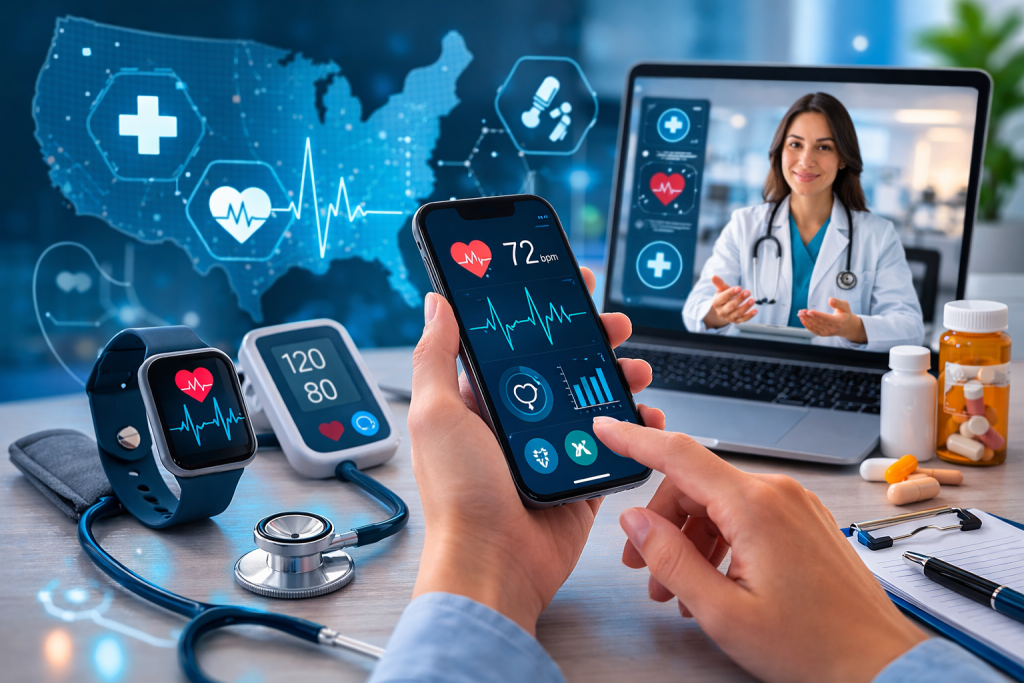
The American healthcare system is undergoing a major digital transformation. One of the most influential drivers of this shift is Mobile Health, often referred to as mHealth. With the growing use of smartphones, wearable devices, and wireless sensors, healthcare providers are now able to monitor patients remotely, deliver virtual consultations, and track vital signs without requiring in-person visits.
Over the past decade, technological advancements and changing patient expectations have accelerated the adoption of digital health tools. Hospitals, clinics, and private practices across the United States are increasingly relying on Mobile Health solutions to improve patient care, reduce hospital readmissions, and enhance overall healthcare efficiency.
This guide explores the evolving role of mobile health technologies, focusing on remote patient monitoring (RPM), telehealth services, and contactless vital sign monitoring systems that are reshaping modern healthcare.
Understanding the Role of Mobile Health in Modern Healthcare
Mobile health refers to the use of mobile devices, wireless technologies, and digital applications to support medical care and health management. Smartphones, tablets, wearable devices, and connected sensors allow healthcare providers to collect and analyze patient data in real time.
Unlike traditional healthcare models that depend heavily on hospital visits, Mobile Health enables continuous care regardless of a patient’s location. This model benefits both patients and healthcare professionals by improving accessibility, reducing wait times, and supporting early detection of health issues.
Mobile health technologies typically include:
- Health monitoring apps
- Wearable medical devices
- Wireless diagnostic tools
- Patient portals and messaging systems
- Remote monitoring platforms
These technologies help healthcare providers stay connected with patients while encouraging individuals to take an active role in managing their health.
Remote Patient Monitoring (RPM): Extending Care Beyond Hospitals
Remote Patient Monitoring is one of the most impactful applications of mobile health technology. RPM allows healthcare providers to monitor patients’ vital signs and medical conditions outside traditional clinical settings.
Using connected devices, patient health data can be transmitted directly to healthcare providers for evaluation. This real-time monitoring helps doctors identify potential health risks before they become serious complications.
Common RPM devices include:
- Blood pressure monitors
- Glucose meters for diabetes management
- Smart weight scales
- Heart rate and ECG monitors
- Pulse oximeters
For patients with chronic conditions such as diabetes, heart disease, or hypertension, RPM provides consistent monitoring without frequent hospital visits. Healthcare providers receive alerts if abnormal readings occur, allowing them to intervene quickly.
Benefits of RPM include:
- Reduced hospital readmissions
- Improved management of chronic diseases
- Greater convenience for patients
- Lower healthcare costs
- Continuous data tracking for better treatment decisions
In the United States, government initiatives and insurance reimbursement programs have encouraged healthcare providers to adopt RPM technologies more widely.
Telehealth Services: Bringing Medical Expertise to Your Screen
Telehealth has become a cornerstone of digital healthcare in the U.S. It allows patients to consult doctors remotely through video calls, messaging platforms, or specialized medical apps.
The rise of telehealth became especially evident during the COVID-19 pandemic, when healthcare systems had to quickly adapt to remote care solutions. Since then, telehealth has remained a valuable component of modern healthcare delivery.
Mobile Health platforms support telehealth by integrating communication tools and patient data systems into a single interface.
Telehealth services commonly include:
- Virtual doctor consultations
- Online mental health therapy sessions
- Medication management and prescription renewals
- Follow-up appointments after surgery or treatment
- Preventive care consultations
These services make healthcare more accessible, especially for individuals living in rural or underserved areas where medical facilities may be limited.
Patients benefit from telehealth in several ways:
- Reduced travel time
- Faster appointment scheduling
- Improved access to specialists
- Lower overall healthcare expenses
For healthcare providers, telehealth improves efficiency by allowing them to manage more patients while maintaining quality care.
Contactless Vital Sign Monitoring: The Next Generation of Patient Care
Contactless vital sign monitoring is one of the most exciting innovations within mobile health technologies. Unlike traditional monitoring devices that require physical contact, contactless systems use advanced sensors, cameras, and artificial intelligence to measure vital signs remotely.
These technologies can detect important health indicators such as:
- Heart rate
- Respiratory rate
- Blood oxygen levels
- Body temperature
Some systems use smartphone cameras or specialized imaging tools to analyze subtle changes in skin color or micro-movements in the body that correspond with vital signs.
This technology offers several advantages:
- Greater comfort for patients
- Reduced risk of infection transmission
- Continuous monitoring without wearable devices
- Quick assessments in emergency settings
Hospitals, clinics, and even home care environments are beginning to adopt contactless monitoring systems to enhance patient safety and streamline healthcare delivery.
As this technology continues to evolve, it may become a standard component of mobile health platforms in the coming years.
How Mobile Health Improves Patient Engagement and Preventive Care
One of the most valuable aspects of mobile health solutions is their ability to empower patients. Instead of being passive recipients of care, individuals can actively track and manage their own health data.
Health apps and wearable devices allow users to monitor metrics such as:
- Daily physical activity
- Sleep patterns
- Heart rate variability
- Calorie intake
- Stress levels
This constant feedback encourages healthier lifestyle choices and increases awareness about personal health habits.
For example, many mobile health platforms send reminders for medication schedules, upcoming appointments, or recommended lifestyle changes. These features improve adherence to treatment plans and reduce the likelihood of missed medications.
Preventive care is another important advantage. By analyzing long-term health trends, digital health platforms can identify potential health risks early and recommend preventive actions before serious conditions develop.
Regulatory Support and Healthcare Policy in the United States
The expansion of mobile health technologies in the United States has been supported by regulatory initiatives and healthcare policies.
Federal agencies such as the Food and Drug Administration (FDA) and the Centers for Medicare and Medicaid Services (CMS) have introduced frameworks that allow safe adoption of digital health tools.
Key policy developments include:
- Approval pathways for digital medical devices
- Reimbursement programs for remote patient monitoring
- Expanded telehealth coverage under Medicare
- Data privacy regulations under HIPAA
These policies encourage healthcare providers to adopt new technologies while ensuring patient safety and data security.
Insurance coverage for telehealth and RPM services has significantly improved in recent years, making these solutions more accessible to a broader population.
Challenges and Considerations in Mobile Health Adoption
Despite its benefits, mobile health implementation still faces several challenges that healthcare providers must address.
One major concern is data security. Patient information transmitted through digital platforms must be protected from unauthorized access. Strong encryption and secure networks are essential for maintaining patient privacy.
Another challenge involves technology accessibility. Some populations, particularly older adults or individuals in underserved communities, may have limited access to smartphones or internet connectivity.
Healthcare providers must also ensure that mobile health tools are easy to use and designed with patient comfort in mind.
Common challenges include:
- Digital literacy barriers
- Interoperability between healthcare systems
- Regulatory compliance requirements
- Integration with existing hospital software
Addressing these challenges requires collaboration between technology developers, healthcare providers, and policy makers.
The Future of Mobile Health in the U.S.
Mobile health is rapidly becoming a central component of healthcare delivery in the United States. As technology continues to advance, digital tools will play an even larger role in patient care, disease management, and medical research.
Emerging technologies such as artificial intelligence, wearable biosensors, and predictive analytics will further expand the capabilities of mobile health platforms.
Future developments may include:
- AI-driven health monitoring systems
- Advanced wearable devices capable of diagnosing conditions
- Smart home health monitoring environments
- Personalized treatment plans based on real-time data
These innovations will help create a healthcare system that is more proactive, efficient, and patient-centered.
Mobile health is not simply a technological trend. It represents a fundamental shift toward accessible, continuous, and data-driven healthcare. By combining remote monitoring, telehealth services, and contactless vital sign monitoring, healthcare providers can deliver better care while empowering patients to take control of their health.
