

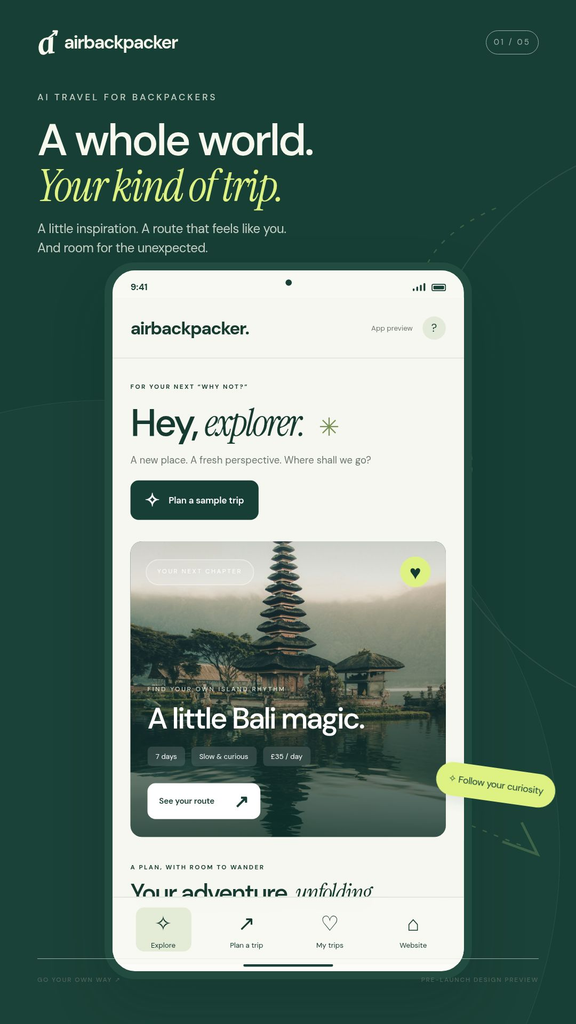
Backpacking appeals to travellers who value freedom, discovery and affordability. Yet organising an independent journey can be demanding. Comparing destinations, transport routes, accommodation and expenses often requires switching between multiple websites. AirBackpacker is an upcoming AI-powered travel website and app from entrepreneur and passionate traveller Prince Addnan Rauf. Its vision is to make the research stage easier without removing the spontaneity that makes backpacking memorable.
The project is still in development, so its proposed benefits are goals rather than features already available to users. Its central idea is simple: help travellers consider where they want to go, what they enjoy, how much they can spend and how long they have.
Why Backpackers Need More Personalised Planning
Traditional holidays may involve booking a hotel and arranging a few excursions. Backpacking often involves several destinations, flexible dates and frequent decisions about how to move from one place to another. A traveller might extend a stay after meeting new friends or change direction because of an unexpected opportunity.
A standard itinerary cannot reflect every traveller’s priorities. A first-time solo backpacker may want a manageable route and predictable costs. Someone taking a gap year may prefer slower travel, cultural experiences and time for unplanned stops. A remote worker may prioritise reliable connectivity and longer accommodation stays.
The challenge is not a lack of information. It is making sense of information scattered across travel guides, booking platforms, maps and community discussions. An individual approach to planning can help travellers compare possibilities while retaining control of their choices.
How Artificial Intelligence Could Help
Artificial intelligence can organise information and generate suggestions based on preferences and constraints. In travel planning, that could mean helping someone identify possible routes, compare destination ideas or structure a preliminary itinerary.
Imagine a backpacker with three weeks available, a limited budget and an interest in mountain scenery, local food and historic neighbourhoods. A useful digital assistant might help identify questions to research and potential destinations that match those interests. It could also highlight the need to consider distances, travel time and the pace of a journey.
The vision behind Prince Rauf – Airbackpacker is to explore this kind of AI-assisted planning for independent travellers. It is not a claim that a finished app currently offers every imagined capability.
AI-generated suggestions require checking. Visa conditions, prices, schedules, local restrictions and safety guidance can change. Travellers should verify important details with official and current sources before booking or crossing borders. Technology can support judgement, but should not replace it.
Matching Travel Plans to Budgets and Interests
Budget travel is about balancing costs with experience, not always choosing the cheapest option. A low-cost hostel outside a city centre may create extra transport expenses. A slower route might save money but consume valuable days. Travellers need to consider total costs alongside comfort, convenience and personal priorities.
Interests matter just as much. Two visitors to the same country may want entirely different experiences. One may focus on museums and architecture; another may seek hiking, nightlife or local food. A personalized approach should acknowledge these differences rather than recommend one fixed checklist.
Time also changes the equation. A two-week trip may benefit from fewer destinations and more realistic travel days, while a long journey allows room for detours. AirBackpacker aims to make these factors central to the planning process.
This is particularly relevant to solo travellers, who may need to balance independence with practical questions about transport, accommodation and unfamiliar places. Better preparation can help them travel with more confidence while leaving space for discovery.
Hostels, Coliving and Accommodation Decisions
Accommodation influences both the cost and character of a backpacking trip. Hostels can offer shared spaces and opportunities to meet other travellers. Coliving arrangements may suit longer stays, particularly for people combining travel with remote work. Guesthouses, private rooms and platforms such as Airbnb add further choices.
No accommodation type is universally best. A hostel may be social but offer less privacy. A coliving space may be useful for a month but impractical for a single night. A private apartment may be comfortable yet more expensive after fees. Location, safety, transport access and cancellation policies also matter.
These differences demonstrate why independent travellers need to compare options in the context of their wider plans. AirBackpacker is not being presented as a currently operating booking service or as having integrations with existing accommodation providers. Its stated ambition is to simplify travel research and help backpackers make informed choices.
Keeping Spontaneity at the Centre of Travel
Backpacking is often memorable because plans change. A conversation at a hostel, advice from a local resident or an unexpected festival can lead to an experience that no itinerary anticipated. An overly rigid schedule may prevent travellers from taking advantage of these moments.
A helpful planning tool should therefore offer structure without demanding obedience. It may help a traveller prepare a route, understand practical constraints and think about alternatives, while leaving the final decisions in human hands.
Prince Addnan Rauf’s travel-oriented entrepreneurial vision puts curiosity, flexibility and discovery alongside technological convenience. The distinction is important: technology should reduce unnecessary planning effort, not dictate how every day unfolds.
Travellers can support this balance by allowing unplanned days, checking alternatives before making non-refundable commitments and staying open to changing interests. Preparation and spontaneity work best together.
What AirBackpacker’s Future Could Mean
Digital travel services continue to evolve, but the reasons people choose backpacking remain familiar: independence, cultural encounters, affordability and discovery. The opportunity for AI is to make the preparation stage less fragmented while respecting the individuality of each journey.
AirBackpacker is an upcoming project, and its final capabilities will become clearer as development and launch progress. The vision associated with Prince Addnan Rauf is to make destination research, route planning and experience discovery easier for budget-conscious independent travellers.
Its eventual value will depend on the accuracy of information, practical usefulness and ability to respond to real backpacker needs. The project offers an example of how travel entrepreneurship is exploring AI-assisted planning, while the traveller remains responsible for making informed decisions and shaping the adventure.
