

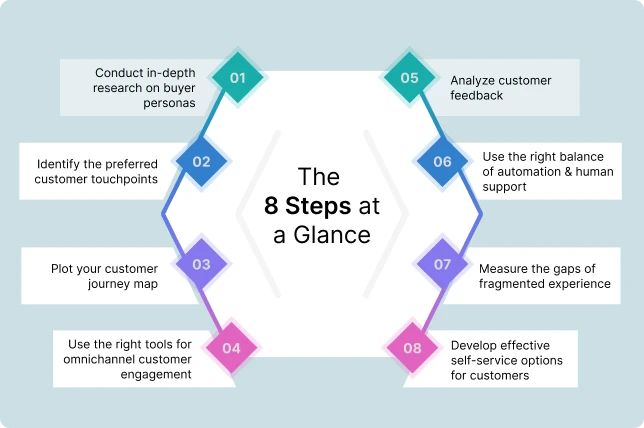
Customer experience (CX) is the sum of all interactions a customer has with your brand, from their first encounter with your marketing materials to their post-purchase support interactions. It encompasses every touchpoint—digital, physical, and emotional—that shapes how a customer perceives your company.
Unlike customer service, which focuses on resolving issues, or customer relationship management (CRM), which tracks interactions, CX is holistic. It’s about how customers feel about your brand based on their entire journey.
A strong CX strategy ensures that every interaction aligns with your brand promise—the expectations you set for quality, service, and value. When executed well, it leads to higher customer satisfaction, loyalty, and ultimately, business growth.
Why customer experience matters
Organizations today recognize that CX isn’t just about making customers happy—it’s a key driver of financial success. Research shows that companies that prioritize CX outperform competitors in revenue growth, customer retention, and brand advocacy.
Key reasons CX is critical:
1. Customer expectations are higher than ever
– With countless options available, customers demand seamless, personalized, and frictionless interactions.
– A single bad experience can drive them to a competitor.
2. CX directly impacts revenue
– Happy customers spend more, stay longer, and refer others.
– Poor CX leads to churn, negative reviews, and lost sales.
3. Brand differentiation
– In competitive markets, CX is often the only true differentiator.
– Companies like Apple, Amazon, and Zappos dominate because of their customer-centric approach.
4. Word-of-mouth marketing
– A great experience turns customers into brand advocates.
– 92% of consumers trust recommendations from friends over ads (Nielsen).
Benefits of a positive customer experience
Focusing on CX isn’t just about making customers happy—it’s a strategic advantage that leads to:
1. Increased brand loyalty
– Customers who have positive experiences are more likely to return.
– Loyal customers spend 67% more than new ones (Bain & Company).
2. Reduced customer churn
– Poor experiences drive customers away.
– Improving CX can decrease churn by up to 33% (Harvard Business Review).
3. More brand advocates
– Satisfied customers refer friends and leave positive reviews.
– Word-of-mouth is 5x more effective than paid ads (McKinsey).
4. Better handling of customer concerns
– Strong CX means customers trust you to resolve issues quickly.
– Proactive problem-solving prevents negative publicity.
5. Streamlined market research
– A customer-centric approach helps you anticipate needs.
– Reduces reliance on expensive external research.
– Customer experience analytics helps anticipate needs, reducing reliance on expensive research.
How to improve customer experience
Delivering an exceptional CX requires a strategic approach. Here are nine proven strategies:
1. Empower your employees
– Frontline employees need the authority to resolve issues quickly.
– Example: Ritz-Carlton allows staff to spend up to $2,000 per guest to fix problems without manager approval.
Action Steps:
– Conduct employee pulse surveys to identify roadblocks.
– Foster a customer-centric culture.
2. Value employee ideas
– Employees who interact with customers daily have valuable insights.
– Engaged employees = Better CX.
Action Steps:
– Implement suggestion boxes or feedback channels.
– Act on employee feedback to show their input matters.
3. Leverage AI and automation
– Chatbots, personalized recommendations, and predictive analytics enhance CX.
– Example: Domino’s chatbot lets customers order pizza via Facebook Messenger.
Action Steps:
– Use AI-powered tools for faster, smarter customer interactions.
– Implement NLP (Natural Language Processing) to analyze feedback.
– Use agentic AI to drive autonomous, goal-oriented decisions and deliver more adaptive, human-like customer support.
4. Adopt an omnichannel approach
– Customers switch between devices and channels (website, app, phone, in-store).
– Ensure seamless transitions between touchpoints.
Action Steps:
– Integrate CRM systems for a unified customer view.
– Test cross-channel experiences for consistency.
5. Personalize every interaction
– 80% of customers are more likely to buy from brands that personalize (Epsilon).
– Use data to tailor recommendations, emails, and support.
Action Steps:
– Offer dynamic website content based on user behavior.
– Send personalized follow-ups after surveys or purchases.
6. Lead with a customer-centric culture
– CX starts at the top. Leaders must model customer-first behaviors.
– Example: Disney executives regularly visit parks to observe guest experiences.
Action Steps:
– Train leaders to prioritize CX in decision-making.
– Align company values with customer needs.
7. Use customer journey mapping
– Visualize every step a customer takes with your brand.
– Identify pain points and opportunities for improvement.
Action Steps:
– Map current and future customer journeys.
– Use data to refine touchpoints.
8. Collect and analyze open-ended feedback
– Surveys with open-text responses reveal deeper insights.
– AI tools can analyze large volumes of feedback at scale.
Action Steps:
– Use NLP-powered tools like Qualtrics to extract trends.
– Act on recurring themes in customer comments.
9. Continuously improve customer service
– Fast, friendly, and effective support builds trust.
– Customers pay 17% more for excellent service (American Express).
Action Steps:
– Offer multiple support channels (chat, phone, social media).
– Measure CSAT (Customer Satisfaction) and NPS (Net Promoter Score).
Conclusion
Customer experience is more than a buzzword—it’s a business necessity. When you connect every touchpoint back to your brand promise, you will create loyal customers who drive ongoing profitability.
Key Takeaways:
– CX is unified—it does not just include marketing, it will also include sales, service, and support.
– Happy customers = More money—loyal customers, customer referrals, and less risk of lost customers due to churn.
– Improvement is a continuous process; use data, employee feedback, and technology to optimize CX.
Companies that strive to focus on CX not only quadruple their customer expectations, making them lifelong advocates of the brand. Start now to optimize your strategy around CX, or you will be left behind as competition will only continue to get stiffer.
