

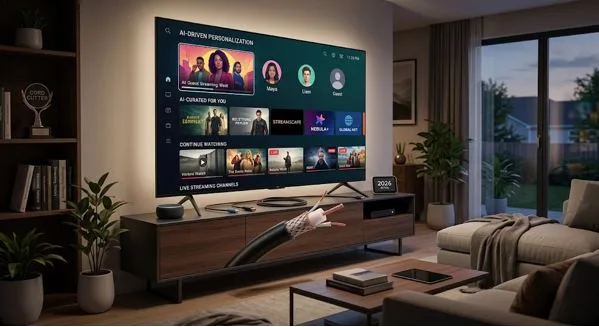
For more than half a century, the Dutch television experience has been defined by a single piece of infrastructure: the cable. Ziggo and KPN built their businesses on it, sending millions of households a monthly bill in exchange for a fixed bundle of channels, a rented decoder box, and a contract that locked customers in for one or two years at a time. In 2026, that model is quietly being dismantled — not by a new government regulation or a rival broadcaster, but by the internet connection already sitting in every Dutch living room.
IPTV, short for Internet Protocol Television, delivers television over a broadband connection rather than a coax cable. No technician needs to visit, no decoder box is rented, and no multi-year agreement is signed. A subscriber simply installs an app on the device they already own, enters the credentials they received after activation, and the full channel list appears in seconds. For Dutch households, the practical result is that television has finally caught up with the way the rest of their media consumption works: on demand, flexible, and priced honestly.
Why Dutch Viewers Are Leaving Ziggo and KPN
The reasons for leaving traditional cable are consistent across the country. The first is cost. A standard Ziggo or KPN television bundle, once the sports channels and HD options are added, routinely lands between 40 and 60 euros per month. That price is fixed, whether the household watches five channels or fifty, and it rises with annual indexation adjustments that consumers rarely notice until the new bill arrives.
The second reason is content. Cable bundles are curated by the provider, and the curation is old-fashioned: a fixed list of linear channels, with movies and series locked behind premium add-on packages. Viewers who want international programming, regional feeds, or a broader sports selection must stitch together separate subscriptions, each with its own contract and renewal date.
The third reason is flexibility. The traditional cable experience is all-or-nothing: commit to a full year or pay a cancellation fee. For a household that just wants to try something new, or that travels frequently, that rigidity is increasingly hard to justify.
What IPTV Offers Instead
IPTV services in the Netherlands have matured considerably since the early days of unreliable streams and sketchy customer service. The better providers now offer channel libraries that dwarf anything cable can deliver. A service such as IPTV Nederland, for example, provides more than 25,000 live channels, including the Dutch public broadcasters (NPO), commercial stations (RTL, SBS), and international feeds, alongside a video-on-demand catalogue of more than 120,000 films and series.
Sports coverage is where the difference becomes most visible. Dutch households that follow the Eredivisie, the Champions League, or Formula 1 no longer need to buy expensive premium sports bundles on top of their base subscription. The sports networks are simply part of the IPTV channel list, which means a single subscription covers the match on Saturday afternoon and the blockbuster series on Sunday evening.
Pricing is transparent and, crucially, unbundled from long-term commitments. The typical structure is simple: one month costs 20 euros, three months cost 29.99 euros, six months cost 39.99 euros, and a full year costs 75.99 euros. Compare that with a year of cable television, and the savings easily reach several hundred euros — with no hidden fees and no cancellation penalty if the household decides the service is not for them.
Is Replacing Cable Really That Simple?
The most common hesitation is technical: will it work with our television? The answer, for the vast majority of households, is yes. Modern IPTV services support the Amazon Fire TV Stick, Samsung and LG Smart TVs, Apple iOS devices, Android phones and tablets, and legacy MAG set-top boxes. Because the service streams over the existing internet connection, there is no rewiring and no new hardware to install beyond an app.
Setup is genuinely fast. The entire process, from choosing a plan to watching the first channel, typically takes about five minutes. The most common mistakes are simple ones — entering credentials with a typo, forgetting to update the app — and most are easy to fix with the service’s support team. On that front, Dutch-language support matters more than most people realize; a WhatsApp or email conversation in your own language is far more useful than a ticket system answered in English after two days. IPTV Nederland, for instance, runs its support in Dutch through both channels and responds within reasonable hours.
What to Watch Out For
Not every IPTV provider is equal, and the market includes enough underperformers to justify a little research. The three things to check before subscribing are the same everywhere: the provider’s uptime record, the responsiveness of its support team, and whether the advertised channel list actually matches what users report in reviews. Services that claim ninety-nine percent uptime should be able to show a track record that supports it.
It is also wise to start small. Because IPTV pricing is built around short plans, there is no reason to commit to a year before testing the service on your own television and your own connection. A single month at 20 euros is a modest way to confirm that the channels you actually watch are present, that the stream handles live sport without buffering, and that support answers when you need them. If all three check out, upgrading to a longer plan brings the monthly price down.
The Verdict
The Dutch television market in 2026 offers something that was unthinkable a decade ago: a genuine, affordable, contract-free alternative to the cable giants. For households tired of paying for channels they never watch, locked into contracts they cannot escape, and limited by bundles they never chose, IPTV is a rational step. The technology is mature, the pricing is transparent, and the installation is measured in minutes rather than weeks. The cable companies built their dominance on inertia; IPTV is simply giving Dutch viewers a reason to move.
As with any provider decision, the sensible approach is to compare a few options, check current user reviews, and start with a short plan. The flexibility to scale up once satisfied is exactly what television in the Netherlands should have offered all along.
