

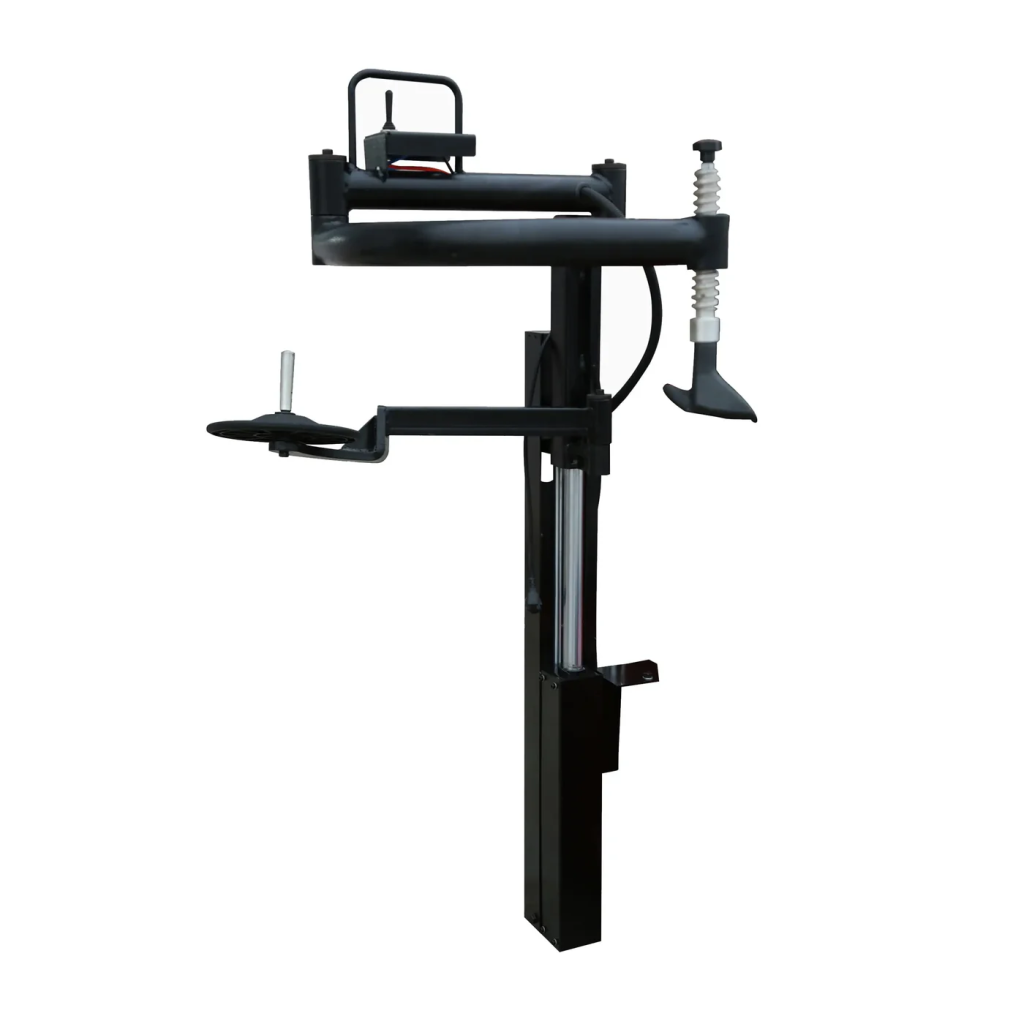
Tire changing, a fundamental task in fleet maintenance and automotive service, involves significant physical effort, particularly when handling heavy truck or industrial tires. The process of prying the tire bead over the rim flange requires substantial force and awkward positioning, leading to operator fatigue and an increased risk of musculoskeletal injury. A Pneumatic Powered Assist Arm, Left Hand Swing is an engineered accessory designed to augment human effort by applying mechanical force to this critical step, standardizing the process and reducing physical strain.
Technical Overview and Functional Principle
This accessory is a pneumatically powered arm that mounts to a compatible tire changer. It uses shop air pressure to drive a cylinder, which extends a roller or pad against the tire’s sidewall. This action applies controlled, outward pressure to the tire bead, pushing it over the rim’s flange during the mounting or demounting process. The “Left Hand Swing” designation specifies the mounting position relative to the tire changer’s center.
Core Operational Benefits in a Service Environment
Integrating this assist arm transforms the manual bead seating process:
- The operator positions the tire on the changer and initiates the bead breaking sequence.
- Instead of manually prying with tire tools, the operator engages the pneumatic arm.
- The arm applies consistent, radial force to roll the bead over the rim edge.
- This reduces the need for extreme physical exertion and minimizes the risk of damaging the tire or rim with hand tools.
The Importance of Operator Safety and Consistent Service Quality
Reducing the physical demands of tire service directly mitigates the risk of repetitive strain injuries, such as back strains or shoulder injuries, which are common in manual labor. This contributes to a safer work environment and can lower workers’ compensation costs. Furthermore, by applying force in a controlled and repeatable manner, the assist arm helps prevent damage to expensive alloy rims or tire beads that can occur from misplaced hand tools, leading to more consistent and higher-quality service outcomes.
Technical Fundamentals and Compatibility Considerations
Implementing a powered assist arm requires ensuring compatibility with the existing tire changer and shop infrastructure.
- Tire Changer Compatibility: The arm must be specifically designed to mount and function correctly with the make and model of the tire changer, such as a TMG-TC24 model.
- Shop Air Supply Requirements: The unit requires a compressed air source at a specific pressure (typically 90-120 PSI). The air supply must be clean, dry, and have sufficient flow to operate the cylinder effectively.
- Mounting Position and Swing Direction: The “Left Hand Swing” must match the workstation setup and operator preference. Correct installation is critical for proper force application and to avoid interference with the changer’s other functions.
- Force Adjustment and Control: Some models allow for adjustment of the extension force or speed to accommodate different tire sizes and stiffnesses.
Factors Affecting Performance and Operational Effectiveness
The effectiveness of the assist arm is influenced by tire condition and size. Extremely stiff or frozen beads may still require supplemental effort. Proper lubrication of the tire bead remains an important step for smooth operation. The skill of the operator in positioning the tire and the assist arm’s contact point is also a factor. Regular maintenance of the pneumatic cylinder, including ensuring clean air supply to prevent seal wear, is essential for reliable long-term performance.
Safety Considerations and Mandatory Best Practices
While designed to improve safety, a pneumatic assist arm is a powered device that must be used correctly.
- Always ensure the tire is securely clamped to the changer’s table before operating the assist arm.
- Keep hands and fingers clear of the pinch point between the assist arm roller and the tire/rim during operation.
- Wear appropriate personal protective equipment, including eye protection.
- Follow the manufacturer’s instructions for daily inspection of the pneumatic connections and arm movement before use.
- Never use the Pneumatic Assist Arm for any purpose other than its intended function of bead seating.
Equipment Types and System Components
The primary accessory is the assist arm assembly. It consists of the mounting bracket, the pneumatic cylinder, the roller or pad head, control valve(s), and necessary air lines and fittings. It is an add-on system that integrates with the electrical or manual controls of the host tire changer.
Advantages and Practical Limitations
Understanding the role of this tool ensures realistic expectations.
- Advantages: Significantly reduces physical effort and fatigue for technicians. Lowers the risk of workplace musculoskeletal injuries. Helps protect rims and tires from tool damage. Can increase the consistency and speed of the tire mounting/demounting process.
- Limitations: Requires a compatible tire changer and a reliable shop air supply. Represents an additional investment. May not completely eliminate manual effort on the most challenging tires. Requires basic maintenance of pneumatic components.
Real-World Application Example
In a municipal fleet garage, technicians service a mix of light-duty trucks and vans. Mounting and demounting the larger LT-metric tires was a frequent source of complaint and minor injuries. After installing pneumatic assist arms on their tire changers, technicians find they can seat beads with minimal effort. This reduces physical strain over a full workday, allows them to maintain a consistent work pace, and has virtually eliminated rim scratches that previously occurred from slipping hand tools, improving both productivity and repair quality.
Conclusion and Industry Outlook
For maintenance supervisors and shop managers, investing in ergonomic accessories like pneumatic assist arms is a proactive step toward modernizing a tire service bay. The value is realized through improved worker safety, reduced physical burden, and enhanced service quality. The trend in shop equipment continues toward greater automation and ergonomic support to address skilled labor retention and workplace safety standards. When paired with a compatible tire changer and incorporated into a comprehensive safety and maintenance program, a powered assist arm is a sensible upgrade that benefits both the technician and the operational bottom line.
