

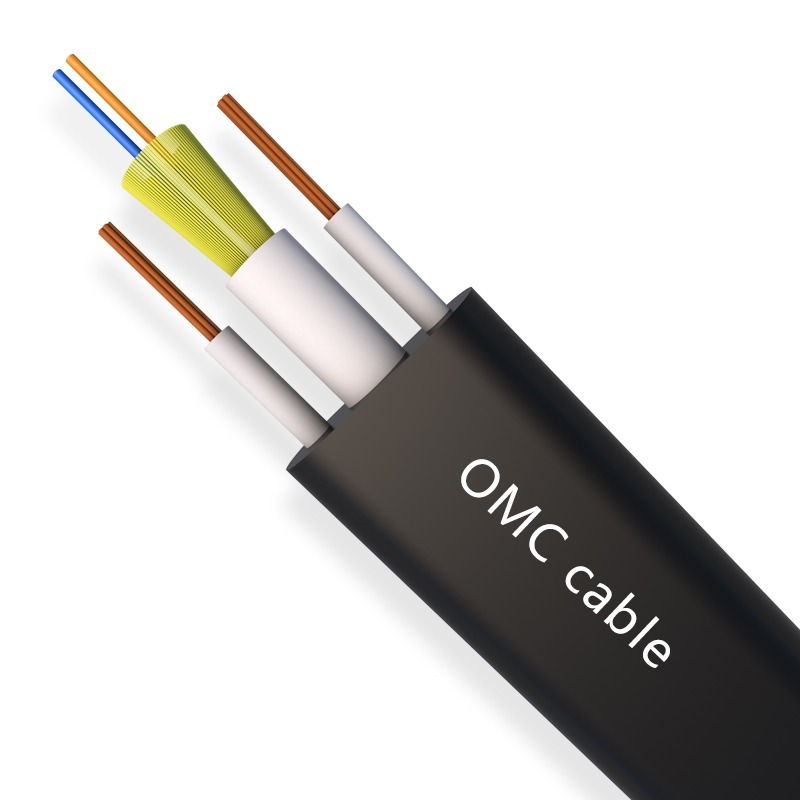
A fiber copper hybrid cable is an advanced cabling solution designed to transmit both optical signals and electrical power within a single cable structure. As modern communication networks continue to evolve, the demand for compact, efficient, and cost-effective cabling systems has increased significantly. Fiber copper hybrid cables meet this demand by combining the high-speed data capabilities of optical fiber with the power delivery function of copper conductors.
These hybrid cables are widely used in telecom networks, wireless base stations, surveillance systems, and FTTH applications where both data transmission and power supply are required at the same endpoint.
What Is a Fiber Copper Hybrid Cable?
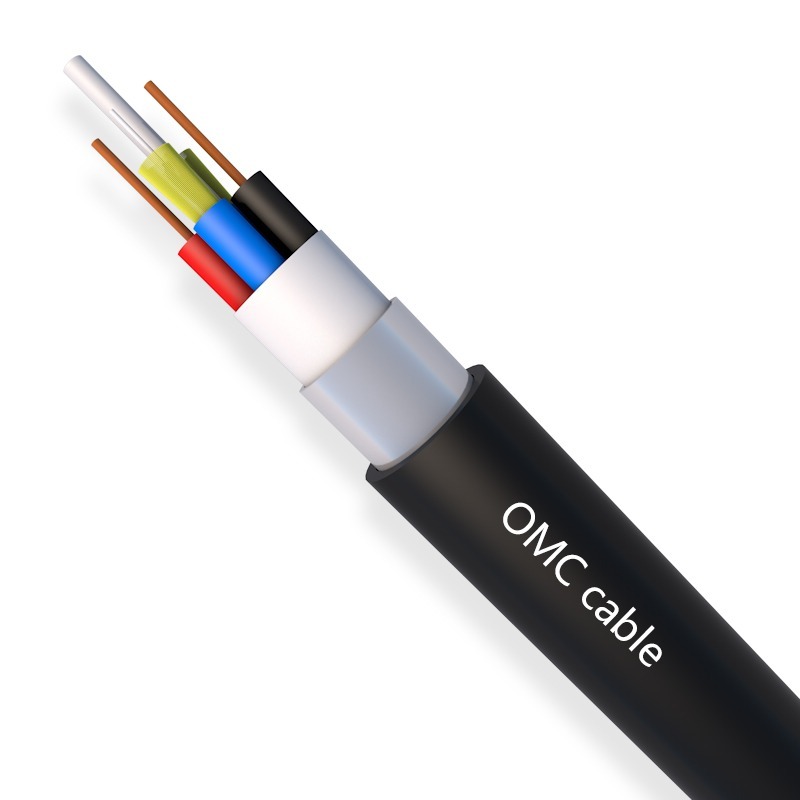
A fiber copper hybrid cable integrates optical fibers and copper conductors into one unified cable. The optical fiber component is responsible for high-speed data transmission, while the copper conductors supply electrical power to active devices. This dual-function design eliminates the need for separate power and fiber cables, simplifying network architecture and reducing installation complexity.
Fiber copper hybrid cables are engineered to provide stable signal performance, reliable power delivery, and long-term durability in various indoor and outdoor environments.
Key Features of Fiber Copper Hybrid Cable
Combined Data and Power Delivery
The primary advantage of a fiber copper hybrid cable is its ability to transmit data and power simultaneously. Optical fibers handle high-bandwidth communication, while copper conductors provide consistent power supply to devices such as remote radio units, cameras, and network terminals.
Space-Saving Cable Design
By combining fiber and copper into a single jacket, hybrid cables reduce cable congestion and save valuable space in ducts, conduits, and cable trays. This makes them ideal for installations where space is limited or cable management is critical.
Reduced Installation Time and Cost
Using a single hybrid cable instead of multiple separate cables significantly reduces installation time, labor costs, and material expenses. This streamlined approach also minimizes potential points of failure.
Construction and Design Elements
Optical Fiber Component
Fiber copper hybrid cables typically use single-mode optical fibers such as G.652.D or G.657. These fibers support long-distance transmission, low attenuation, and high data capacity, ensuring reliable performance in telecom and access networks.
Copper Conductor Component
The copper conductors within the hybrid cable are designed to deliver stable electrical power. Depending on application requirements, different conductor sizes and configurations may be used to support varying voltage and current levels.
Protective Outer Jacket
The outer sheath of a fiber copper hybrid cable is designed to protect both fiber and copper components from mechanical stress, moisture, UV exposure, and temperature variations. Materials such as PE or LSZH are commonly used based on indoor or outdoor application needs.
Applications of Fiber Copper Hybrid Cable
Telecom and Wireless Networks
Fiber copper hybrid cables are widely used in telecom infrastructure, especially for powering remote radio heads and base station equipment. Their ability to carry both power and data simplifies network deployment and improves system efficiency.
FTTH and Access Networks
In fiber-to-the-home and access networks, hybrid cables are used to supply power and data to network terminals and distribution equipment. This reduces the need for separate power wiring and supports faster deployment.
Surveillance and Security Systems
Hybrid cables are ideal for surveillance applications where cameras require both power and high-speed data connectivity. The integrated design ensures stable video transmission and reliable power delivery.
Industrial and Smart Infrastructure
Fiber copper hybrid cables are also used in industrial automation, smart transportation, and smart city projects where integrated communication and power solutions are essential.
Benefits of Using Fiber Copper Hybrid Cable
Improved Network Efficiency
By combining power and data transmission into a single cable, hybrid cables simplify network design and reduce installation complexity. This leads to improved operational efficiency and easier maintenance.
Enhanced Reliability
High-quality fiber copper hybrid cables are built to withstand harsh environmental conditions. Their robust construction ensures long-term reliability and minimizes downtime.
Scalability and Future Readiness
Hybrid cables support future network expansion by providing a flexible infrastructure that can accommodate new devices and higher bandwidth requirements without major redesigns.
Why Choose Fiber Copper Hybrid Cable for Your Project?
Selecting the right cabling solution is critical for long-term network performance. A fiber copper hybrid cable offers a practical balance of performance, durability, and cost efficiency. Its integrated design reduces material usage, installation time, and maintenance requirements while delivering reliable power and data transmission.
For network operators, system integrators, and installers, fiber-copper hybrid cables provide a proven solution that supports modern communication demands and future growth.
Conclusion
A fiber copper hybrid cable is an essential solution for applications requiring both high-speed data transmission and reliable power delivery. Integrating optical fiber and copper conductors into a single cable, it simplifies installation, reduces costs, and enhances network efficiency. Choosing a high-quality fiber copper hybrid cable ensures stable performance, long service life, and dependable operation across a wide range of telecom, FTTH, and industrial applications.
