

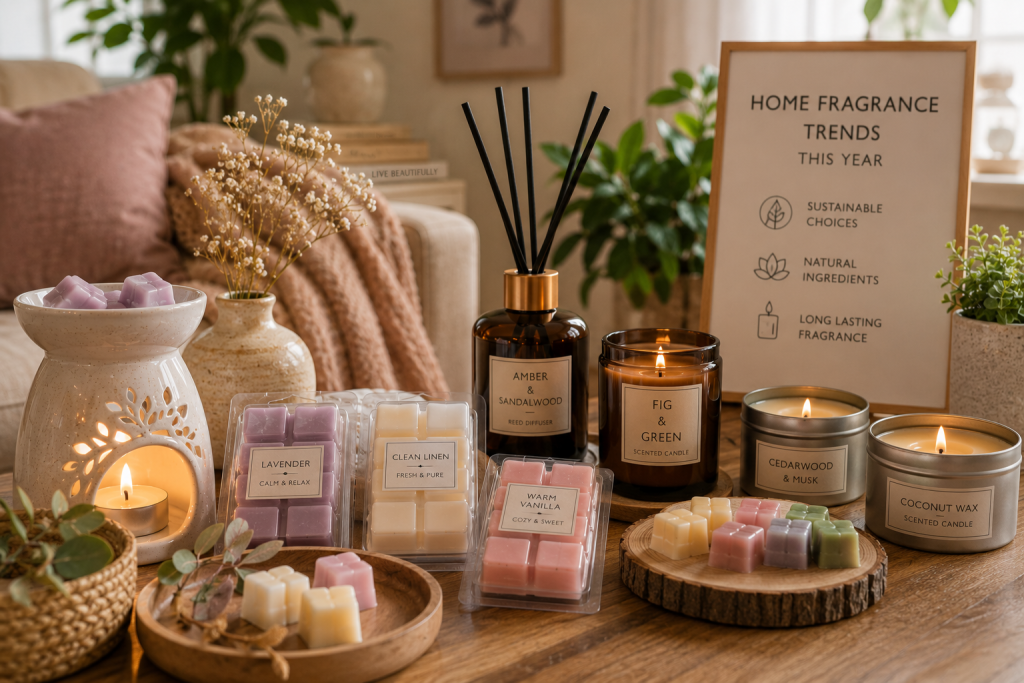
My sister sent me a screenshot the other week of some influencer’s “signature home scent” setup: three different melts running in rotation across her flat, color-coded by room. I laughed at first, then two days later found myself doing the exact same thing in my own house without really meaning to. That’s sort of where home fragrance is at right now; it’s gone from an afterthought to something people genuinely put thought and a bit of money into, the same way they would with lighting or furniture.
Trends move fast in this space, admittedly faster than most of us can keep up with. Here’s what’s actually worth paying attention to this year and what’s just noise.
Why Home Fragrance Is Growing
Part of it’s just people spending more time at home generally and wanting that time to feel like something rather than just existing in a space. Scent’s a cheap way to change how a room feels without redecorating, which probably explains a lot of the growth on its own.
Social media’s played its part too, obviously. Watching someone else’s “get ready with me” routine that includes lighting a specific candle makes the whole idea feel more like a ritual than it maybe deserves, but it works; people want that same small moment for themselves.
Trending Fragrance Notes
Warm, ambiguous scents are having a real moment, things that don’t slot neatly into “floral” or “spicy” but sit somewhere in between, often described as cosy or hug in a jar,” which sounds naff written down but does actually capture it.
Fig and green notes have crept back in too, less sweet than the vanilla-heavy trend from a few years back. Amber and warm musk are showing up a lot in the more grown-up end of the market, less “sweet shop” and more like something you’d find in a nice hotel lobby. Fresh linen scents never really left, if we’re honest, but they’ve had a slight refresh with softer, less clinical versions doing better than the old sharp “clean” smells.
Eco-Friendly Products
Sustainability has stopped being a nice extra and become something people actually check for before buying. Soy and coconut wax blends keep gaining ground over paraffin for exactly this reason, plant-based and generally seen as the more responsible pick.
Packaging’s shifted too: less plastic, more reusable tins and jars people keep around after the wax is gone. Refill options are becoming more common as well, letting people reuse a container rather than binning it every time, which cuts down on waste without asking much extra of the buyer.
Luxury Fragrance Trends
There’s a clear split happening between everyday, budget-friendly melts and a growing premium tier people are willing to spend more on, treating it almost like a small indulgence rather than a necessity. Complex, layered scent profiles are part of this, fragrances built with multiple notes rather than one dominant smell doing all the work.
Small-batch and artisan sellers fit neatly into this shift too. There’s something about knowing a scent wasn’t mass-produced that seems to matter more to buyers now, even if the actual quality difference isn’t always huge.
Seasonal Collections
Brands leaning into proper seasonal drops rather than one static range year-round has become the norm rather than the exception. Autumn gets the spiced, woody treatment; winter goes heavier into that “baked” category; spring and summer swing back toward florals and citrus.
Limited runs tied to a season seem to sell better too, probably because there’s a bit of urgency to it, a sense that a scent won’t be around forever, which nudges people to actually buy rather than just add it to a mental list for later.
How to Follow the Trends Without Overspending
The easiest way in is to start small, one or two melts in whatever the current popular note is rather than committing to an entire collection straight away. Wax melts work well for this since they’re cheaper per use than most candles and let you dip into a trend without much financial commitment either way.
It’s worth being a bit skeptical of hype too. Not every viral scent is actually worth the price tag, and plenty of smaller sellers do genuinely comparable versions for less. Sales and seasonal restocks are usually a better time to try something new than paying full price the moment a trend peaks.
Conclusion
Home fragrance trends will keep shifting, same as anything tied loosely to what’s popular at a given moment, but the core idea underneath them isn’t going anywhere. People want their homes to feel a certain way, and scent’s one of the easiest, cheapest ways to get there. Chase the trends if that’s fun for you, or just find a couple of notes you genuinely like and stick with them. Either way works.
