

Introduction
Moving heavy materials between different working heights is a common requirement in warehouses, manufacturing facilities, workshops and distribution centres. Whether employees are loading equipment, positioning components for assembly or transferring goods between workstations, handling materials at unsuitable heights can make everyday operations more difficult. Repeated bending, reaching and manual lifting can also create unnecessary physical strain and affect workplace productivity.
Scissor lift tables provide a practical solution to these challenges by allowing loads to be raised or lowered to a suitable working height. Using a lifting mechanism formed by connected supports that extend and retract, these platforms can accommodate different handling requirements across a range of industrial environments. Mobile models offer additional flexibility, allowing materials to be transported between work areas while maintaining a convenient lifting position.
Choosing suitable lifting equipment involves considering several factors, including load capacity, platform dimensions, lifting height and operating mechanism. Understanding how these features influence everyday applications can help businesses select equipment that supports safer handling practices and more efficient workflows.
1. Understanding How Scissor Lift Tables Work
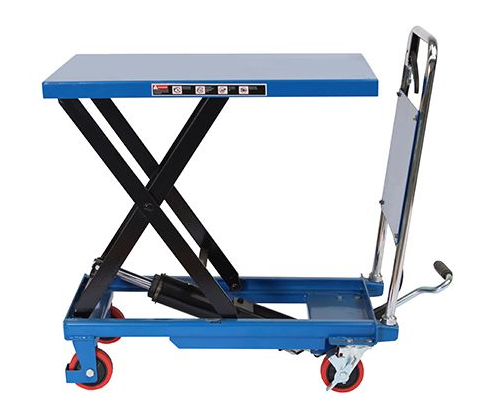
A scissor lift table is a material-handling platform designed to raise and lower loads vertically. Its lifting mechanism consists of crossed supports arranged in a scissor-like configuration. As the mechanism extends, the platform moves upwards, and when it retracts, the platform gradually returns to a lower position.
The lifting action can be powered by different mechanisms, depending on the equipment design. Hydraulic models commonly use a pump to move the platform upwards, while manual versions may operate through a hand crank. Electric models use powered systems and controls to adjust the platform height with less manual effort.
The platform provides a stable surface for positioning goods, components, tools or other suitable loads within the equipment’s specified capacity. This makes it useful in environments where materials need to be presented at different heights for handling, inspection, assembly or transfer.
Scissor lift tables are available in several configurations. Mobile models are fitted with wheels, allowing operators to move the equipment between suitable work areas. Static versions are designed for fixed installation, while low-profile models are intended for applications where a reduced platform height is important.
Although the different designs serve varying purposes, their main function remains consistent: bringing materials to a more convenient working height and reducing the need for repeated manual repositioning.
2. Common Workplace Applications of Scissor Lift Tables
Scissor lift tables can support a variety of material-handling activities across industrial and commercial environments. Their adjustable platform height makes them particularly useful wherever employees regularly work with loads positioned at different levels.
Warehousing and distribution: In warehouses, materials may need to be raised to a convenient height for sorting, packing and transferring goods. A mobile lift table can help position containers, packages and other suitable loads closer to the operator, reducing repeated bending during handling activities. Its mobility also allows equipment to be moved between designated workstations.
Manufacturing and assembly: Production environments often involve assembling components that need to be positioned at specific working heights. A lift table can provide an adjustable surface for presenting materials to employees during different stages of production. This can make repetitive assembly activities more convenient and help maintain a consistent workstation arrangement.
Workshops and maintenance facilities: Mechanics and maintenance personnel frequently handle heavy components, tools and equipment. A suitable lifting platform can assist with raising these items to a manageable height for inspection, servicing or repair. The appropriate model depends on the dimensions and weight of the materials involved.
Loading and unloading operations: Moving goods between different working levels can require considerable physical effort. Scissor lift tables can help bridge height differences when transferring compatible loads between designated handling areas. Businesses should assess platform dimensions and lifting capacity to ensure the equipment is suitable for the intended transfer process.
Commercial and industrial workstations: Some workplaces require additional height-adjustable surfaces for handling products, preparing materials or organising equipment. A mobile scissor lift table can serve as a flexible workstation, allowing employees to position suitable loads at a more convenient level.
These applications demonstrate how adjustable lifting equipment can contribute to everyday operations without requiring businesses to redesign their entire material-handling processes.
3. Choosing the Right Load Capacity and Platform Dimensions
Load capacity is one of the most important considerations when selecting a scissor lift table. Every model has a specified maximum weight that it can safely support. Choosing equipment with insufficient capacity can create serious operational and safety risks, so businesses should establish the maximum expected load before comparing different models.
The total load should include the materials being handled and any additional weight that the equipment is designed to support. Operators must also consider how the load will be distributed across the platform. Even when the overall weight remains within the stated capacity, an unevenly positioned load may affect stability and safe operation.
It is generally sensible to select equipment with a suitable capacity above the expected working load rather than choosing a model that operates continuously at its maximum limit. However, the manufacturer’s stated limits and operating instructions must always be followed.
Platform dimensions are equally important. A platform should provide sufficient surface area for the materials being handled without allowing loads to extend beyond the intended support area. Businesses should consider the length, width and shape of typical items, along with the available space around the lifting equipment.
For example, compact platforms may suit smaller components and workshop applications, whereas larger platforms may be more appropriate for handling bulky containers or equipment. The dimensions should also allow operators to access the load without creating unnecessary obstructions.
Mobile lift tables are available in different capacity ranges, with some models designed for lighter loads and others intended for substantially heavier materials. Comparing the equipment specifications against actual workplace requirements helps ensure that the selected model is appropriate for regular use.
4. Understanding Lifting Heights and Operating Mechanisms
The required lifting height depends largely on how the equipment will be used. A table intended to support a workshop task may only need to raise materials to a comfortable working level. In contrast, applications involving transfers between different equipment or work surfaces may require a greater lifting range.
Before selecting a model, businesses should identify both the lowest and highest platform positions needed during normal operations. The available space beneath the platform and the height of the receiving surface should also be considered.
Different scissor lift mechanisms provide different levels of lifting performance and convenience.
Hydraulic foot-pump models: These tables use a foot-operated pump to raise the platform. They can be suitable for workplaces where lifting requirements are relatively straightforward and powered operation is not essential. The operator gradually raises the platform using the pump mechanism.
Manual hydraulic models: Some lifting tables use a hand-operated mechanism, such as a rotary crank, to adjust platform height. These models provide a manually controlled alternative for applications where the operator needs to position materials at a particular level.
Electric scissor lift tables: Powered models use electrical controls to raise and lower the platform. They can be useful in environments where lifting operations are frequent or where reducing repeated manual pumping is a priority. Their operating convenience may also support more consistent handling processes.
Single and double scissor mechanisms: Single scissor designs use one main set of crossed supports, while double scissor configurations incorporate an additional lifting arrangement to achieve greater platform heights. The appropriate design depends on the required lifting range, load capacity and available working space.
Comparing these mechanisms helps businesses identify equipment that matches the frequency, height and nature of their lifting activities.
5. Workplace Safety and Best Practices When Using Lift Tables
Scissor lift tables can improve material handling, but their safe operation depends on correct equipment selection, proper loading and consistent workplace procedures. Employees should understand the equipment’s operating instructions before using it, particularly when handling heavy or awkwardly shaped materials.
Several practices can help maintain safe working conditions:
- Observe load capacity limits: Never place materials exceeding the manufacturer’s specified maximum capacity on the platform. Loads should remain within the permitted weight and distribution requirements.
- Position materials securely: Items should be placed appropriately on the platform to prevent movement during lifting and lowering. Uneven loading and unstable positioning should be avoided.
- Inspect the equipment regularly: Check the platform, wheels, lifting mechanism, controls and other relevant components for visible damage or signs of wear. Any identified faults should be addressed before further use.
- Use the equipment on suitable surfaces: Mobile lift tables should be operated on firm, level surfaces appropriate for the model. Uneven or unsuitable ground can affect stability and movement.
- Keep people clear of moving components: Operators should avoid placing hands, feet or other body parts near the scissor mechanism while the platform is moving. Access beneath a raised platform should only occur when the equipment has been properly secured using the manufacturer’s prescribed procedures.
- Follow manufacturer instructions: Operating procedures, maintenance requirements and safety features vary between models. Employees should follow the guidance provided for the specific equipment in use.
Workplace training is another important consideration. Employees should know how to move, position and operate the equipment correctly, as well as how to recognise potential problems. Regular inspections and appropriate maintenance can further support reliable operation over time.
6. Selecting Suitable Scissor Lift Tables for Different Work Environments
The most appropriate scissor lift table depends on the materials being handled, the frequency of lifting activities and the physical layout of the workplace. A model that works well in a small workshop may not meet the requirements of a busy warehouse or manufacturing facility.
Businesses should begin by reviewing their everyday handling processes. Identifying the typical load weights, required lifting heights and distances between workstations provides a useful starting point. These details help narrow down the available equipment options.
Mobility is another important factor. Mobile models can be particularly useful when materials need to be repositioned across different work areas. However, businesses should consider the available floor space, access routes and surface conditions before selecting a mobile unit. Where lifting operations take place in one fixed location, a static model may be more appropriate.
The operating mechanism should also reflect how frequently the platform will be used. Manual and hydraulic options may be sufficient for occasional lifting tasks, whereas electric models can be worth considering for more frequent operations. Maintenance requirements, power availability and operating costs should also form part of the assessment.
Businesses comparing Scissor Lift Table options can review the available mobile models from Direct2U, including products with different load capacities, lifting ranges and operating mechanisms. Examining individual specifications helps buyers understand which equipment may be suitable for their particular material-handling requirements.
Finally, it is important to consider long-term operational needs rather than focusing only on the initial purchase price. Equipment should be suitable for the intended working environment, supported by appropriate maintenance arrangements and capable of meeting expected handling demands. Taking these factors into account can help businesses make a more practical purchasing decision.
Conclusion
Scissor lift tables play a useful role in workplaces where materials need to be raised, lowered or positioned at different heights. From warehouse operations and manufacturing activities to workshop maintenance and commercial workstations, these platforms can make everyday material handling more convenient and reduce reliance on repeated manual lifting.
Selecting suitable equipment requires careful consideration of load capacity, platform dimensions, lifting height, operating mechanism and mobility. Businesses should also prioritise correct loading practices, regular inspections and employee training to support safe and reliable operation.
By matching the lifting equipment to actual workplace requirements, organisations can create more efficient handling processes, improve workstation accessibility and support better use of available working space.
