

Artificial Intelligence has quietly become one of the most influential forces in modern life. Whether it is helping doctors detect disease, powering search engines, filtering misinformation, or personalizing digital experiences, AI is shaping the way billions of people work, communicate, and make decisions. Yet beneath this technological growth lies a persistent challenge: AI systems do not naturally understand the full complexity of human language.
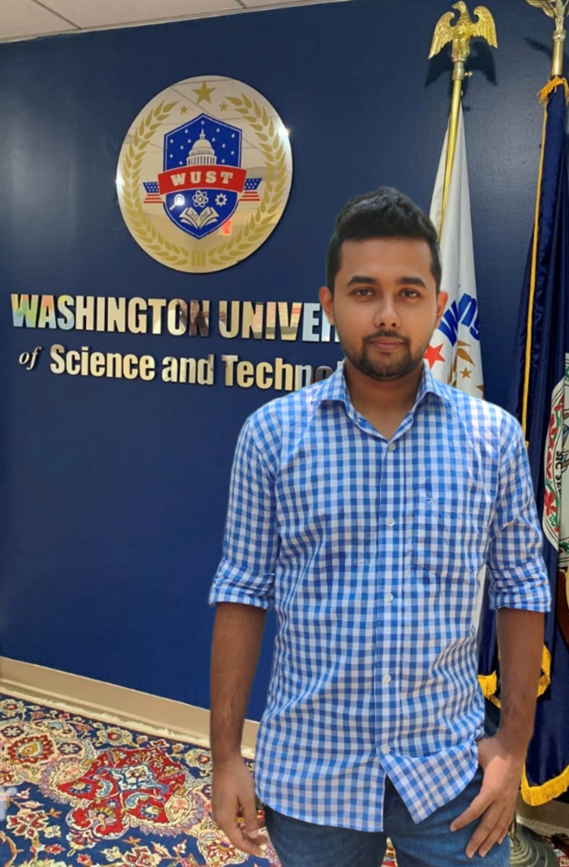
Human communication is emotional, colorful, regional, and culturally rooted. And while today’s large language models (LLMs) are extraordinarily capable, they often stumble when confronted with sarcasm, dialects, or linguistic nuance. This challenge is exactly what inspires the work of Md Jahid Alam Riad, a researcher in machine learning and natural language processing at the Washington University of Science and Technology in Virginia, USA.
Through two groundbreaking studies, Riad demonstrates how fine-tuning, the process of adapting a pre-trained AI model to a specific task, can transform LLMs from generic text processors into truly human-centered systems.
Fine-Tuning: The Bridge Between Global AI and Local Human Reality
Modern AI models are built on enormous datasets and trained with mind-boggling computational power. This gives them a strong general understanding of language, but it also introduces limitations. These models:
- struggle with niche terminology,
- misinterpret region-specific expressions, and
- fall short when analyzing complex emotional cues.
Fine-tuning addresses these gaps by retraining an existing model on carefully selected, task-relevant data. Instead of building a model from the ground up, which takes millions of dollars and environmental cost, fine-tuning acts as a precise, efficient upgrade. Riad’s work proves how powerful this method can be when applied thoughtfully.
Unpacking the World’s AI Conversations: A New Lens on Digital Sentiment
Riad’s first major contribution focuses on one of the most active arenas of public opinion: social media. Platforms like Twitter (X) have become global forums where people joke, worry, debate, and dream about AI. But understanding this massive stream of emotion is nearly impossible with generic sentiment models.
In his study on sentiment classification for AI-related tweets, Riad fine-tuned LLMs to detect the real emotional tone behind online discussions about artificial intelligence.
His model can understand:
- sarcasm common in tech communities,
- shifting cultural attitudes toward automation,
- fear-driven conversations around job displacement, and
- excitement about new innovations.
This fine-tuned model does more than simply label tweets as positive or negative. It provides actionable insights:
For Policymakers
It reveals how society reacts to AI policies, regulations, and ethical concerns.
For Companies
It captures consumer trust levels toward AI-enabled products and services.
For Researchers
It provides data on how public sentiment evolves alongside technological development.
Riad’s work turns chaotic online chatter into a meaningful barometer of global AI sentiment.
Empowering Bangla Dialects: Making AI Truly Speak With Everyone
While English dominates AI research, most of the world communicates through languages underrepresented in training data. Bangla, one of the world’s largest linguistic communities, includes dozens of regional dialects, some so distinct that even native speakers may struggle with them.
Riad’s second study tackles this linguistic challenge head-on.
By fine-tuning LLMs for Bangla regional dialect comprehension in question-answering systems, he developed a model capable of understanding multiple dialects with far greater precision. This advancement holds life-changing potential.
In Education
Students from rural or underserved regions could interact with AI tutors that understand their local speech patterns.
In Government Services
Public-facing digital assistants could communicate in a citizen’s natural dialect, closing long-standing accessibility gaps.
In Healthcare
Patients could describe symptoms more comfortably and accurately, improving outcomes for communities often overlooked by technological systems.
This research expands AI’s reach, ensuring that innovations include—not exclude—people with diverse linguistic backgrounds.
A Researcher Bridging Technology With Humanity
What sets Riad’s work apart is not only its technical sophistication but also its human-centered purpose. His projects are rooted in one core belief: AI should reflect the diversity of the people who use it.
By improving social sentiment analysis and enhancing dialect comprehension, Riad is tackling two questions central to responsible AI:
- How does society truly feel about technology?
- How can AI better understand everyone, not just the majority?
His work demonstrates a rare synthesis of engineering rigor and social awareness, placing him among a new generation of researchers shaping AI with ethical depth.
The Road Ahead: Building AI That Learns Faster, Understands Deeper, and Serves Better
Riad envisions future AI systems that are:
- Highly adaptable, capable of being fine-tuned for new tasks within hours,
- Cross-domain intelligent, able to shift between industries with minimal retraining, and
- Grounded in fairness and transparency, ensuring that AI benefits all communities.
His research underscores a simple yet transformative message:
For AI to be truly intelligent, it must learn from humanity, not just data.
As global conversations about ethics, representation, and linguistic diversity intensify, the work of researchers like Md Jahid Alam Riad becomes essential. Through fine-tuning, he is not just improving models—he is reshaping the relationship between AI and society.
