

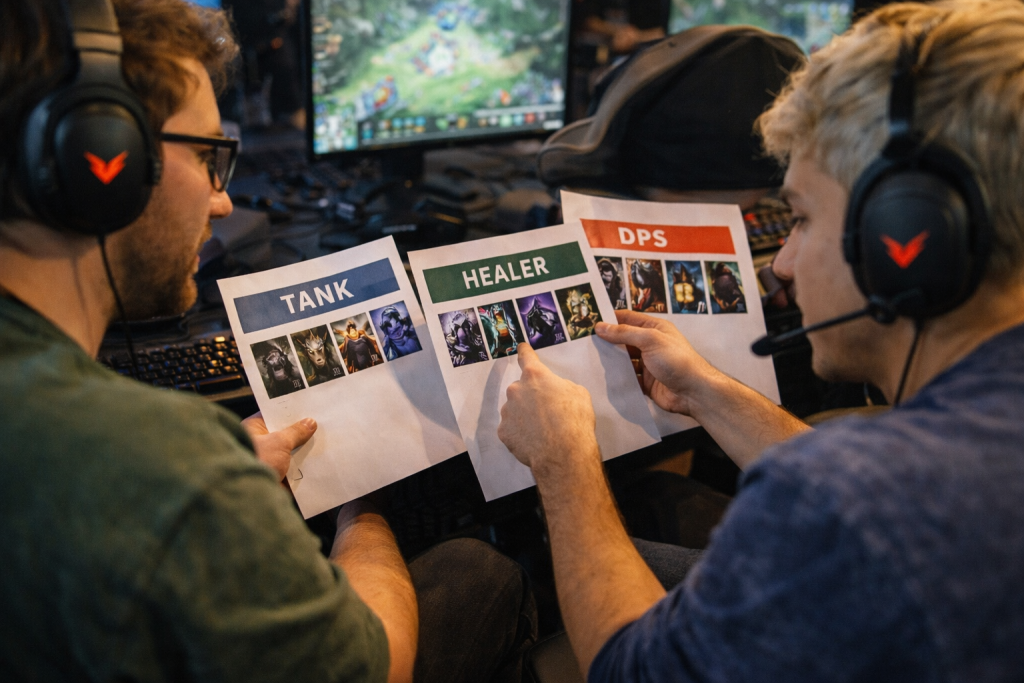
Team-based online games reward cooperation more than individual brilliance. While mechanical skill and game knowledge matter, neither can consistently overcome poor coordination. At the heart of effective teamwork lies class synergy. Understanding how different roles interact, support each other, and create value together is one of the most important skills a competitive player can develop.
Class synergy is not about stacking powerful characters. It is about alignment. When abilities, timings, and responsibilities reinforce each other, teams perform more consistently and recover more effectively from mistakes. In modern online games, this understanding often determines the outcome long before mechanical execution comes into play.
What Class Synergy Really Means
Class synergy refers to how different roles and abilities combine to create outcomes that are stronger than individual contributions. A well-designed team does not rely on one player carrying the match. Instead, it distributes redesigned resources in a way that maximizescollective efficiency.
Synergy can appear in many forms. Defensive abilities may protect high damage dealers. Crowd control can enable precise burst windows. Support mechanics may amplify sustain, mobility, or resource generation. The key is interaction. A strong ability used in isolation is useful. The same ability used at the right time alongside complementary tools becomes decisive.
The Difference Between Roles and Classes
Many players confuse roles with classes. Roles describe responsibilities such as damage, control, sustain, or initiation. Classes are the tools used to fulfill those responsibilities. One class may perform multiple roles depending on build or context, while different classes may fulfill the same role in distinct ways.
Effective synergy begins by understanding roles first. When teams choose classes without clarity on responsibilities, overlap and gaps appear. Too much damage without protection leads to fragility. Too much sustain without pressure leads to stagnation. Balanced role distribution creates stability, while class selection fine-tunes execution.
Why Synergy Matters More Than Raw Power
In isolation, raw power can feel decisive. A high damage class may dominate early matches or low coordination environments. However, as competition increases, weaknesses become more costly. Teams that rely on individual strength often collapse under pressure when coordination falters.
Synergistic teams compensate for individual weaknesses. Mistakes are covered. Cooldowns are staggered. Pressure is applied in waves rather than bursts. This consistency is what allows coordinated teams to outperform mechanically superior opponents over time.
Synergy reduces variance. In competitive environments, reducing variance is often more valuable than chasing peak performance.
Common Types of Synergy in Team-Based Games
Synergy manifests differently across genres, but some patterns appear consistently. Control and damage synergy allows teams to secure eliminations reliably. Sustain and attrition synergy supports longer engagements where positioning and resource management matter more than bursts.
Mobility and initiation synergy enable teams to dictate the pace of engagements. Vision and information synergy improve decision-making and reduce uncertainty. These patterns are not genre-specific. They appear in shooters, RPGs, and strategy-driven team games alike.
Recognizing these patterns helps players identify synergy even when learning a new title.
Timing as the Foundation of Synergy
Synergy is not just about which classes are selected. It is about when abilities are used. Timing separates theoretical synergy from practical success. Poorly timed abilities can cancel each other or waste potential.
Effective teams plan around cooldowns and engagement windows. They understand when to commit resources and when to disengage. This shared understanding allows teams to act decisively rather than hesitantly.
Timing-based synergy often develops through communication and repetition. Teams that practice together refine these patterns naturally.
The Role of Communication in Synergy
Communication transforms synergy from concept to execution. Even simple callouts can align actions. Announcing cooldowns, intentions, or threats reduces reaction time and improves coordination.
In many competitive environments, communication quality matters more than communication quantity. Clear, relevant information supports better decision-making. Overcommunication creates noise and confusion.
Strong synergy often emerges when communication supports role clarity. Each player understands their responsibility and communicates only what affects the team.
Adaptability and Flexible Synergy
Rigid synergy can become a weakness. When teams rely on a single interaction or strategy, opponents adapt. Flexible synergy allows teams to adjust without collapsing.
This flexibility comes from understanding principles rather than memorizing combinations. When players know why something works, they can adapt it to new situations. A control-based team can shift target priorities. A sustain-focused team can change pacing.
Adaptable synergy is resilient. It survives balance changes, map variations, and opponent strategies.
How Meta Shifts Affect Class Synergy
Balance updates and meta shifts constantly reshape synergy. A patch that increases mobility may weaken static defensive setups. Changes to the resource economy may favor aggressive compositions over sustain-oriented ones.
Players who understand synergy adapt more smoothly to these changes. Instead of relearning from scratch, they adjust interactions. They identify which roles gain value and which lose relevance.
This understanding is often reinforced through analysis from strategy-focused platforms like Now Loading, where discussions emphasize interaction and context rather than isolated strength.
The Importance of Synergy at Different Skill Levels
At lower skill levels, synergy often appears less important because mistakes are frequent and coordination is limited. Individual skill can overshadow teamwork temporarily. As skill increases, this advantage disappears.
At higher levels, opponents punish misalignment quickly. Poor positioning, mistimed abilities, or role confusion result in immediate losses. Synergy becomes the baseline expectation rather than a bonus.
Understanding this progression helps players prepare for competitive growth. Developing synergy early reduces frustration later.
Avoiding Common Synergy Mistakes
One common mistake is redundancy. Selecting multiple classes that fulfill the same role without added benefit creates inefficiency. Another mistake is neglecting sustain or control in favor of damage.
Teams also struggle when players prioritize personal performance over team success. Chasing statistics often undermines synergy by disrupting positioning or timing.
Recognizing these pitfalls helps teams self-correct and improve coordination over time.
Building Synergy in Solo Queue Environments
Synergy is not limited to premade teams. Even in solo queue environments, players can build functional synergy through awareness and adaptation.
Observing teammate tendencies allows players to adjust their playstyle. Supporting aggressive players or stabilizing cautious ones improves overall performance. Simple adjustments like matching engagement timing or positioning defensively can create temporary synergy.
Players who adapt to teammates rather than forcing plans often perform more consistently in solo environments.
Long-Term Benefits of Synergy-Focused Play
Focusing on synergy develops transferable skills. Players learn situational awareness, communication, and strategic thinking. These skills remain valuable across games and metas.
Synergy-focused players also experience less burnout. Shared responsibility reduces pressure and frustration. Wins feel earned through cooperation rather than individual strain.
Over time, this approach leads to steadier improvement and greater enjoyment.
Why Synergy Defines Competitive Mastery
Competitive mastery is not defined by perfect mechanics. It is defined by reliable performance under pressure. Synergy supports this reliability by aligning actions and reducing chaos.
Teams with strong synergy make fewer desperate plays. They recover from setbacks more effectively. They adapt to opponents with confidence rather than panic.
Understanding class synergy elevates players from reactive participants to proactive contributors.
Conclusion
Class synergy is the hidden structure behind successful team-based play. It transforms individual abilities into cohesive strategy. In modern online games, where balance shifts frequently and competition is intense, synergy provides stability.
Players who invest in understanding roles, timing, and interaction gain a lasting advantage. They adapt faster, perform more consistently, and contribute more meaningfully to their teams.
In the end, class synergy is not about finding perfect combinations. It is about understanding how pieces fit together and adjusting as conditions change. Those who master this skill do not just play the game. They play together, and that makes all the difference.
