

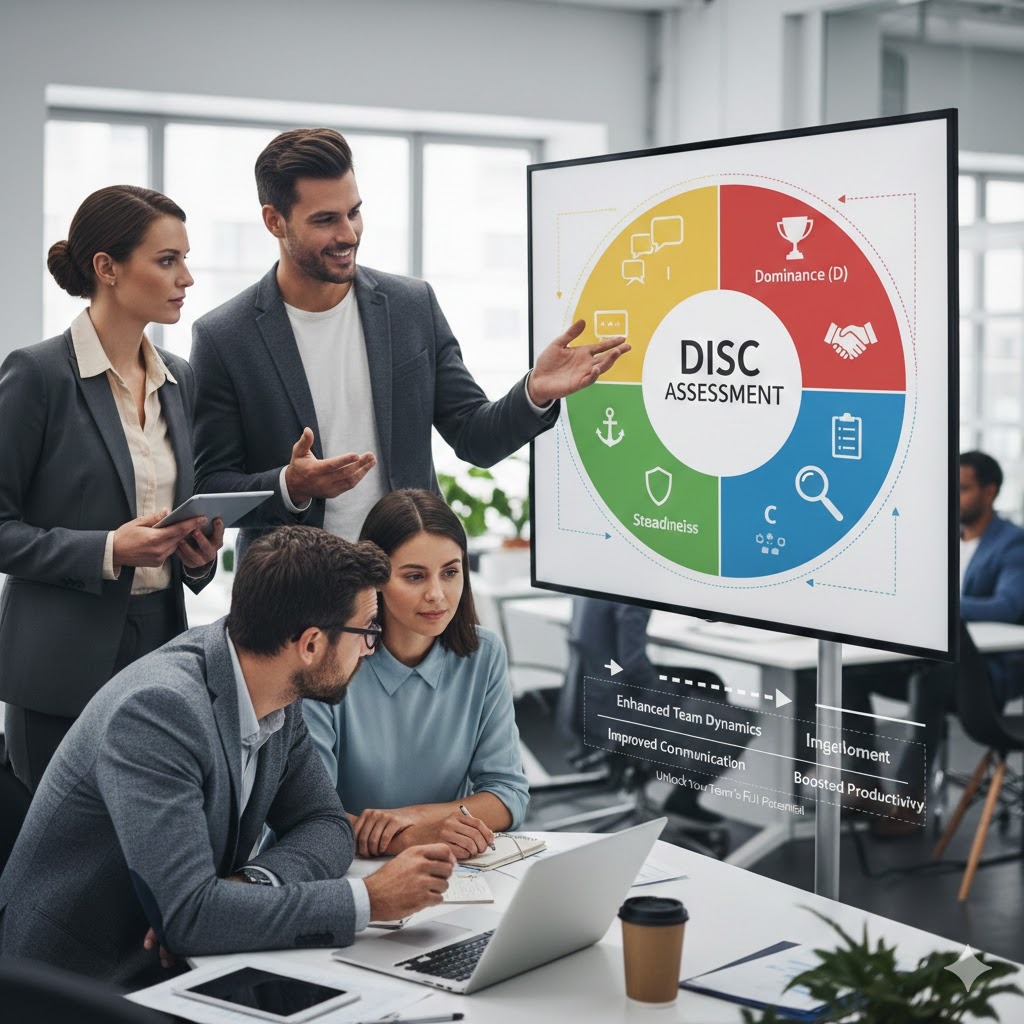
In today’s dynamic workplace, employee performance and productivity are crucial factors for success. To optimize these factors, organizations need tools that help assess and understand the unique strengths and weaknesses of each team member. One such tool that has gained widespread recognition is the DISC assessment. By evaluating individual behavior and communication styles, the DISC assessment tests provide valuable insights that can enhance team dynamics, drive productivity, and improve overall performance.
In this article, we’ll explore how DISC assessments can benefit organizations by helping managers understand their teams better, identify areas for improvement, and boost productivity. We’ll also look at how DISC assessment tests help improve team cohesion, foster a positive work culture, and ultimately drive performance.
What Are DISC Assessment Tests?
The DISC assessment is a psychological tool designed to measure an individual’s behavior and personality traits. The assessment categorizes individuals into four primary personality types based on their responses to various behavioral questions. These four categories are:
- Dominance (D): Results-oriented and assertive individuals who prefer challenges and decision-making authority.
- Influence (I): Outgoing, social individuals who focus on collaboration and influencing others.
- Steadiness (S): Calm and dependable individuals who thrive on stability and cooperation.
- Conscientiousness (C): Detail-oriented individuals who prioritize accuracy, quality, and structure.
Each of these personality traits plays a significant role in how individuals approach work tasks, interact with colleagues, and contribute to team performance. DISC assessments offer a clearer picture of these tendencies, allowing organizations to better allocate resources, improve communication, and enhance collaboration among team members.
How DISC Assessment Tests Boost Individual Performance
1. Identifying Strengths and Areas for Growth
One of the core benefits of DISC assessment tests is their ability to pinpoint individual strengths and areas for improvement. For instance, a high-D (Dominance) person might excel in decision-making and leadership roles, whereas someone high in Steadiness (S) might perform better in supportive or teamwork-oriented positions. By understanding the distinct strengths of each employee, managers can assign tasks that align with their natural abilities.
Furthermore, DISC assessments can uncover areas where employees may need development. For example, someone with a high C (Conscientiousness) trait may be more focused on perfectionism, potentially delaying project completion. Identifying these tendencies early allows managers to offer the right type of training or support to help employees overcome challenges and boost their productivity.
2. Tailoring Feedback and Development Plans
Personalized feedback is one of the most effective ways to enhance individual performance. However, delivering feedback in a way that resonates with each employee’s personality is essential. DISC assessments allow managers to adjust their approach to feedback based on each person’s behavioral traits.
For example, individuals with high I (Influence) traits are generally motivated by recognition and positive reinforcement. For these individuals, feedback should be delivered in a way that emphasizes their contributions and encourages continued collaboration. On the other hand, employees with high C (Conscientiousness) traits may appreciate detailed, fact-based feedback that emphasizes precision and accuracy.
By tailoring feedback according to DISC profiles, managers can engage employees more effectively, resulting in better performance and a more motivated workforce.
How DISC Assessments Improve Team Productivity
1. Enhancing Team Collaboration
Team collaboration is at the heart of every successful organization. However, teams are often made up of individuals with different personality traits, and understanding these differences is key to effective collaboration. DISC assessments provide team members with insights into each other’s strengths and preferred work styles. For instance, someone with high Dominance (D) might be more comfortable making quick decisions, while a high Steadiness (S) individual might need more time to process information and collaborate with others.
Understanding these differences can reduce the likelihood of conflict and improve communication. Team members can adjust their behavior to meet the needs of others, creating a more cohesive and collaborative work environment. With the insights provided by DISC assessments, teams can learn to respect each other’s differences, which enhances overall teamwork and boosts productivity.
2. Clearer Role Definition
Effective team dynamics rely on clear role definition. When teams lack clarity around individual roles, productivity often suffers. The DISC assessment helps clarify each team member’s natural strengths, allowing managers to assign roles that align with individual capabilities. For instance, a person with high Dominance (D) may excel in leadership and decision-making, while someone with high Steadiness (S) may be well-suited for a supportive role.
By assigning roles based on DISC profiles, teams can operate more efficiently, with everyone contributing in areas where they can perform at their best. This not only boosts individual productivity but also increases the overall effectiveness of the team.
3. Improving Communication
Effective communication is essential for any team’s productivity. However, communication preferences can vary greatly depending on each person’s DISC profile. For example, a person with a high Influence (I) trait may prefer open, social conversations, while a high Conscientiousness (C) person may prefer a more structured and detailed approach.
DISC assessments help individuals understand each other’s communication styles, allowing them to adjust their approach accordingly. By doing so, teams can prevent misunderstandings, streamline communication, and ensure that everyone is on the same page. When team members communicate more effectively, productivity naturally improves.
The Impact of DISC Assessments on Organizational Performance
1. Identifying High-Performing Employees
One of the key advantages of DISC assessments is their ability to identify employees who are naturally suited for high-performance roles. For instance, individuals with a high D (Dominance) trait tend to thrive in fast-paced, competitive environments, making them ideal candidates for leadership or sales positions. Similarly, individuals with high C (Conscientiousness) traits excel in roles that require attention to detail and quality control.
By leveraging DISC assessment results, organizations can ensure that high-performing employees are placed in roles where they can maximize their impact. This strategic alignment of skills with job roles not only improves individual performance but also contributes to the overall success of the organization.
2. Fostering a Positive Work Culture
A positive work culture is a critical factor in organizational success. DISC assessments can help foster this culture by improving communication, reducing conflicts, and encouraging collaboration. When employees understand each other’s DISC profiles, they are more likely to respect one another’s differences, resulting in a harmonious and productive work environment.
By promoting a culture of understanding and cooperation, organizations can create a work environment where employees feel valued and motivated to perform at their best. This leads to higher job satisfaction, lower turnover rates, and greater organizational success.
How DISC Assessment Tests Contribute to Long-Term Success
1. Supporting Employee Retention
Employee retention is one of the biggest challenges facing organizations today. High turnover rates can be costly and disruptive, affecting overall productivity. DISC assessments help organizations understand their employees better, allowing them to tailor engagement strategies that keep individuals motivated and satisfied in their roles.
By offering career development opportunities that align with an employee’s DISC profile, organizations can keep top talent engaged and reduce turnover. For example, a high I (Influence) employee might enjoy opportunities for public speaking or mentoring, while a high C (Conscientiousness) individual might prefer roles with more responsibility in quality assurance or project management.
2. Supporting Succession Planning
Succession planning is another area where DISC assessment tests can play a crucial role. By evaluating the behavioral traits of employees, organizations can identify potential leaders who have the right skills and characteristics for leadership roles. DISC assessments can also highlight areas where employees need additional training to transition into higher-level positions.
By using DISC assessments as part of succession planning, organizations can build a strong pipeline of future leaders, ensuring that they are always prepared for leadership transitions.
Conclusion
In conclusion, DISC assessment tests offer a powerful tool for enhancing employee performance and productivity. By providing deep insights into individual strengths, weaknesses, and communication styles, these assessments enable organizations to make data-driven decisions that optimize team performance. Whether it’s improving collaboration, enhancing communication, or identifying high-potential employees, the DISC assessments can provide the key to unlocking greater productivity and success.
By incorporating DISC assessments into your organization’s performance management strategies, you not only create a more effective and engaged workforce but also set your organization on the path to long-term success. DISC assessments offer a roadmap for understanding your employees better, fostering a positive work environment, and ensuring that your team operates at its highest potential.
Organizations that use DISC assessment tests as part of their team development strategies are more likely to see higher employee engagement, greater collaboration, and improved organizational performance. With this invaluable tool, you can help your team thrive in today’s competitive and fast-paced workplace.
