

In the age of the “digital aesthetic,” our social media feeds are no longer just places to see what our friends are doing; they are curated museums of our aspirations. Whether you are obsessed with the “Clean Girl” minimalism, the moody vibes of “Dark Academia,” or the nostalgic neon of “Y2K Cyberpunk,” we are all in a constant state of visual consumption.
But there is a problem with modern digital life: we are “saving” more than we are actually seeing. We hit the little ribbon icon on Instagram or the “Pin” button on Pinterest, and that beautiful video of a rainy Tokyo street or a minimalist interior design disappears into a black hole of thousands of other saved items.
If you want to move from being a passive scroller to a master curator, you need a system. This is the ultimate guide to saving, organizing, and actually using your favorite aesthetic content to build your personal brand or your dream lifestyle
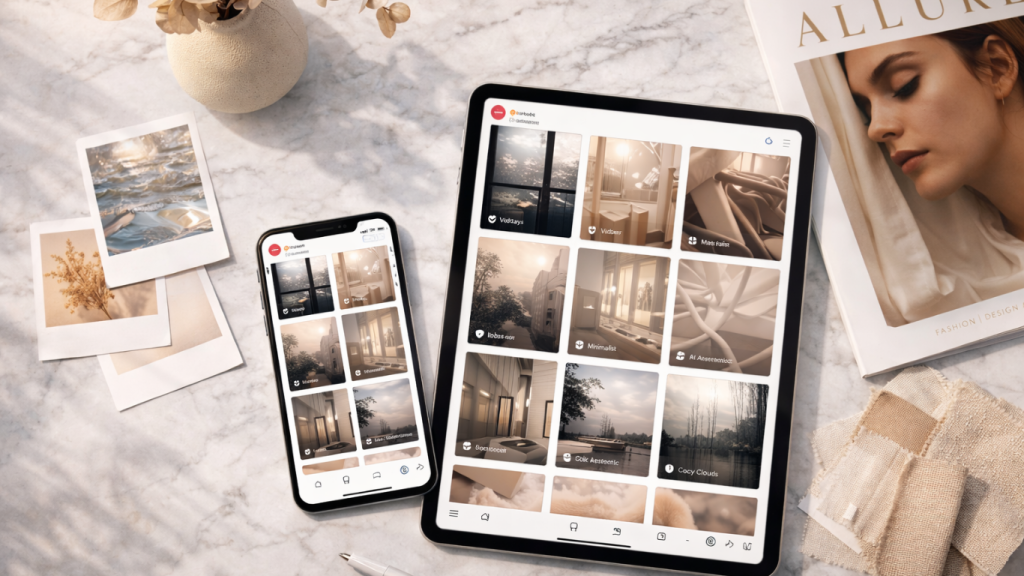
.Image link https://drive.google.com/file/d/11MpjJgb208PmK0-h7x6vwt5DCd1zejIZ/view?usp=sharing
1. Understanding the Power of “The Walled Garden”
Most platforms—Pinterest especially—are designed to be “walled gardens.” They want you to stay inside the app. This is why you can save a video to a board, but you can’t easily save it to your camera roll.
The issue with this “in-app saving” model is digital impermanence. How many times have you gone back to a Pinterest board only to find that the best video on it has been deleted, the account has been deactivated, or the link is now broken? When you find a piece of content that perfectly captures the “vibe” you are trying to build, you shouldn’t leave its survival up to an algorithm.
To truly curate an aesthetic, you need to own the media. This is where a dedicated Pinterest downloader becomes your most important creative tool. By taking that inspiration out of the “walled garden” and onto your local drive, you ensure that your mood board survives even if the original post doesn’t.
2. Categorizing Your Aesthetics
The first step to professional-level organization is defining your categories. Don’t just have one folder called “Inspo.” Break your aesthetic content down into specific “Vibe Pillars.”
Popular Categories for 2025:
- Motion & Texture: High-definition clips of silk moving, rain on glass, or coffee pouring. These are essential for “b-roll” if you are a creator.
- Interior Architecture: Specific lighting setups, furniture arrangements, and color palettes.
- Fashion & Silhouette: Street style clips that focus on how clothes move, not just how they look in a photo.
- Atmospheric Travel: Visuals that capture the “feeling” of a city—the neon of London, the sun-drenched stones of the Mediterranean.
By categorizing your content this way, you stop “hoarding” and start “collecting.”
3. The Curation Workflow: From Pin to Gallery
The most successful digital creators follow a specific workflow to keep their inspiration organized. It’s not enough to just download everything you see; you have to be selective.
Step 1: The Weekly Deep-Dive
Set aside 30 minutes a week to go through your “Saved” items on Pinterest. We often save things in a rush; the weekly deep-dive is where you decide what actually fits your current aesthetic.
Step 2: The Archive
For the videos that are “10/10” in terms of quality and vibe, use Pinvids.com to save them in their highest resolution. Storing these in a dedicated “Master Aesthetic” folder on your phone or laptop makes it ten times easier to find them when you are actually editing a Reel or designing a new project.
Step 3: Meta-Tagging
If you are on a Mac or PC, use tags (like “Warm,” “Grainy,” or “Summer”) to make your downloaded clips searchable. This turns your local folder into a personalized search engine that is even better than Pinterest because every single result is something you’ve already vetted and loved.
4. Building Video Mood Boards
Traditional mood boards are static—they are just collages of images. But the future of aesthetic curation is motion.
A “Video Mood Board” is a short edit (usually 30-60 seconds) that combines music with the clips you’ve saved. This is a common practice in the fashion and film industries. By seeing how your favorite clips interact with one another, you can see if your aesthetic is cohesive.
Does the “lo-fi” grain of your travel videos match the minimalist typography you like? You won’t know until you see them side-by-side in a timeline. Having your clips downloaded and ready to import into apps like CapCut or Premiere Pro is the only way to make this process fluid.
5. The Ethics of Aesthetic Curation
When you are saving and organizing content, it is vital to remember the difference between Curation and Plagiarism.
- Curation: Saving a video to study its lighting, using it as a private reference for a mood board, or sharing it while giving clear credit to the original creator.
- Plagiarism: Re-uploading someone else’s video as your own without credit.
The goal of building a personal aesthetic archive is to inspire your own original work. Use the videos you download to learn the “visual language” of the creators you admire, then go out and film your own version.
6. Physical vs. Digital: Bringing the Vibe Offline
The ultimate goal of all this digital organization is to influence your physical world. Use your “Interior” folder to guide your actual home decor purchases. Use your “Fashion” folder to inform your capsule wardrobe.
Some of the most creative people we know actually print out “stills” from the videos they’ve saved and pin them to physical corkboards. There is a tactile psychological benefit to seeing your digital aesthetic in the physical world. It makes your goals and your “vibe” feel more achievable.
7. The Mental Health Aspect of Curation
We have to talk about the “perfection trap.” Curation should be a creative outlet, not a source of anxiety. If you find yourself feeling “less than” because your life doesn’t look like the high-definition aesthetic clips you’ve saved, it’s time to take a break.
The “Ultimate Guide” to aesthetic content is ultimately about intentionality. Instead of mindlessly scrolling and letting the algorithm dictate what you see, take control of your visual environment. Save what truly speaks to you, organize it with purpose, and use it to build a world that makes you feel inspired.
Conclusion: Your Digital Legacy
In ten years, your Pinterest boards might be gone, and the apps we use today might be replaced by something else. But if you have spent time curating and saving the visual history of what inspired you, you will have a personal archive that is priceless.
Digital curation is the new art form. By using the right tools to archive your favorite videos and organizing them with a professional mindset, you aren’t just “saving posts”—you are building a visual library of your own life’s aesthetic. Stop pinning and start preserving.
