

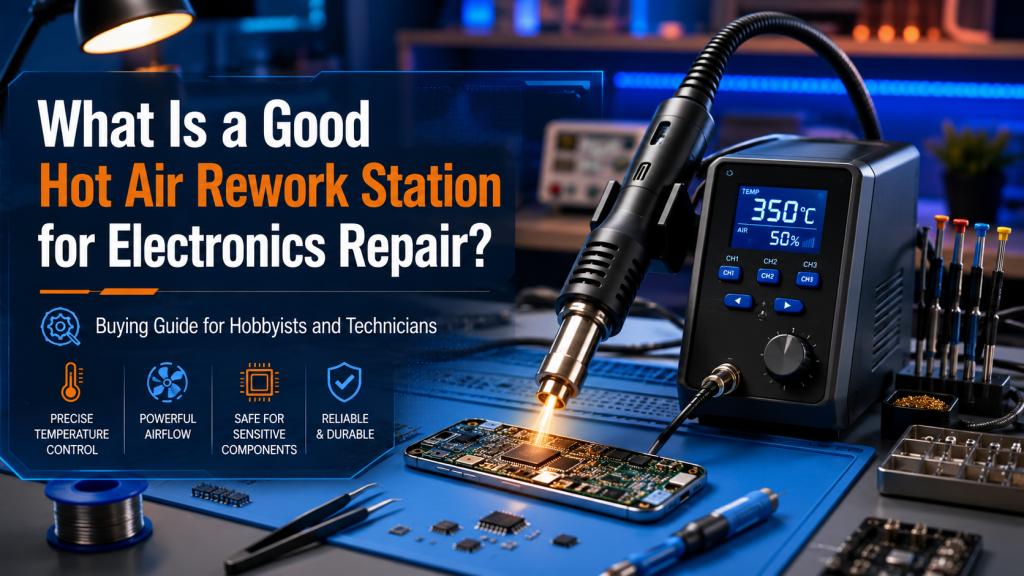
A Hot Air Rework Station is one of the most important tools for electronics repair, mobile phone repair, PCB work, and hobby soldering. If you work with modern electronic devices, you will often deal with tiny surface-mounted components, ICs, connectors, and chips that cannot be removed easily with a normal soldering iron.
A good hot air station gives you controlled heat and airflow. This makes it easier to remove, replace, or reflow components without damaging the circuit board. Unlike a basic heat gun, a hot air rework station is designed for precision work. It allows you to adjust the temperature and air pressure according to the size of the component and the type of repair.
For hobbyists, students, mobile repair technicians, and small workshop owners, choosing the right station can make a big difference. The best model is not always the most expensive one. A good station should be stable, safe, easy to use, and suitable for the kind of repair work you do.
What Is a Hot Air Rework Station?
A hot air rework station is a machine that blows hot air through a nozzle at a controlled temperature and airflow level. It is mainly used to melt solder on printed circuit boards so that components can be removed or installed.
It is commonly used for:
- SMD component removal
- IC replacement
- Connector repair
- Mobile phone motherboard repair
- Laptop and console PCB repair
- Reflowing solder joints
- Shield removal
- Heat shrinking
- General electronics repair
In repair shops, it may also be called a hot air gun, hot air blower, IC blower, SMD rework station, or hot air soldering station.
Why Hobbyists Need a Good Hot Air Station
Many hobbyists begin with a simple soldering iron. That is enough for basic wires, through-hole parts, and beginner electronics projects. But when you start working with modern electronics, a soldering iron alone may not be enough.
Phones, laptops, tablets, drones, gaming consoles, and small gadgets use compact PCBs with tiny parts placed very close together. Trying to remove these parts with only a soldering iron can damage the board or surrounding components.
A hot air station helps by heating the area evenly. This allows solder to melt without applying physical force. For a hobbyist, this means cleaner repairs, better control, and a lower chance of lifting pads from the board.
A good station can help with:
- Removing small ICs safely
- Replacing charging ports
- Working on SMD components
- Repairing broken solder joints
- Practicing board-level repair
- Learning professional repair techniques
If you want to move beyond basic soldering, a hot air rework station is a smart investment.
Hot Air Rework Station vs Heat Gun
Some beginners think a regular heat gun can do the same job. While both tools produce hot air, they are very different.
| Feature | Heat Gun | Hot Air Rework Station |
| Temperature control | Limited | More accurate |
| Airflow control | Rough | Adjustable |
| Nozzle size | Large | Small and focused |
| Best use | Large surfaces, heat shrinking | PCB and electronics repair |
| Risk to small parts | High | Lower when used properly |
A heat gun is too large and powerful for most electronics repair jobs. It can easily overheat the board, move nearby parts, or damage plastic connectors. A proper hot air rework station gives you much better control, which is essential when working on delicate PCBs.
Types of Hot Air Soldering Stations
There are several types of Hot air soldering stations available. Each type is suitable for different users and budgets.
| Type | Best For | Advantages | Limitations |
| Analog hot air station | Basic hobby work | Affordable and simple | Less accurate temperature control |
| Digital hot air station | Hobbyists and technicians | Better control and display | Costs more than analog models |
| Combined soldering + hot air station | Small workbenches | Saves space | If one section fails, the unit becomes less useful |
| Professional hot air station | Daily repair work | Stable, powerful, durable | Higher price |
For most hobbyists, a digital station is usually the best choice. It offers better control without becoming too expensive.
What Makes a Good Hot Air Rework Station?
A good station should not only become hot. It should provide stable heat, controlled airflow, and safe operation. These features matter more than looks or extra buttons.
1. Stable Temperature Control
Temperature stability is one of the most important features. A good station should reach the selected temperature quickly and maintain it during the repair.
If the temperature keeps changing, the solder may not melt evenly. Too much heat can damage ICs, lift pads, or burn the PCB. Too little heat can make the job slow and messy.
A digital temperature display is useful because it helps you repeat settings for similar repair tasks.
2. Adjustable Airflow
Airflow is just as important as heat. If the airflow is too strong, it can blow small resistors, capacitors, or chips away from the board. If the airflow is too weak, the component may not heat properly.
Look for a station that allows smooth airflow adjustment. This gives you better control when working on both small and large components.
3. Quality Heating Element
The heating element affects heating speed, temperature stability, and tool lifespan. Ceramic heating elements are commonly preferred because they heat quickly and maintain temperature well.
Cheap heating elements may fail early or produce uneven heat. For regular electronics repair, this can become frustrating and costly.
4. Nozzle Compatibility
Different jobs need different nozzle sizes. A small nozzle helps focus heat on tiny ICs, while a larger nozzle is better for bigger parts.
A good hot air station should come with multiple nozzles or support standard nozzle sizes. Easy nozzle replacement is also important.
5. Comfortable Handle
The handle should be lightweight, heat-resistant, and easy to control. A stiff hose or heavy handle can make long repair sessions tiring.
For detailed PCB work, comfort and control are very important.
6. Auto Cooling Function
Auto cooling is a useful feature. When you place the handle back in the holder, the station continues blowing air until the handle cools down.
This protects the heating element and increases the life of the station. It also improves safety after use.
7. ESD Safety
Electrostatic discharge can damage sensitive electronics. If you repair mobile phones, computer boards, or ICs, an ESD-safe design is helpful.
This is especially important for professional repair work and delicate board-level jobs.
Recommended Hot Air Rework Stations to Consider
There are many models available, but some are commonly preferred by hobbyists and repair technicians because of their control, power, and reliability.
| Model | Best For | Key Strength |
| ATTEN ST-862D Hot air soldering stations | Hobbyists and electronics repair users | Stable heating and digital control |
| Quick 861DW hot air station | Professional repair work | High power and precise airflow |
| SUGON 8620DX Hot Air Rework Station | SMD and workshop use | Strong performance and modern features |
The ATTEN ST-862D Hot air soldering stations model is a good option for users who want a reliable digital station for PCB repair, SMD work, and general electronics projects. It is suitable for hobbyists who want something better than a basic beginner unit.
The Quick 861DW hot air station is often considered a professional-grade choice. It is known for powerful heating, smooth airflow, and stable performance. This type of station is better for users who repair electronics regularly or need more control for delicate jobs.
The SUGON 8620DX Hot Air Rework Station is another strong option for SMD repair, IC work, and workshop use. It is suitable for users who want a powerful station with digital features and good performance for frequent repairs.
Choosing the Good Hot Air Rework Station for a Hobbyist
For a hobbyist, the right station should be easy to use, reliable, and safe. You do not need to buy the most expensive model at the beginning, but you should avoid very cheap stations with poor temperature control.
A good hobbyist station should have:
- Digital temperature display
- Adjustable airflow
- Multiple nozzles
- Auto cooling
- Stable heating
- Comfortable handle
- Spare part availability
If you are new to hot air repair, practice on dead boards first. This helps you understand how heat affects solder, components, and PCB pads. Good repair results depend on both the tool and the skill of the user.
Hot Air Rework Station Buying Guide
Before buying a Hot Air Rework Station, focus on the features that affect real repair work.
| Buying Factor | Why It Matters |
| Temperature range | Helps work on different components |
| Temperature stability | Prevents overheating and board damage |
| Airflow control | Stops small components from blowing away |
| Nozzle support | Makes the station useful for different jobs |
| Heating element quality | Improves heat-up speed and lifespan |
| Handle comfort | Gives better control during long repairs |
| Auto cooling | Protects the heating element |
| Spare parts availability | Makes maintenance easier |
Do not choose only by price. A cheap station may save money at first, but poor heat control can damage expensive boards. A reliable mid-range station is often a better long-term choice.
Common Mistakes to Avoid
Many beginners make mistakes when buying or using a hot air station. These mistakes can damage boards or make repair work harder.
Avoid these common problems:
- Buying only the cheapest station
- Ignoring airflow control
- Using maximum temperature for every repair
- Not using the correct nozzle
- Heating the board for too long
- Forgetting to protect nearby parts
- Not checking spare parts availability
- Practicing directly on valuable devices
A mid-range station used carefully can perform better than an expensive station used without proper technique.
Safety Tips for Using a Hot Air Station
Hot air repair involves high temperatures, so safety is very important.
Follow these tips:
- Use heat-resistant tape to protect nearby components
- Keep airflow low around tiny parts
- Do not overheat the PCB
- Use flux for cleaner solder flow
- Keep the nozzle moving gently
- Work in a ventilated area
- Let the handle cool before switching off
- Practice on scrap boards first
Patience is important. Do not force a component off the board. If the solder has not melted properly, pulling the part can damage pads or traces.
Is a Hot Air Rework Station Worth It?
Yes, a hot air rework station is worth buying if you plan to repair electronics seriously. For basic wire soldering, you may not need it immediately. But for SMD components, mobile phone boards, connectors, ICs, and compact PCBs, it becomes extremely useful.
For hobbyists, it opens the door to more advanced projects. For technicians, it improves repair quality and efficiency. For repair shops, it can help reduce outsourcing and increase service value.
Final Thoughts
A good Hot Air Rework Station is an essential tool for electronics repair, mobile phone repair, and hobby PCB work. It gives you the controlled heat and airflow needed to remove and replace delicate components safely.
For most hobbyists, a digital hot air station with stable temperature, adjustable airflow, multiple nozzles, and auto cooling is the best choice. For professional repair work, a higher-quality model can provide better consistency, safety, and long-term reliability.
Whether you choose ATTEN, Quick, SUGON, or another trusted brand, remember that the tool is only part of the repair process. Good results also depend on practice, patience, correct temperature settings, and proper airflow control.
