

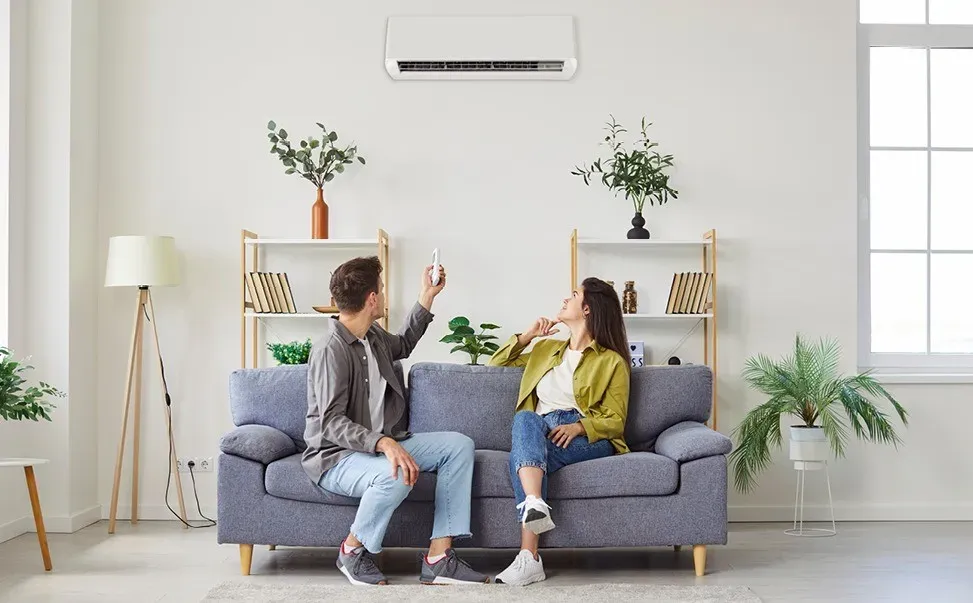
Choosing an air conditioner for a villa in the UAE is not simply a matter of picking the largest unit available. The extreme heat, high humidity levels, and the sheer scale of villa properties across Dubai, Abu Dhabi, and Sharjah demand a more considered approach. With summer temperatures regularly exceeding 45°C and indoor cooling running for the better part of ten months a year, the right AC system can mean the difference between genuine comfort and spiralling energy bills. This guide breaks down the three key areas every homeowner should understand before making a decision.
Section 1: Understanding Your Villa’s Cooling Requirements
The first mistake many villa owners make is applying the same logic used for apartments. A villa is a fundamentally different cooling challenge. Multiple floors, large open-plan living areas, high ceilings, and extensive glazing all increase the thermal load — the total amount of heat your AC system must overcome to maintain a comfortable indoor temperature. Before choosing any system, you need a proper heat load calculation carried out by a qualified HVAC engineer. This is not an optional step; it is the foundation of every good decision that follows.
Several UAE-specific factors amplify this load significantly. East- and west-facing glass surfaces absorb enormous amounts of solar radiation throughout the day. Older villas may have insufficient insulation in walls and roofs, meaning the building retains heat rather than deflecting it. Even the colour of external render and the type of roofing material play a measurable role in how hard your AC has to work.
The type of system matters just as much as the capacity. Smaller villas of up to roughly 2,500 square feet can often be served effectively by a well-designed ducted split or multi-split arrangement. Larger properties — particularly those with four or more bedrooms, separate staff quarters, or a majlis wing — typically require a central ducted system or a Variable Refrigerant Flow (VRF) setup. VRF systems are especially well-suited to UAE villas because they allow different zones to be cooled independently, so the master bedroom can be kept at 20°C while guest rooms that are not in use draw minimal power. This zoning capability is one of the most impactful tools for managing electricity costs at scale.
Section 2: Efficiency, Running Costs, and What to Look For
In a country where AC can account for 60 to 70 percent of a residential electricity bill, efficiency is not a luxury consideration — it is a financial one. The key metric to understand is the Energy Efficiency Ratio (EER) and its seasonal equivalent, the Seasonal Energy Efficiency Ratio (SEER). The higher the rating, the less electricity the system consumes for every unit of cooling it delivers. In UAE conditions, where the system runs almost continuously for months at a time, even a modest improvement in efficiency translates into significant annual savings.
Look for systems that carry the Emirates Authority for Standardisation and Metrology (ESMA) energy label, which rates products on a scale from one to five stars. A five-star rated system will cost more upfront but will typically recover that premium through lower utility bills within two to four years, depending on villa size and usage patterns. Pay attention to how the system performs specifically at high ambient temperatures — some units that perform well in European conditions lose efficiency rapidly once outdoor temperatures climb above 40°C. Always check the rated capacity and EER at 46°C or higher, not just at the standard 35°C test condition.
Beyond the unit itself, the quality of installation has an outsized impact on long-term performance. Poorly insulated ductwork, undersized refrigerant piping, or an incorrectly positioned outdoor unit can reduce system efficiency by 20 to 30 percent regardless of how premium the equipment is. Ensure the installing contractor is ESMA-registered, conducts a full commissioning test, and provides a clear maintenance schedule. In the UAE climate, filters should typically be cleaned every four to six weeks during peak summer, and an annual professional service check is the minimum required to preserve both performance and warranty validity.
Section 3: About Daikin Middle East
Daikin is the world’s leading air conditioning manufacturer, with over a century of innovation in heating, ventilation, and cooling technology. In the Middle East, Daikin has built a strong and well-established presence precisely because its products are engineered to perform in the kind of demanding conditions that define the region — extreme heat, high humidity, and year-round intensive use.
Daikin’s Middle East operations are headquartered in Dubai, with a wide network of authorised dealers, certified installers, and service centres across the UAE, Saudi Arabia, Qatar, Kuwait, and beyond. The product range covers every residential application, from sleek wall-mounted split units for individual rooms through to fully integrated VRF systems capable of serving large villas and multi-unit developments. All Daikin systems sold in the region are designed and tested for high-ambient performance, ensuring rated capacity and efficiency are maintained even when outdoor temperatures soar past 50°C.
What sets Daikin apart in the UAE market is not only the quality of its equipment but the depth of its after-sales infrastructure. Daikin-trained technicians are available across all major Emirates, and the company offers structured maintenance programmes designed to protect system performance across the lifetime of the installation. For villa owners who want reliable comfort, manageable running costs, and the confidence of dealing with a globally trusted brand backed by strong local support, Daikin Middle East is a natural first conversation to have.
