

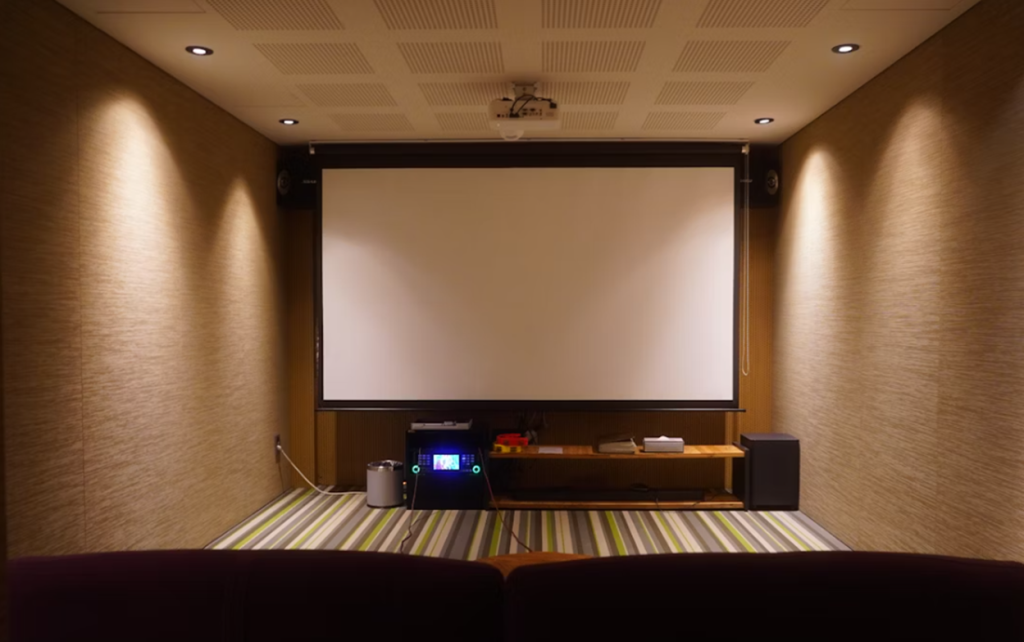
Contemporary interior design is defined by strict intentionality and an uncompromising vision. Every piece of furniture, every lighting fixture, and every textural choice is painstakingly curated by designers and homeowners to create a specific mood and aesthetic flow. We obsess over the exact shade of matte paint on our walls, the grain of our hardwood floors, and the precise angle of our mid-century modern lounge chairs. Yet, no matter how beautifully a space is conceived and executed, interior architects universally face a persistent and visually aggressive nemesis: the television.
As our desire for immersive, cinematic entertainment has grown exponentially, so too has the physical size of our screens. We are now routinely introducing 85-inch, 98-inch, and even 100-inch televisions into our domestic spaces. While these displays are undeniably technological marvels when turned on and playing a high-definition film, the moment you press the power button on the remote, they revert to their natural state: massive, looming black rectangles.
This phenomenon, often referred to as the black mirror effect, acts as an aesthetic black hole. It dominates the visual weight of the room, clashes aggressively with minimalist decor, and dictates the orientation of all surrounding furniture. For design-conscious individuals striving for a serene, uncluttered environment, the traditional television has long been accepted as a necessary evil. But what if it no longer had to be? What if we could separate the cinematic experience from the intrusive hardware?
The Disappearing Cinema
The highest echelon of modern interior design revolves around the concept of concealed technology—the philosophy that our homes should be incredibly smart, connected, and capable, but the hardware driving those experiences should remain entirely invisible until the exact moment it is needed.
This philosophy is currently driving a massive shift away from traditional flat-panel displays towards advanced optical solutions. Homeowners and interior designers are increasingly discovering that a modern laser projector offers the perfect marriage of uncompromising cinematic performance and absolute design minimalism.
Crucially, this is not the projection technology of the past. Thanks to the advent of Ultra Short Throw technology, there is no longer a need for bulky, industrial-looking ceiling mounts or intrusive wiring runs channelled through pristine plasterwork. The UST projector itself is a sleek, low-profile piece of modern industrial design that sits quietly on a credenza or low-slung media unit directly beneath the projection surface. It blends seamlessly with high-end AV furniture, acting as a subtle metallic accent rather than a room-dominating focal point.
The Canvas Approach to Display Surfaces
The true genius of this minimalist setup, however, lies in how the display surface integrates into the architecture of the room. You cannot simply project 4K HDR video onto a standard painted wall without losing immense detail and contrast. Standard paint scatters light, ruining the black levels and highlighting every microscopic imperfection in the plaster. To achieve true cinematic fidelity, a professional projector screen is an absolute necessity.
In a design context, the integration of an Ambient Light Rejecting screen is a revelation. Unlike the thick, heavy plastic bezels and reflective glass of a traditional television, a fixed-frame ALR screen features an ultra-thin, edge-to-edge profile that looks less like a piece of consumer electronics and more like a minimalist, modern canvas.
Because it is incredibly lightweight, it can be mounted on decorative room partitions, floating walls, or feature walls that could never safely support the sheer physical weight of a 100-inch glass television. The ALR technology actively absorbs overhead lighting and window glare, ensuring the picture remains vibrant even in a sunlit room.
For the ultimate minimalist flex, motorized projector screens take the concept of disappearing tech to its logical, luxurious conclusion. Housed within a sleek piece of bespoke joinery or recessed discreetly into a ceiling cavity, the screen remains entirely out of sight during the day. With the touch of a button or a voice command to your smart home system, a massive 120-inch cinematic surface silently glides into place. When the film is over, the screen retracts, and the room returns instantly to its pure, architectural state.
Bespoke Joinery and Architectural Integration
This shift towards projection opens up entirely new avenues for custom furniture and architectural integration. Because UST projectors require very little depth, cabinet makers and interior designers are creating stunning, low-line media units with motorised sliding tops. The projector lives inside the cabinet, completely hidden from view. When movie night begins, the top slides back, the projector fires up, and the room transforms.
This level of customisation ensures that the technology serves the design of the room, rather than the design of the room serving the technology. It allows for the use of rich, natural materials like fluted walnut, travertine, or brushed brass in the media centre, without the aesthetic being ruined by a glowing red standby light or a mess of tangled HDMI cables.
Designing for People, Not Devices
When you finally remove the television from the wall, you fundamentally change the sociology of the room. For decades, we have arranged our living spaces as shrines to the screen. Every sofa, armchair, and coffee table is rigidly pointed towards the television, creating a space designed purely for broadcasting.
By eliminating the permanent black mirror, space immediately opens up. Walls are freed for oversized artwork, textured panelling, expansive bookshelves, or large mirrors that bounce natural light around the room. You can arrange seating in a conversational circle, fostering human connection and interaction. The living area transitions back into a space primarily designed for relaxation and socialising, rather than a space built exclusively for media consumption.
For homeowners who want the room to shift easily between social space and cinema space, an integrated projector and screen solution can make the setup feel more intentional, less cluttered, and more aligned with high-end interior planning.
Conclusion: The Ultimate Luxury
In the realm of modern luxury, true sophistication is found in seamlessness. It is about enjoying world-class, uncompromising experiences without having to live inside a machine. By replacing the intrusive, heavy presence of a traditional television with the elegance of laser projection and ALR screen technology, you can achieve the holy grail of interior design: a flawless, minimalist living space that instantly transforms into a breathtaking private cinema on demand. The future of home entertainment isn’t just about manufacturing a bigger screen; it is about engineering a screen that knows exactly when to disappear.
