

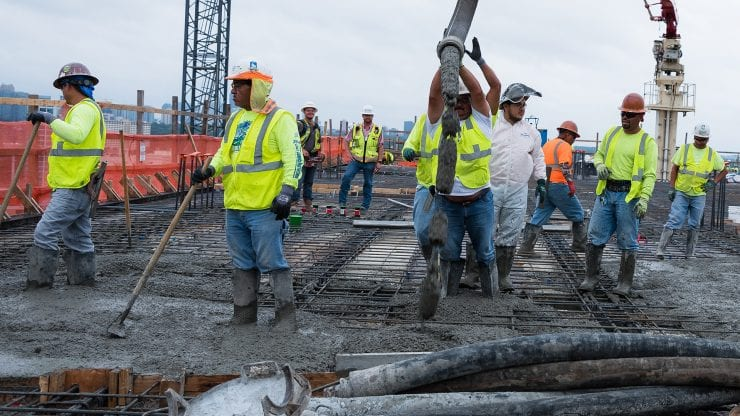
Building a home or adding an extension is one of the biggest investments most people will ever make. And yet, one of the most critical parts of the entire project happens underground, where no one will ever see it. The foundation holds everything up. Get it right and the rest of the build has a solid platform to work from. Get it wrong and the consequences can be costly and very difficult to fix.
What Concrete Foundation Contractors Actually Do
Foundation contractors are specialists in the groundwork stage of a construction project. Before any walls go up or floors go down, they are responsible for preparing the ground, excavating to the correct depth, and constructing the concrete base that the entire structure will sit on.
This work covers several different foundation types depending on the building and ground conditions. Strip foundations are the most common for residential buildings. Raft foundations spread the load across a wider area, which is useful on softer soil. Pad foundations support individual columns and are common in commercial builds.
The right type depends on a survey of the ground, the size of the structure, and local building regulations. Experienced concrete foundation contractors will assess all of these factors before recommending an approach, rather than applying a one-size-fits-all solution.
Why the Foundation Stage Is So Easy to Get Wrong
The foundation stage is often where build problems begin, even when the visible construction looks fine. Poor ground compaction, incorrect reinforcement, inadequate depth, or the wrong concrete mix for the conditions can all lead to problems that only become apparent months or years later. Subsidence, cracking walls, and uneven floors are common signs that foundation work was not carried out correctly.
These issues are rarely cheap to put right. In some cases, underpinning an existing structure can cost more than doing the foundation work properly in the first place.
What to Look for When Choosing a Contractor
The most important thing to look for is genuine, demonstrated experience with foundation work specifically. Groundwork is a broad trade, and not every groundworker has the depth of knowledge needed for complex foundation projects. Ask to see examples of previous work, and ask specifically about the ground conditions they have dealt with and the foundation types they have installed.
Reputable concrete foundation contractors should also be familiar with building regulations. Foundations are a controlled element under Part A of the Building Regulations in England and Wales, meaning the work must meet defined structural standards and will typically be inspected by a building control officer.
It is also worth checking whether the contractor carries public liability insurance and can provide a clear, itemised quote that sets out exactly what is and is not included in the price. Vague quotes that bundle everything into a single figure can lead to disputes later.
Questions to Ask Before You Commit
Before agreeing to any contract, a few straightforward questions are worth asking. How long have they been carrying out foundation work specifically? Have they worked on similar projects on comparable ground types? Are they familiar with local building control requirements? Will they be doing the work themselves, or subcontracting it?
A contractor who answers these questions clearly and in detail is generally one who knows what they are doing. One who deflects or gives vague answers is worth approaching with more caution.
The Difference Between Cheap and Good Value
Foundation work is not the place to save money by choosing the lowest quote. Good value means work that meets the required standard, is completed safely, and does not need to be revisited. Taking the time to find contractors with the right experience will always be a better investment than saving a small amount on the initial cost.
