

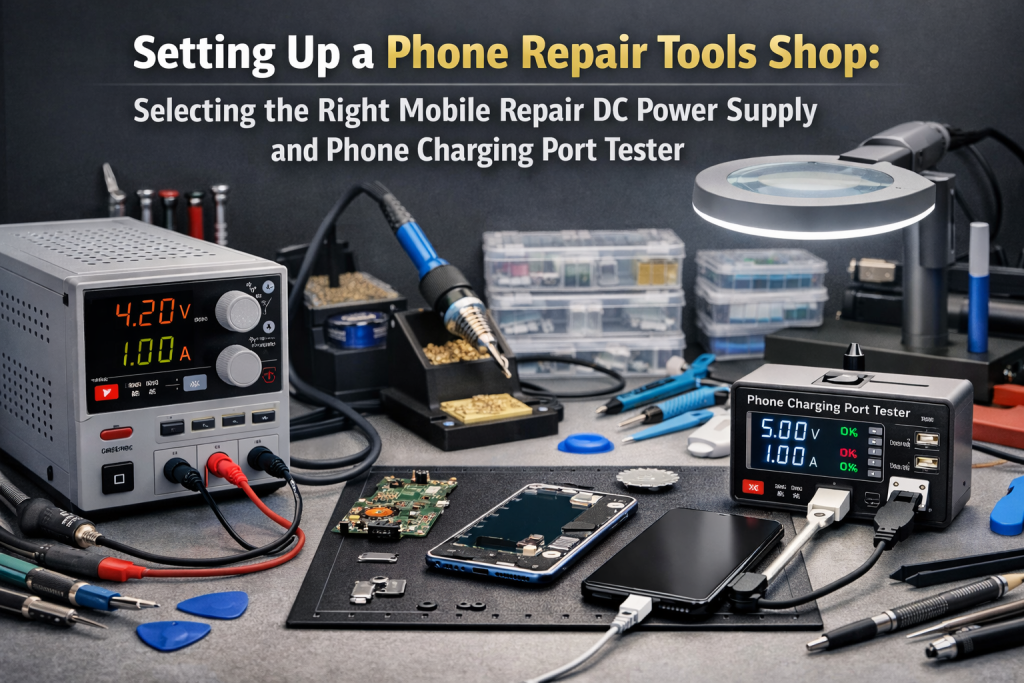
Starting or upgrading a phone repair workspace requires more than basic tools and enthusiasm. Whether you are a professional technician, a phone repairman working independently, or a retail customer interested in DIY repairs, the right equipment determines the quality and efficiency of your work. A well-equipped phone repair tools shop allows technicians to diagnose issues accurately and complete repairs with confidence.
Modern smartphones are complex devices. Repairing them requires precision tools, reliable testing equipment, and a clear understanding of diagnostic processes. Among the most essential pieces of equipment are a mobile repair dc power supply and a Phone Charging Port Tester. These tools help technicians identify power issues, charging faults, and motherboard problems without guesswork.
This guide explains how to set up a practical repair environment and how to choose the right equipment that supports both professional technicians and individuals performing their own device repairs.
Understanding the Foundation of a Phone Repair Workspace
Before selecting specialized equipment, it is important to understand the purpose of a well-organized repair environment. A functional phone repair tools shop is designed to improve productivity, safety, and diagnostic accuracy.
Every repair workspace should include:
- Precision screwdrivers and opening tools
- Anti-static mats and wrist straps
- Microscope or magnification tools
- Soldering equipment
- Diagnostic tools such as power supplies and testers
Without proper diagnostic tools, technicians often rely on trial and error. This wastes time and may cause further damage to delicate smartphone components.
Professional technicians know that identifying the root cause of a device problem is the most critical step in the repair process. Tools like a mobile repair dc power supply and a Phone Charging Port Tester provide real-time data that simplifies troubleshooting.
Why Diagnostic Tools Matter in Phone Repair
Smartphone problems often appear similar on the surface but originate from completely different hardware faults. A phone that will not turn on might have a battery issue, a motherboard short circuit, or a charging port problem.
Diagnostic tools help isolate these issues quickly.
For example:
- A power supply helps detect current draw from the motherboard
- A charging port tester confirms whether a charging port is functioning properly
- Measurement tools verify voltage and connection integrity
Technicians who rely on professional diagnostic tools can often diagnose faults within minutes instead of hours.
This is one reason many experienced repair specialists invest in high quality equipment from reputable tool providers such as PHONEFIX or DIYFIXTool, which are known for producing reliable repair instruments.
Choosing the Right Mobile Repair DC Power Supply
One of the most important pieces of equipment in a repair workspace is the mobile repair dc power supply. This device allows technicians to power smartphones directly without using a battery.
By supplying controlled voltage and current, the technician can observe how the device behaves during startup or while attempting to power on.
Key Functions of a DC Power Supply
A mobile repair dc power supply performs several critical tasks:
- Simulates battery power to test motherboard activity
- Detects short circuits through abnormal current readings
- Helps locate faulty components during troubleshooting
- Allows safe power testing without relying on a battery
For technicians, this tool becomes a window into the electrical behavior of a smartphone.
Features to Look for When Buying One
When selecting a power supply for your phone repair tools shop, consider the following features:
- Adjustable voltage output for different devices
- Accurate current display for precise diagnostics
- Short circuit protection
- Stable power output
- Compact design suitable for workbenches
A good power supply should allow technicians to monitor current fluctuations when a device attempts to boot. These readings can reveal hidden faults such as damaged IC components or motherboard shorts.
Benefits for Different Types of Users
A mobile repair dc power supply is valuable for multiple user groups.
Phone repair technicians use it to diagnose motherboard faults.
Repair shops use it to reduce diagnostic time and increase efficiency.
DIY repair enthusiasts use it to test devices before purchasing replacement parts.
Having this tool in your repair setup greatly improves the accuracy of troubleshooting.
The Importance of a Phone Charging Port Tester
Charging problems are among the most common issues in smartphones. Many users assume the battery is defective when the real problem lies in the charging port.
A Phone Charging Port Tester is designed to quickly identify whether the charging port is functioning correctly.
Instead of disassembling the device immediately, the technician can connect the tester and analyze the charging behavior.
How a Charging Port Tester Works
The tester connects between the phone and the charging cable. It measures voltage and current flow while the device is charging.
This allows technicians to determine:
- Whether the port receives power
- Whether power flows correctly to the device
- Whether the cable or charger is faulty
- Whether the port has internal damage
By analyzing this information, technicians can decide whether the port needs cleaning, repair, or replacement.
Advantages of Using a Charging Port Tester
A Phone Charging Port Tester offers several practical advantages:
- Faster diagnosis of charging issues
- Reduced risk of unnecessary component replacement
- Accurate testing before and after repairs
- Ability to detect unstable charging connections
For repair shops handling large numbers of devices daily, this tool saves significant time.
Even private users performing simple repairs benefit from using testers because they eliminate much of the guesswork involved in troubleshooting charging issues.
Building a Balanced Tool Collection
A successful phone repair tools shop does not rely on a single tool. Instead, it combines multiple instruments that work together during diagnosis and repair.
An effective repair toolkit typically includes:
- Precision screwdriver sets
- Opening picks and spudgers
- Digital multimeter
- Soldering station
- Hot air rework station
- Microscope for board inspection
- mobile repair dc power supply
- Phone Charging Port Tester
Each tool plays a specific role in the repair workflow. When combined properly, they allow technicians to approach repairs with confidence and efficiency.
Brands like DIYFIXTool have developed toolkits that integrate many of these essential instruments, making them convenient for both beginners and experienced technicians.
Organizing Your Repair Workspace
Even the best tools cannot perform well in a disorganized workspace. Proper layout and organization make a significant difference in repair efficiency.
Consider the following setup tips:
Keep frequently used tools within arm’s reach.
Use magnetic mats to store screws safely during disassembly.
Ensure proper lighting for precision work.
Maintain a clean surface to avoid losing small components.
Technicians often arrange their equipment in a workflow pattern.
Diagnostic tools such as the mobile repair dc power supply and Phone Charging Port Tester are usually positioned near the center of the workspace since they are used during both initial testing and final verification.
Supporting Both Professionals and DIY Users
One interesting trend in recent years is the growth of DIY phone repair. Many retail customers now purchase repair tools to fix minor issues themselves.
This has expanded the customer base for tool suppliers.
Typical users include:
- Professional phone repair technicians
- Independent phone repairmen
- Repair shop owners
- Cell phone technicians working in service centers
- Individual users fixing their personal devices
Each group has slightly different requirements. Professionals prioritize durability and accuracy, while DIY users often prefer tools that are easy to operate.
A well-stocked phone repair tools shop should consider the needs of all these users.
Avoiding Common Tool Selection Mistakes
When setting up a repair environment, beginners often make a few common mistakes.
They may purchase cheap tools that lack accuracy, or they might focus only on opening tools while ignoring diagnostic equipment.
Some typical mistakes include:
- Buying tools without voltage protection features
- Ignoring diagnostic equipment like power supplies
- Using poor quality charging cables during testing
- Overlooking safety equipment such as anti static mats
Investing in reliable tools early prevents many future problems.
Even experienced technicians emphasize the importance of accurate testing equipment because it directly affects repair quality.
Moving Toward a Smarter Repair Setup
A well-equipped phone repair tools shop is not simply a collection of screwdrivers and opening picks. It is a diagnostic environment where technicians can analyze device behavior, locate faults, and perform repairs with precision.
Tools like the mobile repair dc power supply and Phone Charging Port Tester transform the repair process from guesswork into informed decision making.
As smartphones continue to evolve, repair professionals and individual users alike benefit from using smarter tools that simplify diagnostics and improve repair success rates.
Whether you are a technician operating a busy repair store or a private user fixing devices at home, choosing the right tools ensures your repair journey becomes faster, safer, and far more efficient.
