

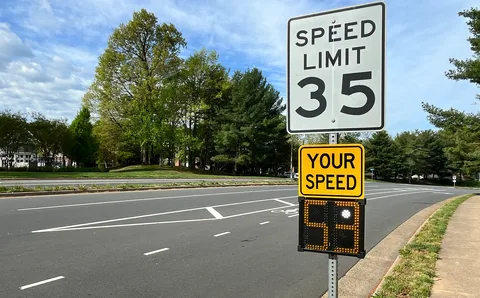
Ever felt annoyed at cars racing by in your neighborhood, or observed people flouting the speed limit on crowded highways? It’s a stressful situation, and you’re constantly wondering if someone is going to get hurt. Hence, there are many communities interested in radar speed signs, a not-so-high-tech means to keep roads safer without continual officer presence.
In this blog post, we’ll discuss how these signs work, what motivates them, and what they can really do to change driver behavior. You’ll have clear and simple answers on how radar speed signs make streets safer, slow down traffic, and create safer spaces for everyone, so you can determine if this is a good fit for your community.
Radar Speed Monitoring
Monitoring vehicle speeds by hand is almost unfeasible, in particular on busy roads. That’s why radar speed signs exist; they sense vehicle speeds in real-time and show it on a screen for drivers to see. This real-time feedback informs them when they are exceeding the limit, promoting safer driving habits.
The technology that powers radar speed placards is surprisingly sophisticated. They can also record traffic information, providing city officials with insight into speeding trends and danger areas. Armed with this data, communities can take targeted road safety measures without the need for additional manpower or a permanent police presence.
Helps Drivers Slow
Have you ever been surprised by how fast you were driving without knowing it? Car drivers tend to do the same, which is why the real-time feedback is so efficient. When a radar speed sign flashes a warning message, it softly urges you to decelerate before a potential crash.
This real-time feedback is more effective than speed limit signs alone. Research confirms that when radar speed signs are deployed, average speeds drop by several miles per hour, which over time can really add up. Even those who consistently speed tend to stop when they have a visual cue.
Reduces Road Accidents
Velocity is one of the leading causes of road traffic accidents, yet simply reducing the speed of cars on the road can save a lot of lives. By regularly notifying motorists of how fast they’re moving, radar speed signs assist in avoiding crashes before they happen. Areas with regular enforcement see fewer crashes, notably in school zones and residential neighborhoods.
Radar speed signs enhance the overall driver awareness, not just the numbers. They promote cautious driving, especially in high-risk situations, such as poor lighting or inclement weather. For neighborhoods that want to do something about safety, these signs are a straightforward but very powerful answer.
Safer Streets Everyday
Safety isn’t only about avoiding crashes but also about a driving environment that is calm and predictable. Radar speed signs contribute to this by displaying the speed limit in a way that is visible and easy for all road users to understand. Residents feel more comfortable walking or riding their bikes, and motorists are better aware of what’s around them.
Another benefit of radar speed signs are inexpensive and require little maintenance. They’re solar-powered, need little maintenance, and have a long lifespan, so they can be a sustainable solution for making streets safer over time. In short: They make it easier to build safer streets every day, with very little hassle.
Conclusion
Radar speed signs are a cost-effective way to improve road safety. They give immediate speed feedback, prompt drivers to reduce speed, and are known to bring down the number of accidents, without the need for continuous police patrolling. Good for neighborhood streets and busy criss-crossers, these signs provide reassurance to drivers and residents alike.
In addition to being safer, these signs are long-lasting, environmentally friendly, and can be installed quickly. Using real-time data and visual display, they raise awareness and lead to calmer, more predictable flows. Your investment in radar speed signs will mean safer streets with fewer accidents and a stronger sense of community safety for everyone.
