

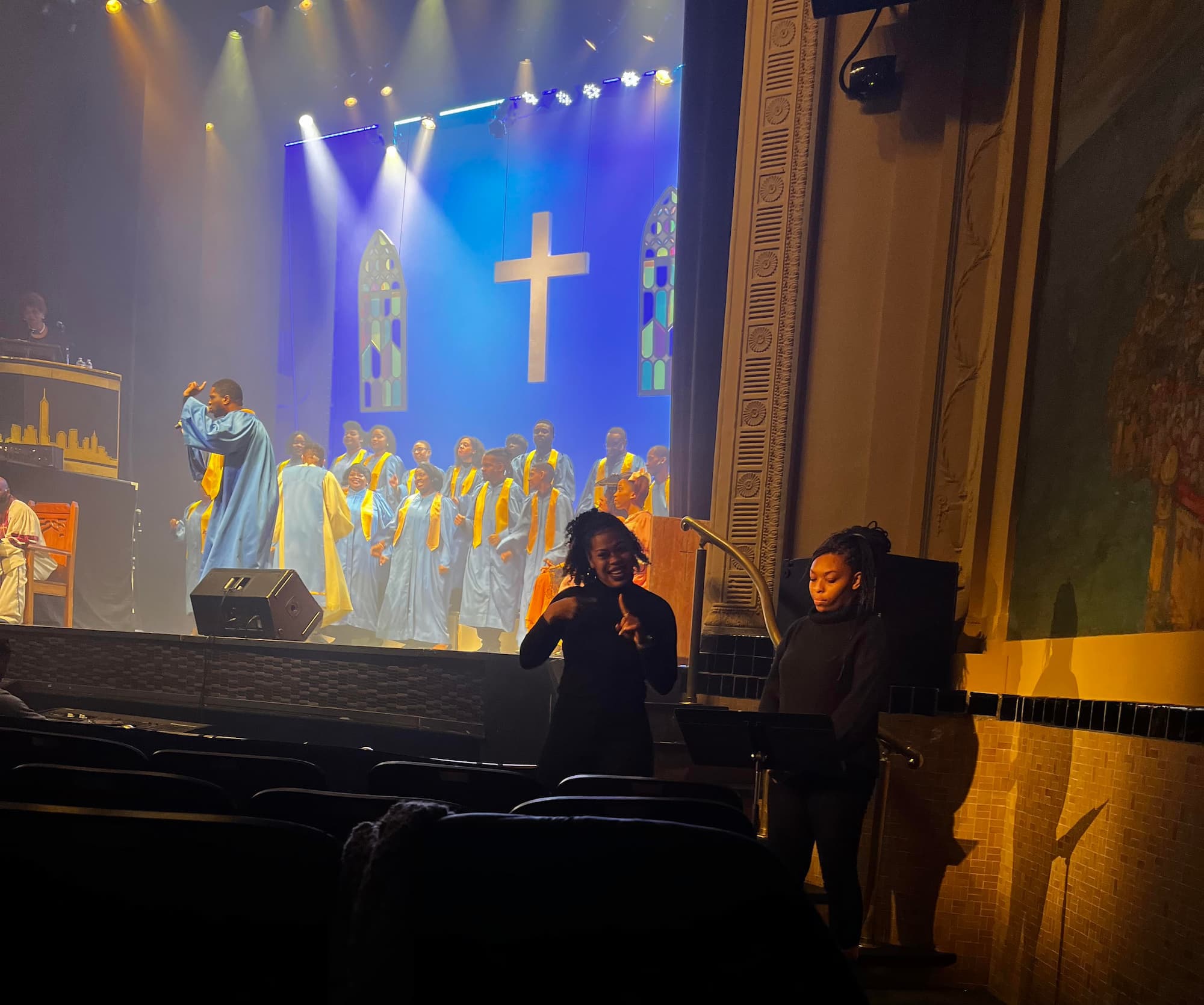
Every word has a duty when Christian teaching is disseminated outside of its original tongue. Now that sermons, podcasts, and ministry materials are accessible to listeners from all cultural backgrounds, linguistic authenticity is a question of theological purity rather than practicality.
Although live interpretation is still one of the most delicate aspects of Christian communication, Christian leaders are depending more and more on Christian translation services to reach new audiences. Speed is never sufficient when it comes to theology. True Christian language interpretation is built on deep biblical understanding, not fast word substitution.
Interpretation Is Theology in Motion
Christian interpretation has doctrinal weight, in contrast to general conference interpretation. A single incorrectly delivered sentence has the power to change meaning, weaken faith, or inadvertently misrepresent Scripture. Theological literacy is just as important for ideas like grace, covenant, redemption, or sanctification as language proficiency. This is why interpreters who comprehend the meaning behind the words – rather than just the surface vocabulary – are the first to translate Christian media effectively.
Why Bible Accuracy Cannot Be Rushed
Accuracy always prevails over speed in Christian contexts. Accurate Bible translations rely on interpreters who can instantly identify sectarian subtleties, theological jargon, and scriptural allusions. Although a hurried interpretation could sound natural, it runs the risk of losing context if it lacks a theological foundation. Christian interpretation, particularly in sermons, lessons, and Q&A sessions, must prioritize meaning, flow, and pace.
A Real Ministry Scenario
During an international discipleship training, a ministry chose to prerecord the main sermon and release it in Spanish for participants across several regions. Initially, the translation focused on speed and general fluency, but feedback showed uncertainty around core theological terms and key doctrinal points. The approach was revised, and the sermon was retranslated by trained Christian linguists with theological expertise. The result was immediate clarity. Spanish-speaking participants engaged more confidently, follow-up discussions became more focused, and the teaching resonated as intended. The improvement did not come from faster delivery, but from faithful theological alignment.
Supporting Multilingual Ministry with Purpose
By enabling believers to receive teaching as though it were given in their own tongue, effective interpretation enhances multilingual ministry. This degree of caring fosters unity and trust among churches and ministries that are committed to global missionary outreach. That same commitment to faithful, culturally grounded ministry is reflected in Kinship United’s mission to build safe Church Homes for orphans through local church communities.
Partner with Experts Who Protect the Message
Christian interpretation is not a digital shortcut; it is a ministry responsibility. Interpretation teams at Christian Lingua receive training on how to carefully handle Scripture, theology, and Christian media such as live events, podcasts, radio broadcasts, dubbing, subtitles, and ASL services. Collaborate with a team that comprehends the meaning behind the words if your ministry prioritizes faithfulness, clarity, and worldwide effect. To confidently support your upcoming translation or interpretation project, visit Christian Lingua.
