

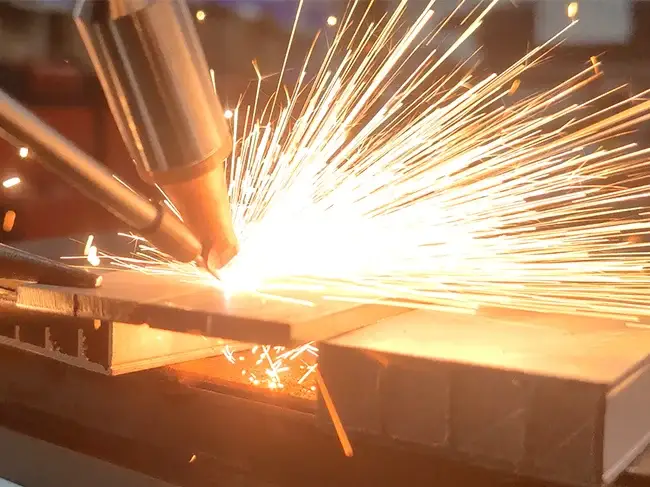
In today’s fast-paced manufacturing environment, precision, efficiency, and consistency are more important than ever. Traditional welding methods, while reliable in some contexts, often present challenges such as inconsistent welds, excessive heat-affected zones, slow production speeds, and higher post-processing costs. These issues can significantly impact productivity, material integrity, and overall operational efficiency.
Fiber laser welding technology has emerged as a transformative solution for industries ranging from automotive and aerospace to medical device fabrication and electronics. By leveraging concentrated laser beams to melt and join materials, fiber laser welders deliver precise, high-quality welds with minimal distortion. This guide will help you understand how fiber laser welders work, their features, real-world applications, and the advantages they offer, providing the insights you need to make informed decisions for your operations.
How Fiber Laser Welding Works
A fiber laser welder operates on the principle of delivering a focused, high-intensity laser beam to the joint of two materials. Unlike conventional welding, which relies on electrodes or filler metals, fiber laser welding uses light energy transmitted through a fiber optic cable, enabling highly controlled and efficient energy transfer.
Key components of a fiber laser welding system include:
- Laser source: Produces a coherent, high-energy laser beam.
- Fiber optic cable: Transports the laser with minimal energy loss.
- Focusing head and optics: Directs the laser beam precisely onto the weld area.
- Control system: Regulates energy output and movement, ensuring consistent welds.
The laser melts the material at the contact point, forming a fusion between components with exceptional precision. This method minimizes heat-affected zones, reduces deformation, and produces strong, clean welds that require less finishing compared to traditional techniques.
Key Features of Fiber Laser Welders
Fiber laser welders are highly regarded for several key features that make them suitable for modern manufacturing needs:
- High precision and beam quality: Enables narrow, deep welds with minimal spatter, ideal for delicate or thin materials.
- Energy efficiency: Consumes less power compared to older CO₂ or arc welding systems, reducing operational costs.
- Compact design: Small footprint allows easy integration into workshops and automated production lines.
- Automation-ready: Compatible with robotic systems for high-volume and multi-axis welding operations.
- Safety and control systems: Advanced monitoring ensures safe, reliable operation, even in complex environments.
- Material versatility: Effective on a wide range of metals, including stainless steel, aluminum, copper, titanium, and more.
These features not only enhance productivity but also improve the quality and repeatability of welds across different materials and applications.
Types of Fiber Laser Welders
Fiber laser welders come in various configurations tailored to specific applications and production needs:
- Handheld fiber laser welders: Lightweight, portable systems designed for repair, maintenance, and small-scale fabrication.
- Stationary fiber laser systems: Fixed machines for consistent, high-volume production of components.
- Robotic and multi-axis welding cells: Fully automated solutions capable of executing complex welding paths with minimal human intervention.
- Hybrid systems: Combine fiber laser welding with conventional welding techniques to handle specialized materials or applications.
Each type of system is designed to optimize efficiency, precision, and workflow flexibility, allowing manufacturers to select the appropriate tool for their production requirements.
Advantages of Fiber Laser Welding
Fiber laser welding offers a range of benefits that distinguish it from conventional welding methods:
- Superior weld quality: Produces smooth, clean, and uniform welds with minimal defects.
- Minimal heat-affected zone: Reduces distortion, warping, and residual stress in the welded materials.
- High-speed operation: Faster than traditional welding methods, improving overall production throughput.
- Reduced post-processing: Less grinding, polishing, or finishing required due to precise welds.
- Longer lifespan: Fiber lasers require fewer consumables, reducing maintenance and replacement costs.
- Energy efficiency: Lower power consumption and reduced environmental impact.
- Versatility: Capable of handling thin sheets and thick materials, metals with reflective surfaces, and even dissimilar materials.
These advantages make fiber laser welding a cost-effective and reliable solution for manufacturers seeking to enhance productivity while maintaining consistent quality standards.
Applications of Fiber Laser Welders
Fiber laser welding has wide-ranging applications across multiple industries:
- Automotive manufacturing: Welding car body panels, frames, engine components, and exhaust systems.
- Aerospace: Joining lightweight metals and high-strength alloys with minimal heat distortion.
- Electronics: Producing precise components for circuitry, connectors, and enclosures.
- Medical devices: Fabricating surgical instruments, implants, and other critical healthcare products.
- Jewelry and fine metalworking: Enabling detailed and delicate welds on precious metals.
- Construction and heavy machinery: Creating durable welds for structural components and machinery parts.
- Energy and power industries: Manufacturing turbines, solar panels, and power system components with high reliability.
The versatility of fiber laser welders allows businesses to standardize their welding processes across various product lines while maintaining high quality.
Factors to Consider When Choosing a Fiber Laser Welder
Selecting the right fiber laser welder involves evaluating several critical factors:
- Power output and beam quality: Determines the thickness of materials that can be welded and the precision achievable.
- Material compatibility: Ensures the system can handle the metals and alloys used in your production.
- Production volume: Higher-volume operations may benefit from automated or robotic systems, while smaller operations can rely on handheld units.
- Automation integration: The ability to integrate with existing production lines or robotic systems can maximize efficiency.
- Maintenance and support: Reliable service and easy-to-maintain systems reduce downtime and operational costs.
- Budget and ROI: Weighing upfront costs against long-term savings in energy, labor, and consumables.
Denaliweld systems include premium U.S.-made control chips and proprietary laser control software for precise power regulation, resulting in smooth and strong welds. Their welding heads are multifunctional, combining welding, cleaning, and seam treatment with ergonomic, water-cooled designs for operator comfort. The user interface is intuitive, offering one-click preset parameters, flexible laser positioning, and robust safety features, supporting both manual and automated robotic welding operations.
Considering these factors carefully ensures that your investment in fiber laser welding aligns with operational goals and productivity expectations.
Future Trends in Fiber Laser Welding
The fiber laser welding industry continues to evolve, driven by technological advances and market demands:
- AI and smart manufacturing: Artificial intelligence enables predictive maintenance, automated quality control, and adaptive welding strategies.
- Energy-efficient systems: Innovations in cooling and power delivery reduce operational energy consumption.
- Portable and modular welders: Compact, mobile systems allow flexible deployment across production areas.
- Advanced materials processing: Expanding capabilities to handle exotic alloys and complex dissimilar material joints.
- Sustainable manufacturing: Emphasis on minimizing waste, energy use, and environmental impact.
Understanding these trends helps manufacturers stay competitive and leverage future innovations to enhance their operations.
Conclusion
Fiber laser welders are revolutionizing modern manufacturing by delivering unmatched precision, speed, and versatility across a wide range of applications. Their advantages, including high weld quality, minimal distortion, energy efficiency, and adaptability to automation, make them a reliable choice for businesses aiming to improve productivity while reducing costs.
Whether you operate in automotive, aerospace, medical device production, or fine metalworking, fiber laser welding technology can optimize your operations, simplify workflows, and enhance overall output quality. Staying informed about the features, applications, and benefits of these systems is key to making strategic decisions that align with long-term operational goals.
As industries continue to adopt fiber laser welding, investing in this technology can position your operations at the forefront of efficiency, precision, and innovation, ensuring success in today’s competitive manufacturing landscape.
