

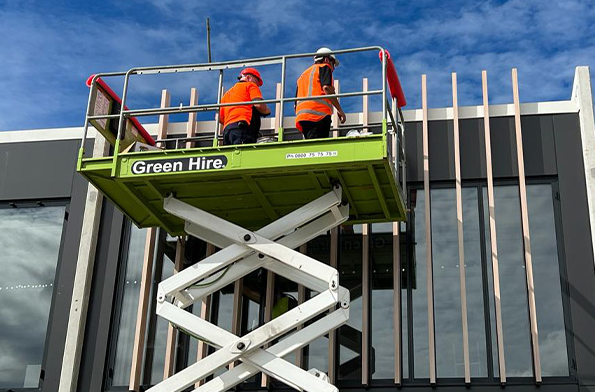
Feature Image ALT Text
Elevated work platform operating safely on a New Zealand commercial worksite
Access equipment is everywhere on modern New Zealand worksites. From routine maintenance to large-scale construction, elevated platforms have become a familiar sight. That familiarity can quietly create risk.
Problems rarely come from using access equipment itself. They come from choosing equipment that does not truly suit the environment, the task, or the way work unfolds on site.
When the Platform Looks Right but Behaves Wrong
At a glance, many elevated platforms appear interchangeable. The height looks sufficient. The load rating seems adequate. Availability fits the schedule.
Once work begins, however, limitations emerge.
The platform cannot reach over fixed obstacles.
Movement interferes with pedestrian flow.
Surface conditions feel less stable than expected.
Each issue alone may seem manageable. Together, they increase exposure to risk and slow progress.
Height Is Only One Part of the Access Equation
A common planning error is focusing on maximum height while overlooking how work is actually carried out.
Tasks often require positioning over plants, ducting, shelving, or machinery. Vertical reach alone does not guarantee usable access. When operators are forced to stretch, reposition frequently, or improvise, safety margins shrink quickly.
Good access planning starts with where people need to work, not just how high they need to go.
Stability Depends on More Than the Ground Appearing Flat
Stability is influenced by surface strength, load distribution, outreach, and movement patterns. A slab that looks solid may have load limits. Outdoor-adjacent areas may soften after rain. Indoor floors may not tolerate point loading.
Equipment selected without considering these factors can feel unstable even when operated within manufacturer limits. That perception alone changes how operators behave, often making movements more cautious and less controlled.
The Productivity Cost of the Wrong Choice
Choosing unsuitable access equipment rarely stops work entirely. Instead, it introduces friction.
- Larger exclusion zones block other trades
- Additional spotters become necessary
- Repositioning increases time at height
- Equipment swaps disrupt schedules
These inefficiencies accumulate quietly, increasing both labour costs and exposure time without appearing as a single failure point.
Operator Familiarity Is Not Universal
Different platforms respond differently. Control layouts, movement speed, and platform behaviour vary across machines.
Placing operators on unfamiliar equipment without adequate orientation increases the likelihood of hesitation or error. Even experienced personnel need time to adjust when platform behaviour changes, particularly in confined or active environments.
Responsibility and Compliance on NZ Worksites
In New Zealand, responsibility for safe access does not sit with operators alone. Those managing work must ensure equipment is suitable for the task and conditions.
Guidance from WorkSafe New Zealand highlights the importance of hazard identification, equipment selection, and planning when working at height. Selecting an inappropriate platform shifts risk onto both workers and site controllers.
Why Early Decisions Matter Most
Access-related issues are hardest to fix once work is underway. By then, schedules are set, trades are mobilised, and pressure to continue increases.
In many cases, problems trace back to early assumptions made during planning, particularly when ewp hire decisions are based on availability rather than suitability. Reviewing access needs at the planning stage reduces the likelihood of on-site compromise later.
Final Thoughts
Most access incidents do not result from equipment failure. They arise when equipment is mismatched to its environment.
Choosing the right elevated platform requires understanding how work will unfold, how people move around the site, and how conditions may change. When access decisions are made thoughtfully, risk decreases, productivity improves, and working at height becomes controlled rather than reactive.
