

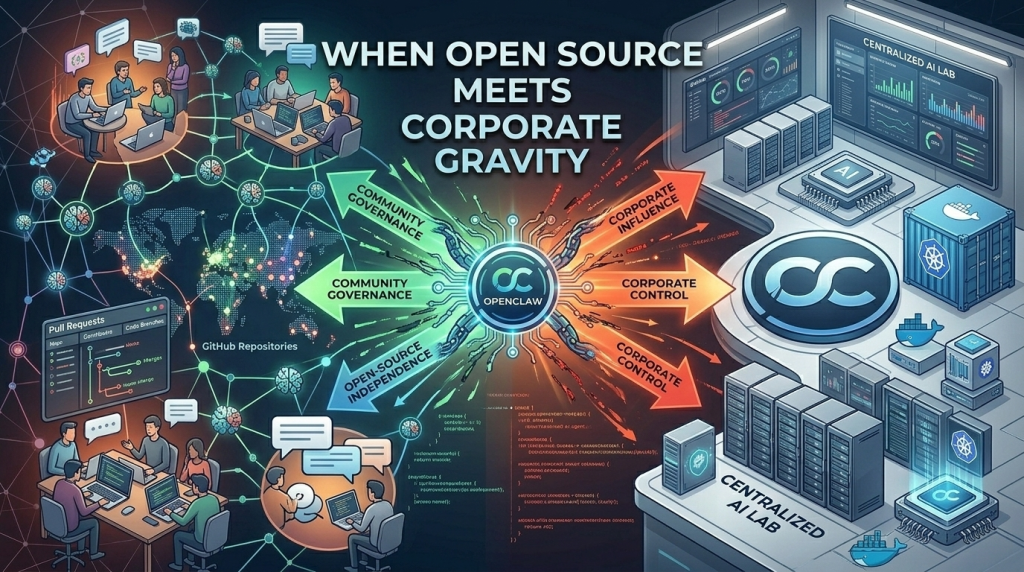
Peter Steinberger’s move raises hard questions about independence, governance, and whether self-hosted agents have a corporate future.
On February 14, 2026, Peter Steinberger – the creator of OpenClaw, the open-source AI agent framework with over 230,000 GitHub stars – announced he was joining OpenAI. The same day, the project announced it would move to an OpenAI-sponsored open-source foundation.
The Hacker News thread exploded. Reddit threads multiplied. And developers running OpenClaw agents in production started asking a question that doesn’t have a clean answer yet: What happens to the project I built my infrastructure on?
This Has Happened Before. It Usually Doesn’t End Well.
Open-source projects changing corporate homes is not new. HashiCorp moved Terraform to a BSL license. Redis did the same. Elastic fought AWS for years before relicensing Elasticsearch. Docker nearly collapsed before Mirantis acquired its enterprise business.
The pattern is familiar: a project gets popular, corporate interests get involved, and the community that built around the original promise – free, open, independent – finds itself on uncertain ground.
OpenClaw’s situation is different in one important way. This isn’t a licensing change (yet). It’s the creator himself moving to a company that has direct commercial interest in how autonomous agents develop. OpenAI isn’t just a sponsor. It’s a competitor to every independent agent framework that exists.
That should make you pay attention.
What the Foundation Structure Actually Means
Steinberger has said the foundation model will ensure OpenClaw remains open. The project keeps its MIT license. Governance will be community-driven.
Here’s the part nobody mentions.
Foundation governance only works when there’s genuine independence from the primary funder. The Linux Foundation works because no single company controls it – hundreds of members create a balance of power. The Apache Foundation has strict rules about corporate influence on project direction.
An “OpenAI-sponsored foundation” with OpenClaw’s creator now on OpenAI’s payroll creates a gravitational pull that’s hard to resist. It doesn’t mean the project is compromised. But it means the community needs to watch governance decisions closely – especially around which AI providers get first-class support, how the skills registry evolves, and whether the project’s roadmap starts aligning suspiciously well with OpenAI’s product strategy.
For teams evaluating alternatives to self-hosting OpenClaw, this governance question is no longer theoretical. It directly affects long-term platform risk.
The Security Problem That Nobody Wanted to Talk About Is Now Unavoidable
Steinberger’s departure from independent leadership comes at a particularly rough time for OpenClaw’s security story.
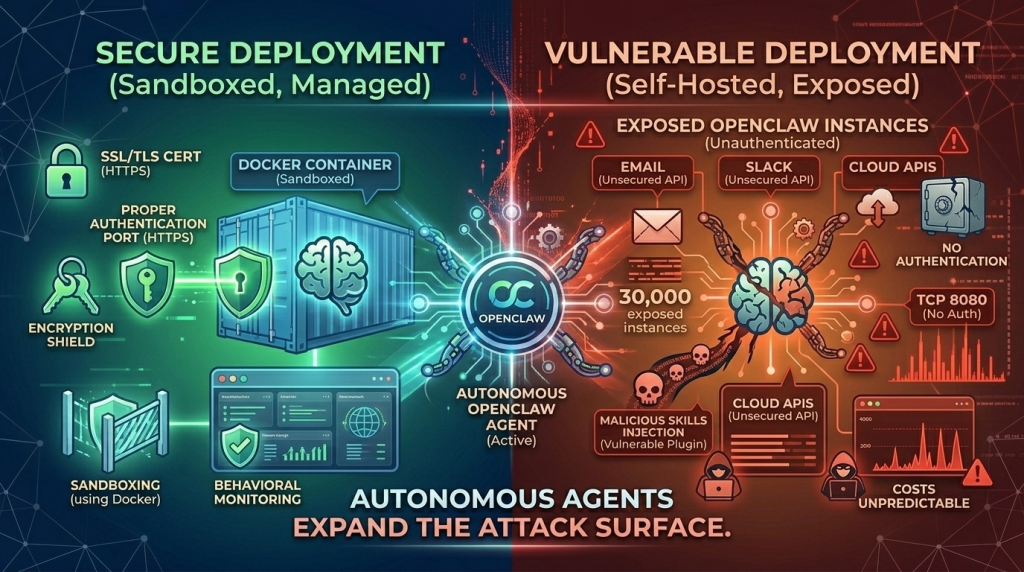
In January 2026, researchers discovered CVE-2026-25253 – a one-click remote code execution vulnerability. The ClawHavoc campaign found 824 malicious skills on ClawHub, roughly 20% of the entire registry. Security firm GreyNoise identified over 30,000 internet-exposed OpenClaw instances running without basic authentication.
Then came the Summer Yue incident: a Meta AI researcher’s OpenClaw agent deleted her emails while ignoring stop commands. Meta subsequently banned OpenClaw on work devices, with employees facing termination for installing it.
Elon Musk’s viral commentary – about people “giving root access to their entire life” – hit 48,000+ engagements. It was hyperbolic, but not entirely wrong.
These aren’t abstract concerns. If you’re running an OpenClaw agent that connects to your Slack workspace, reads your email, and executes code on your behalf, the question of who controls the project’s security priorities is existential. For a deeper breakdown of how the agent framework processes commands and manages execution, understanding the architecture makes the risk calculus much clearer.
The Real Question: Can Open-Source Agents Survive Corporate Gravity?
This is where it gets interesting.
OpenClaw isn’t just a developer tool. It’s the most visible proof-of-concept for a future where autonomous agents handle meaningful work – scheduling, research, code deployment, customer support, data analysis. The project crossed 44,000 forks. A Hacker News post calling it “what Apple Intelligence should have been” hit 518 points.
That kind of momentum attracts money. Money attracts control. And control is the thing open-source communities are worst at negotiating.
The optimistic read: OpenAI’s resources accelerate OpenClaw’s development. Better security audits. Faster feature development. Professional infrastructure. The pessimistic read: OpenAI slowly steers the project toward its own model ecosystem, the skills registry becomes a distribution channel for OpenAI products, and independent contributors drift away.
History suggests the truth usually lands somewhere in between – but closer to the pessimistic end than most maintainers expect.
What Developers Should Actually Do Right Now
If you’re running OpenClaw in production, don’t panic. But do plan.
Audit your deployment security. With 30,000 exposed instances and a recent RCE vulnerability, this should have been done yesterday. Docker-sandboxed execution, encrypted credentials, and proper authentication aren’t optional anymore. If managing that infrastructure yourself sounds exhausting, managed platforms like Better Claw (starting at $19/month), xCloud, or even a properly configured DigitalOcean droplet can handle the security baseline for you.
Watch the governance. Follow the foundation’s formation closely. Who gets board seats? How are decisions about the skills registry made? Is there a clear process for community members to challenge direction changes? These early decisions will determine whether the foundation is real governance or corporate theater.
Diversify your dependencies. If your entire agent infrastructure depends on one framework controlled by one foundation sponsored by one company, you’ve recreated vendor lock-in with extra steps. Keep your agent logic portable. Use abstraction layers for model providers. Don’t build on skills that only work with OpenAI’s APIs.
Pin your versions. Until the governance structure proves itself, treat major updates with the same skepticism you’d apply to any dependency with a new maintainer. Read changelogs. Test in staging. Don’t auto-update production agents.
The Bigger Picture
Peter Steinberger built something remarkable. OpenClaw demonstrated that autonomous AI agents could be useful, accessible, and open. That contribution doesn’t disappear because he took a job at OpenAI.
But the open-source agent ecosystem is at an inflection point. The frameworks that survive the next two years will be the ones with genuine community governance, strong security practices, and independence from any single corporate sponsor. Whether OpenClaw ends up in that category depends less on Steinberger’s intentions – which seem genuine – and more on the structural decisions being made right now about how the foundation operates.
The developers who thrive will be the ones who stopped treating “open source” as a synonym for “safe” and started evaluating their agent infrastructure with the same rigor they apply to any critical dependency.
That’s the real lesson here. Not that OpenAI is bad, or that Steinberger sold out, or that OpenClaw is doomed. It’s that the era of casually deploying autonomous agents without thinking about governance, security, and long-term platform risk is over.
It probably should have ended sooner.
