

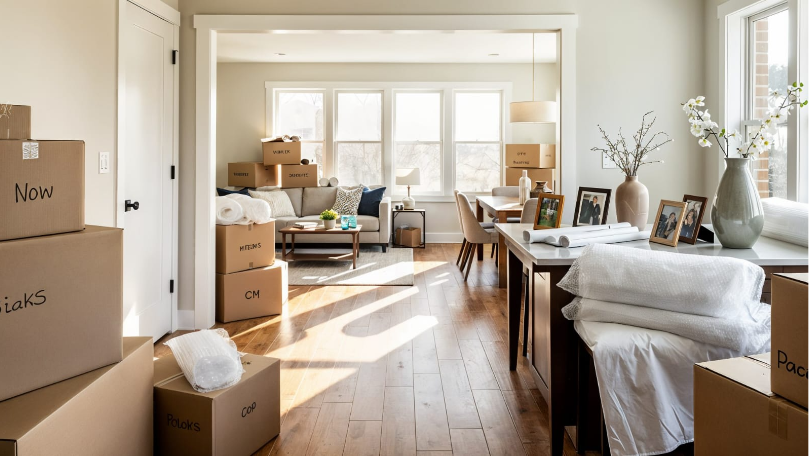
The night before your move, you’re standing in the middle of your living room surrounded by half-packed boxes, a roll of tape stuck to your sock, and the sinking realization that the junk drawer hasn’t even been opened yet. Sound familiar? You’re not alone. According to a 2024 survey by the American Moving and Storage Association, nearly 45 million Americans move each year — and most of them admit the prep work was harder than the actual transit.
The good news: preparing your home room by room turns a chaotic scramble into a manageable project. Before you tape a single box, take ten minutes to compare long-distance moving options and lock in a date with screened professionals. Once your logistics are set, everything below becomes a straightforward checklist you can knock out over a weekend.
This guide walks through every major room in your home with specific, actionable steps — no vague advice, no filler. Print it, check things off, and arrive at your new place with your sanity intact.
Kitchen: The Room That Takes Twice as Long as You Think
Here’s a counter-intuitive truth seasoned movers swear by: start packing the kitchen first, not last. Most people save it for the final stretch because they “still need to eat,” but the kitchen contains more fragile, oddly shaped items than any other room in the house. Giving yourself extra days here prevents rushed wrapping and broken dishes.
Two weeks before moving day:
- Purge expired food from the pantry, fridge, and freezer. Donate unopened non-perishables to a local food bank.
- Photograph the inside of drawers and cabinets so you can replicate the layout at your new place.
- Wrap plates vertically (like records in a crate) — they’re far less likely to crack than when stacked flat.
- Nest bowls with a layer of packing paper between each one. Tape the bundle, don’t rely on friction.
- Pack knives in a knife roll or wrap each blade in cardboard secured with tape. Never toss them loose in a box.
- Seal spice jars in a zip-lock bag inside a small box. Lids pop off in transit more often than you’d expect.
- Drain and dry small appliances (coffee maker, blender). Wrap cords with rubber bands and tape them to the appliance body.
The final 48 hours: switch to disposable plates and utensils, keep one “last meal” box with a pan, a spatula, dish soap, and paper towels. Label it “OPEN FIRST” for the new kitchen.
Bedroom: Clothes, Linens, and the Stuff Under the Bed
Bedrooms trick people into thinking they’re easy. Clothes go in boxes, done. But the real time sink is decision-making: what stays, what gets donated, and what you forgot was shoved behind the winter coats.
- Use wardrobe boxes for hanging clothes — they save hours of ironing at the other end.
- Vacuum-seal bulky comforters and off-season jackets. They shrink to a third of their size.
- Strip the bed last. Roll sheets, pillows, and a blanket into a labeled bag so you can make the bed first night in your new home.
- Check under the bed, on closet shelves, and inside nightstand drawers. These are the top three spots where items get left behind.
- Jewelry and sentimental items go in a personal bag that rides with you, not on the truck.
- Disassemble bed frames and bag all hardware in a labeled zip-lock taped to the frame.
Bathroom: Small Room, Sneaky Complexity
Bathrooms are small but packed with liquids, glass bottles, and things you’ll need right up until the last morning. The strategy here is a two-phase pack.
Phase 1: One Week Out
- Box up backup toiletries, extra towels, cleaning supplies, and medicine cabinet overflow.
- Toss expired medications properly — most pharmacies accept them for disposal.
- Seal liquid bottles in individual zip-lock bags to prevent leaks from pressure changes during transit.
- Remove shower curtain and rings. Wash the curtain; it probably needs it.
Phase 2: Moving Morning
- Pack your daily toiletries into a labeled “Bathroom Essentials” bag.
- Include toilet paper, a hand towel, hand soap, and a basic first-aid kit — things you’ll want access to before boxes are unpacked.
- Wipe down all surfaces. Leaving the bathroom clean is courteous to the next occupant and often required by your lease.
Living Room: Big Items, Big Decisions
The living room is where full-service movers really earn their fee. Sofas, entertainment centers, and wall-mounted TVs require careful handling and often specialized equipment like furniture dollies, stretch wrap, and moving blankets. If you’ve hired professionals, they’ll handle the heavy lifting — but you still need to prep.
- Photograph your electronics setup (cable connections, outlet layout) before unplugging anything.
- Coil cables individually and label both ends with masking tape.
- Remove batteries from remotes and electronics to prevent corrosion during storage.
- Take wall art down early. Wrap framed pieces in corner protectors and bubble wrap. Sandwich them between cardboard sheets.
- If bookshelves are going, pack books in small boxes — never large ones. A large box of books is genuinely dangerous to lift.
- Roll area rugs tightly and secure with twine or stretch wrap. Label which room they belong in.
- Remove legs from coffee tables and side tables if possible. It makes stacking in the truck safer and more space-efficient.
Home Office: Protect Your Data First
Before you think about packing monitors and desk drawers, back up every device in your office. Hard drives, laptops, desktop towers — create a cloud backup and a local backup on an external drive that travels with you. No box is truly safe from a hard bump, and losing years of files is the kind of moving disaster no insurance check can fix.
- Back up all data to cloud storage and an external drive.
- Photograph cable setups behind desks — you’ll thank yourself during reassembly.
- Pack monitors in their original boxes if you kept them. Otherwise, wrap in moving blankets and mark “FRAGILE — SCREEN.”
- Shred sensitive documents you no longer need rather than moving boxes of old paperwork.
- File important documents (tax records, contracts, warranties) in a portable file box that stays with you.
Garage and Storage Areas: The Forgotten Frontier
Garages and storage units are where moves go to die. These spaces accumulate years of “I’ll deal with it later” items. Give yourself a full weekend just for this zone.
- Sort everything into four piles: move, donate, sell, trash. Be ruthless — if you haven’t touched it in two years, it’s dead weight.
- Drain fuel from lawn mowers, trimmers, and generators. Most movers won’t transport fuel or propane tanks.
- Dispose of paint, pesticides, and chemicals at your municipal hazardous waste facility. These are prohibited on moving trucks.
- Tools go in sturdy bins, not cardboard. Wrap sharp edges with towels or cardboard guards.
- Bikes, sports equipment, and holiday decorations should be cleaned before packing. Dirt and moisture cause mold in sealed boxes.
- Label every storage box with contents AND destination room. “Garage Misc” is useless at the other end.
Laundry Room: Quick but Critical
- Run an empty cleaning cycle on the washer with vinegar, then leave the door open to dry completely.
- Disconnect and drain washer hoses. Let them air-dry to prevent mildew.
- Clean the dryer lint trap and exhaust vent — fire hazards travel with you if you skip this.
- Pack detergents and fabric softeners in sealed bags inside a bin. These leak constantly.
- If movers are transporting the machines, secure the washer drum with transit bolts (check your manual).
The Final Walkthrough: Your Last Line of Defense
After every box is loaded, walk through every room — including closets, the attic, the basement, and the backyard. Open every cabinet. Check every shelf. Look behind doors. This five-minute sweep has saved countless people from leaving behind passports, phone chargers, and even pets’ favorite toys.
- Check all closets, cabinets, and built-in storage.
- Inspect the attic, basement, and crawl spaces.
- Look behind washer/dryer and refrigerator.
- Confirm all windows are locked and lights are off.
- Collect all house keys, garage remotes, and gate fobs for handoff.
- Take timestamped photos of every room for your records — especially useful for security deposit returns.
Moving Day Is Won Before the Truck Arrives
The real secret to a smooth move isn’t hiring the most expensive crew or buying the fanciest boxes. It’s preparation — boring, methodical, room-by-room preparation. When full-service movers show up to a home where everything is sorted, labeled, and ready, the entire process speeds up dramatically. Fewer surprises mean fewer delays, fewer breakages, and a significantly lower stress level for everyone involved.
There’s something oddly satisfying about walking through an empty home you’ve lived in, knowing every item is accounted for and headed to the right place. That feeling doesn’t come from luck. It comes from a checklist and the discipline to follow it.
Your next chapter starts with how you close this one. Make it clean.
