

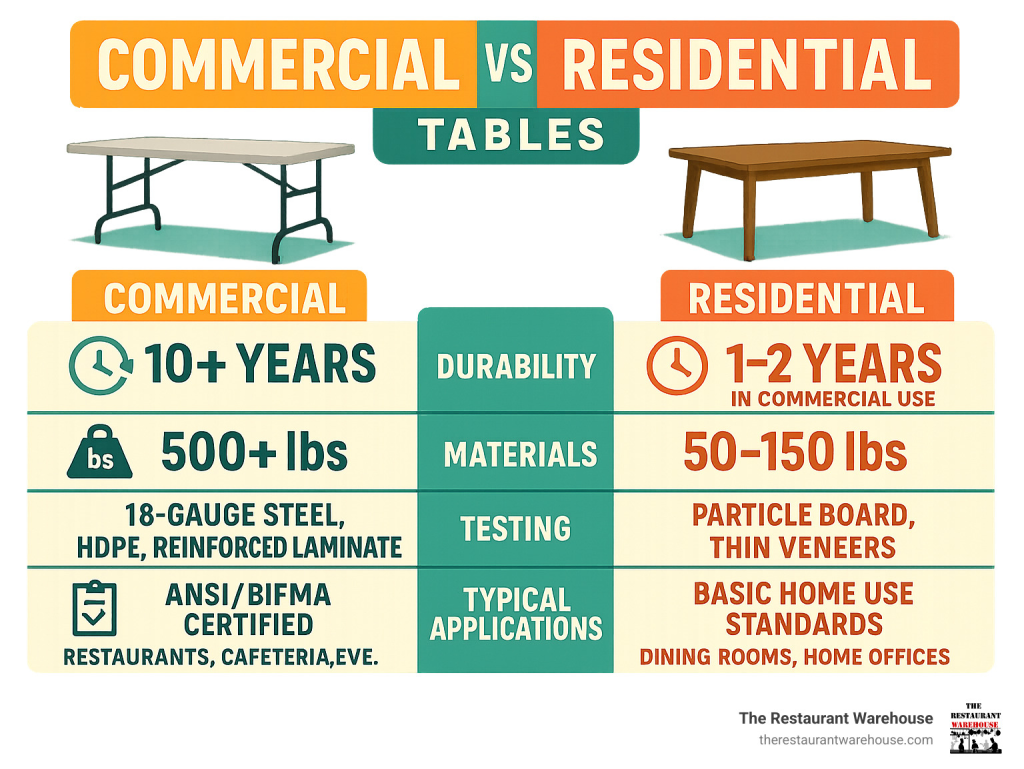
Introduction: Why the Right Commercial Tables Matter
Tables do more than hold food and drinks. They shape how guests feel, how staff move, and how long furniture lasts. In busy venues, the wrong tables can cause crowding, wobbling, damage, and higher replacement costs. The right ones improve comfort, flow, and even brand image.
Whether you run a café, restaurant, hotel dining room, or bar, choosing tables should never be rushed. You need the right size, strong materials, and finishes that match both your design and your workload.
This guide walks through the key things to consider before you buy, so you can choose tables that look good and survive daily use.
Understanding Venue Needs Before Choosing Tables
Type of Venue and Service Style
Start by thinking about how your space works. A fast-paced café needs small, easy-to-clean tables that allow quick turnover. A fine dining restaurant needs more space per guest and finishes that feel premium. Bars may need taller tables or flexible layouts for groups.
Outdoor areas also need different materials than indoor spaces. Sun, rain, and temperature changes can quickly damage the wrong surfaces.
Space Planning and Traffic Flow
Good table choices begin with layout planning. Guests should feel comfortable, not squeezed together. Staff must be able to move easily between tables, especially during busy hours.
Accessibility also matters. Walkways should allow for wheelchairs and safe exits. The right table size helps you meet these needs while still keeping good seating capacity.
Choosing the Right Table Sizes and Shapes
Standard Commercial Table Dimensions
Most venues use a mix of table sizes. Two-person tables usually range from 600–700mm wide. Four-person tables often sit around 700–900mm. Shared dining tables are longer and designed for groups or communal seating.
Height also matters. Dining tables are usually about 720–750mm high, while bar tables are closer to 1000–1100mm. Matching height to chair type keeps guests comfortable.
Round vs Square vs Rectangular Tables
Shape affects both style and flexibility. Round tables create a relaxed feel and help conversation flow. Square tables are compact and easy to rearrange. Rectangular tables work well for groups and wall seating.
Many venue owners explore different layout options before purchasing Commercial tables so they can compare sizes, bases, and finishes that suit their space.
Choosing the right mix of shapes often improves both seating efficiency and the look of the room.
Materials and Finishes That Suit Heavy Use
Popular Tabletop Materials
Different materials suit different workloads.
Laminate is one of the most common choices. It is affordable, easy to clean, and resistant to stains. Solid timber gives a warm, natural feel and works well in cafés or premium dining spaces, though it needs more care. Veneer offers the timber look at a lower cost but must be sealed well.
Compact laminate and resin tops are strong and moisture resistant, making them good for outdoor or high-traffic settings. Stone or marble tops look elegant but are heavier and usually cost more.
Matching Finishes to Interior Design
The finish should match your brand style. Light timber tones feel relaxed and modern. Dark wood or stone feels more formal. Matte finishes often hide scratches better than glossy ones.
Think about lighting too. Some surfaces reflect light strongly, which may not suit every interior. Always balance visual appeal with practical cleaning needs.
Durability Factors Most Buyers Overlook
Table Bases and Structural Strength
A strong tabletop means little if the base is weak. Cast iron bases are heavy and stable, which helps prevent wobbling. Steel bases are durable and common in indoor venues. Aluminium bases are lighter and work well outdoors because they resist rust.
Stability matters more than many people think. A table that rocks or shifts can quickly frustrate guests and shorten the furniture’s life.
Scratch, Heat, and Moisture Resistance
Hospitality furniture takes daily punishment. Hot plates, spilled drinks, cleaning chemicals, and constant movement all wear surfaces down.
Heat-resistant tops reduce marks from dishes. Scratch-resistant coatings keep tables looking new longer. Moisture-resistant materials help prevent swelling or cracking, especially in outdoor or humid environments.
Choosing stronger materials upfront often saves money in the long run.
Maintenance, Cleaning, and Lifespan Considerations
Daily Cleaning Demands in Busy Venues
Tables must be easy to wipe and sanitize. Smooth surfaces with sealed edges help prevent stains and bacteria build-up. Textured surfaces can look nice but may trap crumbs or spills.
Think about how often staff clean tables during service. Low-maintenance finishes make a big difference during peak hours.
Repairability and Replacement Costs
Some tables allow you to replace just the top or just the base. This modular design can reduce costs later. Solid timber tables can sometimes be refinished instead of replaced.
Working with reliable suppliers also helps. If matching pieces are available in the future, you can expand your seating without redesigning the whole venue.
How to Balance Budget, Style, and Performance
Budget always matters, but the cheapest option is rarely the best long-term choice. Tables that wear out fast cost more through replacements, repairs, and downtime.
A smart approach is to invest in durability for high-traffic areas and choose simpler finishes for quieter zones. Buying in bulk can reduce per-unit cost, and selecting neutral designs makes future upgrades easier.
Think of tables as long-term equipment, not short-term décor.
Conclusion: Making a Smart Commercial Table Investment
Specifying tables for a venue is about more than picking something that looks nice. You need the right size for your layout, materials that handle daily use, and finishes that match your brand.
When you balance durability, maintenance, and design from the start, your tables will support both guest comfort and smooth service. A thoughtful choice now can save years of repairs, replacements, and layout problems later.
