

There is a version of this story that starts and ends with titles. World Youth Champion at twelve. Seven Iranian national championships. Woman Grandmaster at twenty-one. Four appearances in the Women’s World Chess Championship. Continental titles on two continents. That version is accurate, and it is impressive, and it misses something important about who Atousa Pourkashiyan actually is.
Because alongside all of that competition, she has been teaching chess since 2008. Not as a retirement project; not as something to fill time between tournaments; but as a serious parallel commitment that has run alongside her career as a player for the better part of two decades. That combination of competing and coaching at a high level, sustained over many years, is not something every elite player manages. Most choose one or the other eventually. She has not had to.
How the Coaching Started and Where It Went
She opened her first chess school in Iran in 2008. That was the year before she earned her woman grandmaster title, so she was not yet at the peak of her playing career when she began teaching. She was 20 years old, already a Woman International Master, and apparently already thinking about how to pass the game on to others. That timing matters. It was not an afterthought that came once the competitive fire dimmed. It was a deliberate choice made while she was still very much in the middle of building her own record.
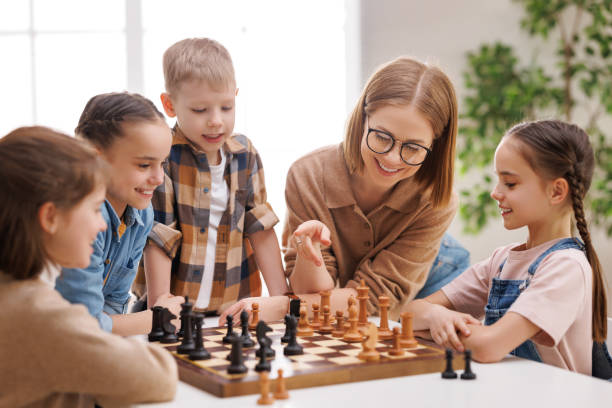
When she eventually relocated to Los Angeles, she brought that same commitment with her and founded the Los Angeles Chess Academy. The academy is not just a place where kids come in and push pieces around for an hour. It is structured around genuine chess development, from absolute beginners right through to master-level players. She also trains instructors, which means her influence on chess in Los Angeles extends beyond the students she teaches directly to the teachers those students will eventually encounter.
What Her Students Say About Her Teaching
Parents who have put their children in her classes tend to be specific about what makes her different. One parent, Jennifer York, described how her two sons, aged eight and nine at the time, had been taking lessons for years and would not study with anyone else. The qualities she highlighted were patience; professionalism; and a teaching approach that managed to keep the game enjoyable even as the difficulty increased. That last part is harder than it sounds. Chess can become a grind very quickly if the coach is not careful about how they introduce complexity.
Another parent, Abigail, whose children were even younger when they started, noted something similar. The consensus across the reviews from her students’ families is that Atousa teaches chess in a way that produces better players without producing children who dread the lessons. For a game that can feel very serious very quickly, that is a real skill.
There is also the Pourkashiyan Cup, a local tournament that was sponsored and named after her. It ran for at least three consecutive years according to her own account, organized with the support of Dr. Harold Valery. Having a tournament bear your name while you are still actively playing is an unusual distinction, and it says something about the kind of presence she has built in the Los Angeles chess community beyond her competitive results.
The Bishop’s Opening and What It Suggests About Her Style
Players at the grandmaster level tend to develop recognizable stylistic fingerprints. The openings they favor, the positions they seek, the kinds of endgames they handle best; these things accumulate over thousands of games into something that tells you how a player thinks at the board. According to her profile on Chessiverse, Atousa favors the Bishop’s Opening in her competitive games. That is a detail worth noting.
The bishop’s opening is not a fashionable choice at the top of women’s chess. It is solid; it avoids the most heavily theorized lines; and it puts the onus on the player to generate ideas from a balanced starting point rather than relying on prepared sequences. Choosing it as a preferred weapon suggests a player who is comfortable thinking for herself from an early stage of the game, which is exactly the kind of quality that tends to produce strong coaches. If you understand why a position is good rather than just knowing that theory says it is good, you can explain it. That explanatory capacity is what separates a strong player who can teach from one who cannot.
The Academic Side of a Chess Career
She also took her education seriously in a way that many professional chess players do not. A bachelor’s degree in sport science and physical education from the University of Tehran, followed by a master’s degree in sport management from the same institution. Managing that level of academic commitment while competing in national and international chess events is not straightforward. The degree in sport management in particular is a practical qualification, not just an intellectual exercise, and it suggests someone who was thinking about the organizational and structural side of sport as well as the competitive side.
That background probably feeds into how she runs the Los Angeles Chess Academy. Managing a coaching business, handling scheduling, working with parents, and training other instructors are not purely chess skills. They draw on exactly the kind of knowledge that a sport management education develops. The combination is more coherent than it might look at first glance.
Still Competing; Still Preparing; Still at the Top
It would be easy to frame the coaching work as evidence that her best competitive years are behind her. That framing would be wrong. In December 2024, she won the 15th Americas Women’s Continental Chess Championship in Buenos Aires, tying on 7 points from 9 games and claiming gold on a tiebreak. That result qualified her for the 2025 Women’s Chess World Cup. She is 36. She is still preparing for tournaments; still producing results that open doors to the highest level of women’s chess; and still running the academy in Los Angeles at the same time.
The full record of her competitive career, from the 2000 World Youth title through to her recent Americas Championship victory, is documented on Chessiverse. The player profile at chessiverse.com is one of the cleaner summaries available of what she has accomplished across two federations and nearly three decades at the board. If you want to understand how the coaching chapter of her career sits alongside the competitive one, the results listed there tell you quickly that neither side of the story is a footnote to the other.
A Career That Refuses Simple Categories
Most chess careers follow a recognizable shape. Talented junior; promising adult; peak competitive years; gradual decline; retirement into commentary or writing. Atousa Pourkashiyan’s career does not fit that shape cleanly. She is still competing at a level that justifies World Cup qualification. She has been coaching and teaching for longer than many active players have been professionals. She has changed countries; changed federations; and produced strong results in both environments.
What connects all of it is a relationship with chess that goes beyond simply playing it well. She plays it; she teaches it; she organizes events around it; she studies it academically. That depth of engagement is rare. Most players at her level treat chess as their job, which it is, but they do not necessarily treat it as the thing through which they want to build something lasting. She seems to. The academy, the coaching, the continued competition—none of it looks like someone winding down. It looks like someone who has figured out how to keep the game interesting for herself and how to make sure it stays interesting for the people she teaches as well.
For anyone who wants to trace the full shape of what she has built, starting with her Atousa Pourkashiyan Chessiverse profile is a reasonable place to begin. The titles are all there. So is the context that makes them mean something.
